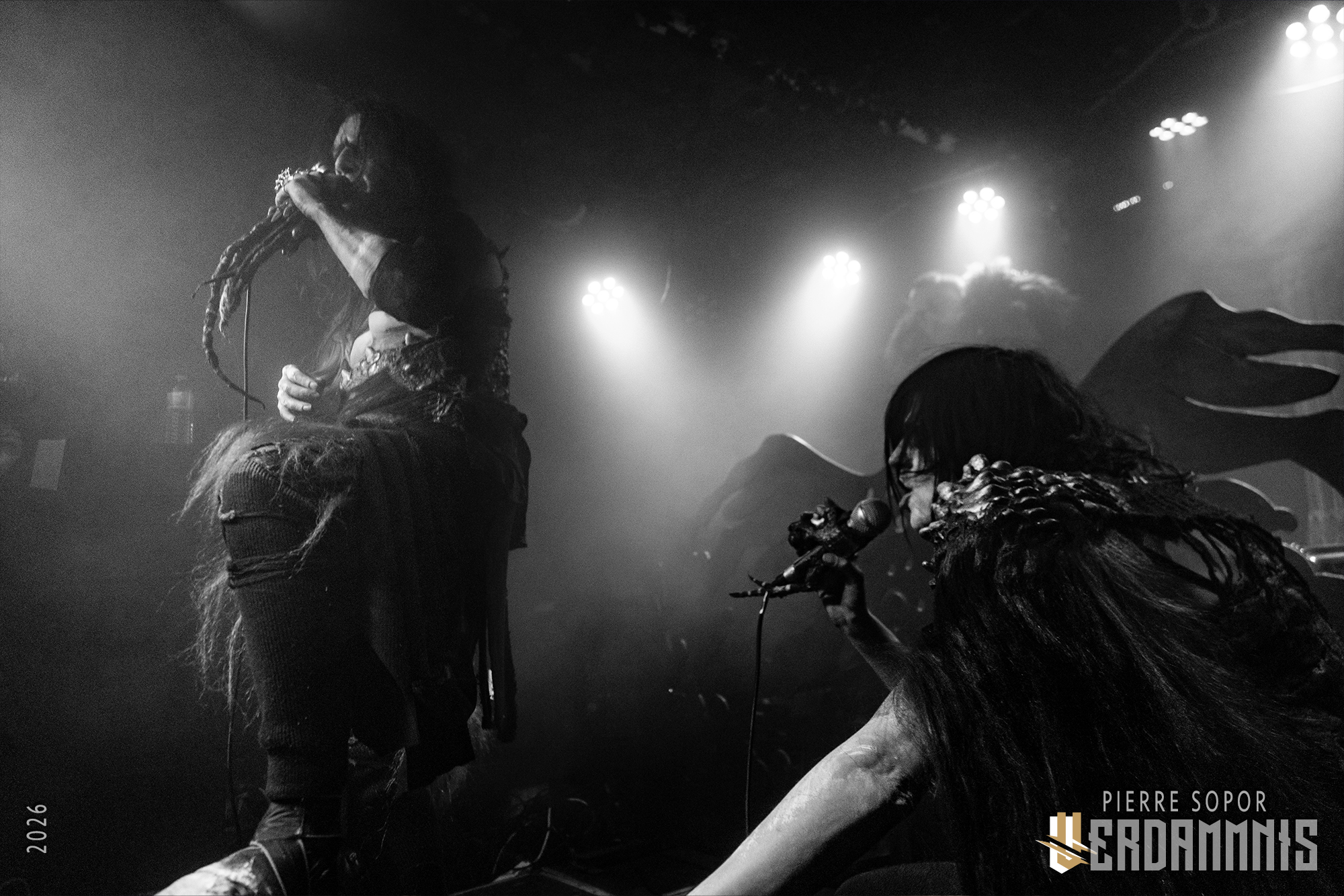
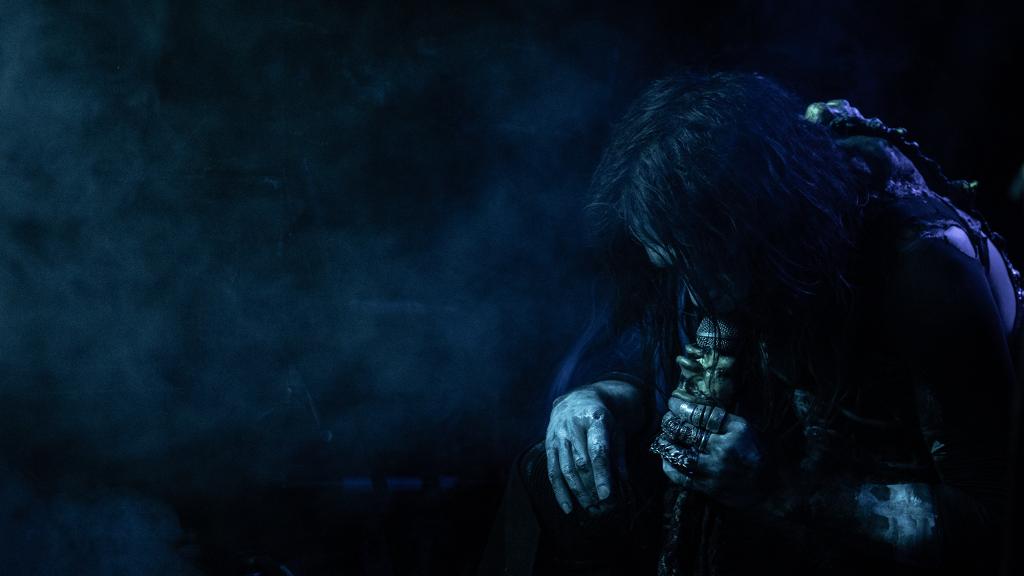
There are some mutant bills that you just can't miss. The combination of Öxxö Xööx's mystical avant-garde doom, Déhà's funeral doom catharsis and Rïcïnn's ritual/darkwave/neo-classical/metal had us dreaming: it promised to be beautiful, crazy, strange, moving and sometimes uncomfortable – in short, everything we love. Laurent Lunoir and Laure Le Prunenec, eternal accomplices, have become a rare sight on stage, and Déhà is not one to show his face in public very often... It should be noted that this evening, organised by Sanit Mils, was one of only two on the Öxxö Xööx tour to feature Rïcïnn, so we were well aware of how lucky we were as we prepared to bury ourselves under the stones of the Caves Saint-Sabin.
RÏCÏNN
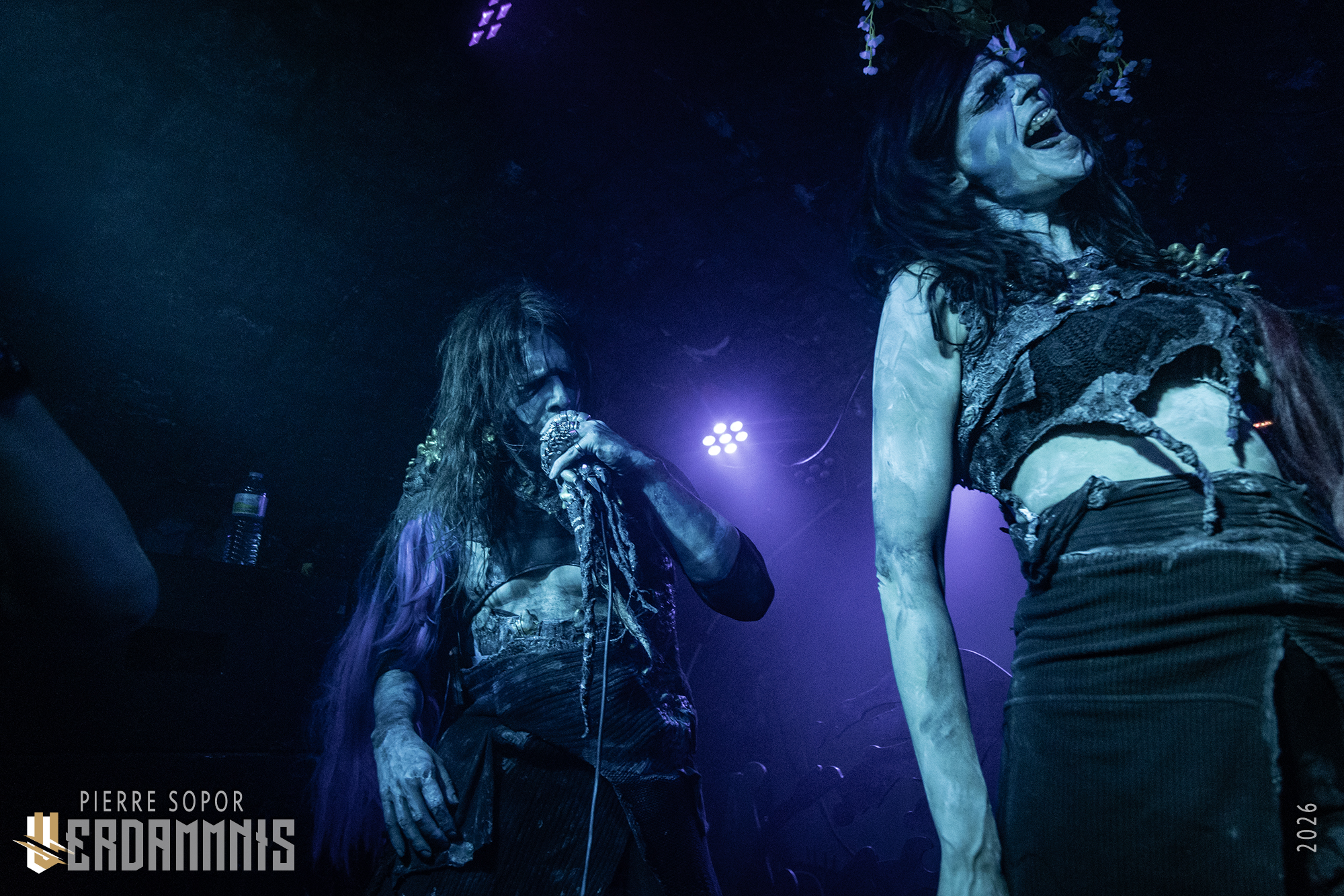
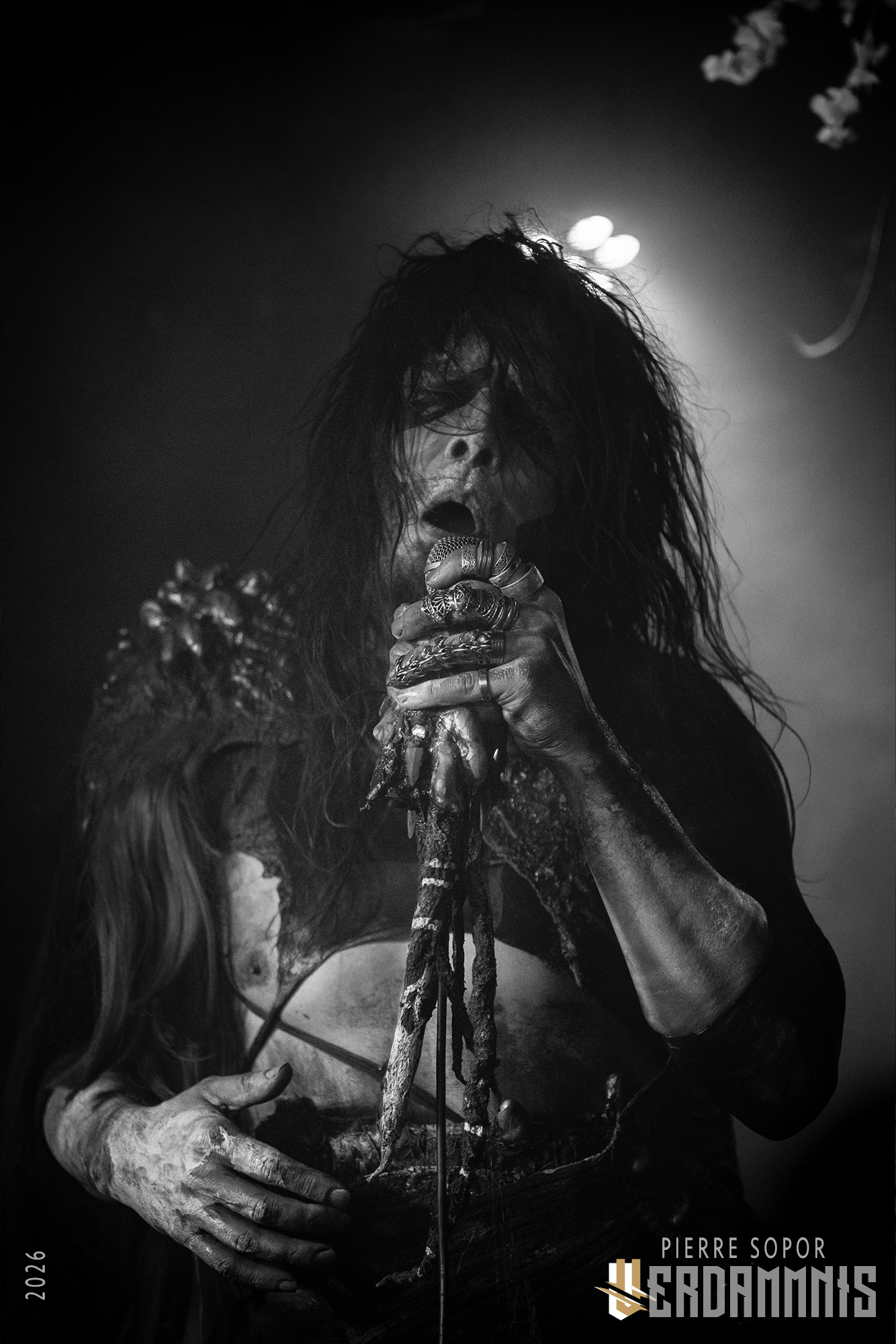
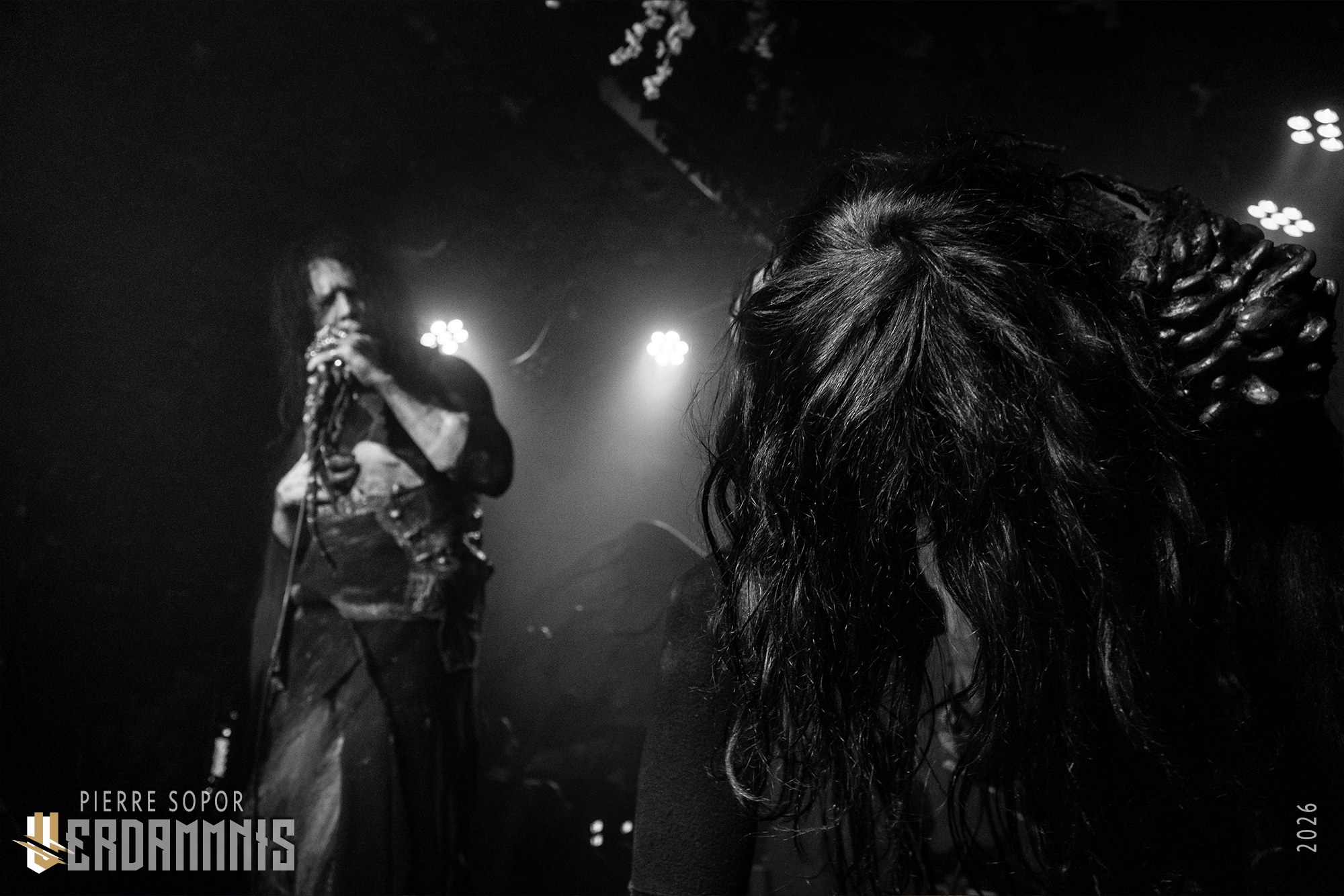
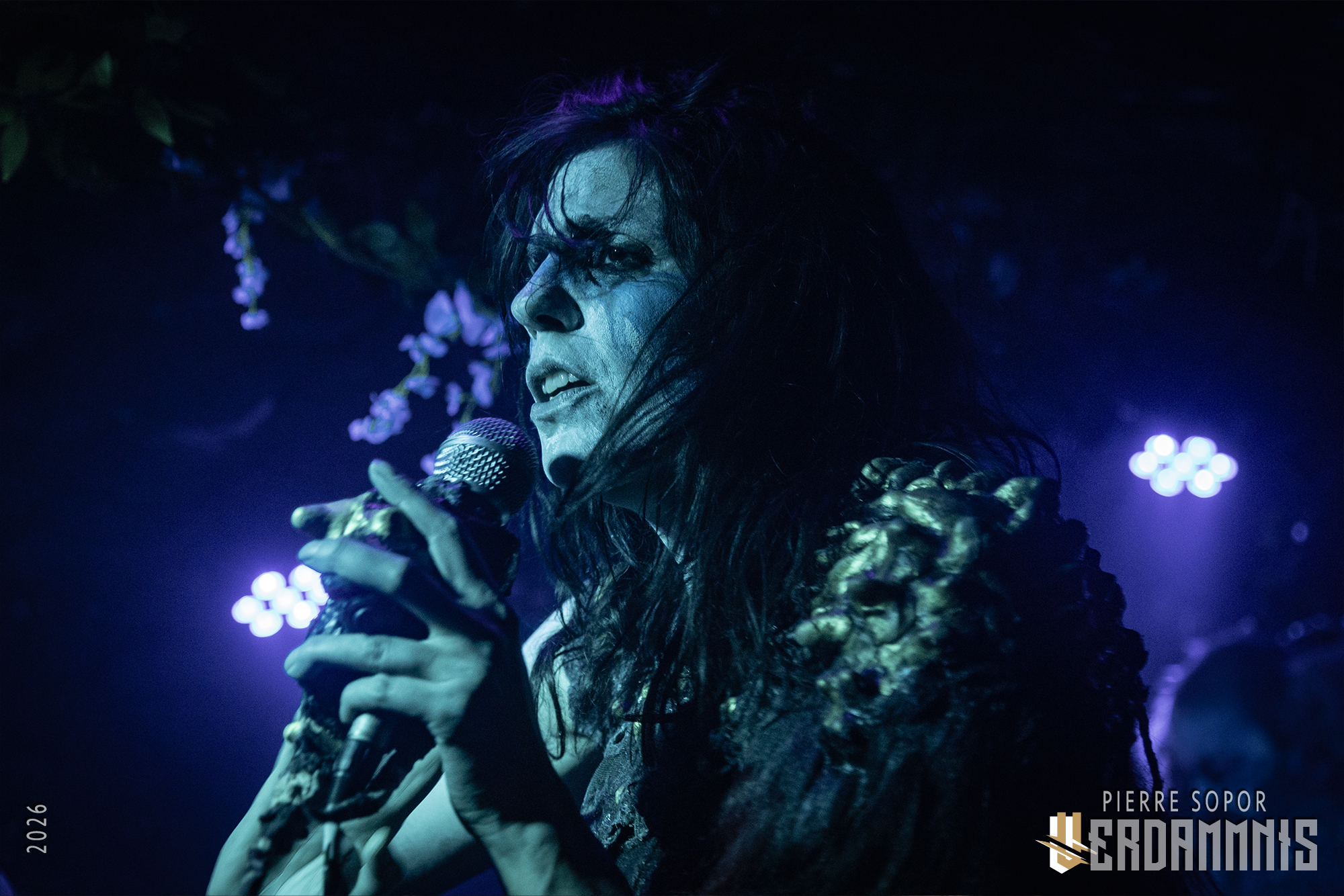
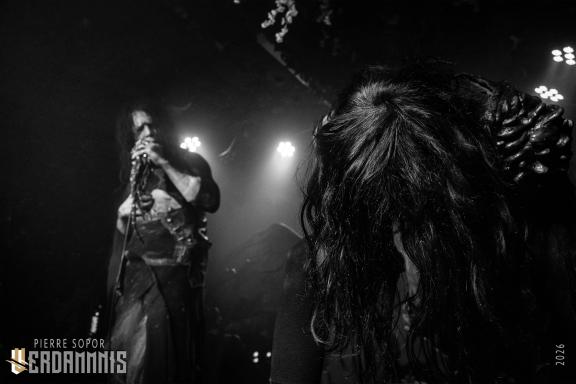
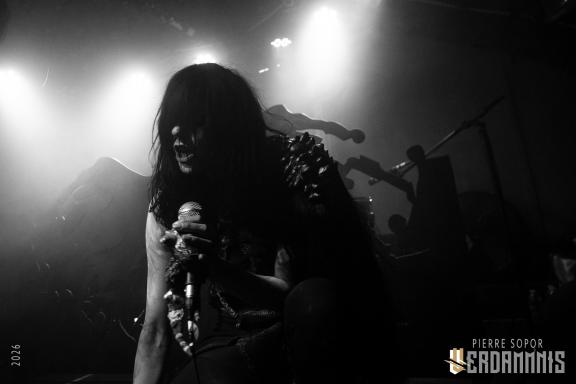
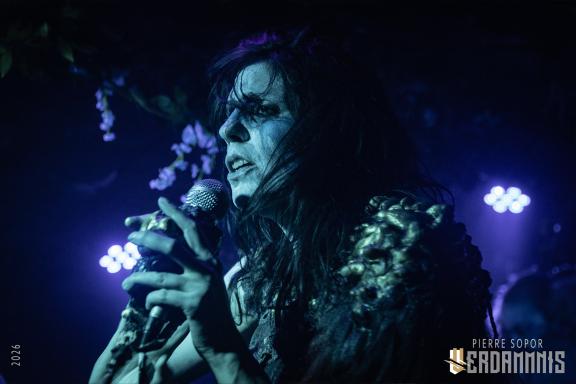
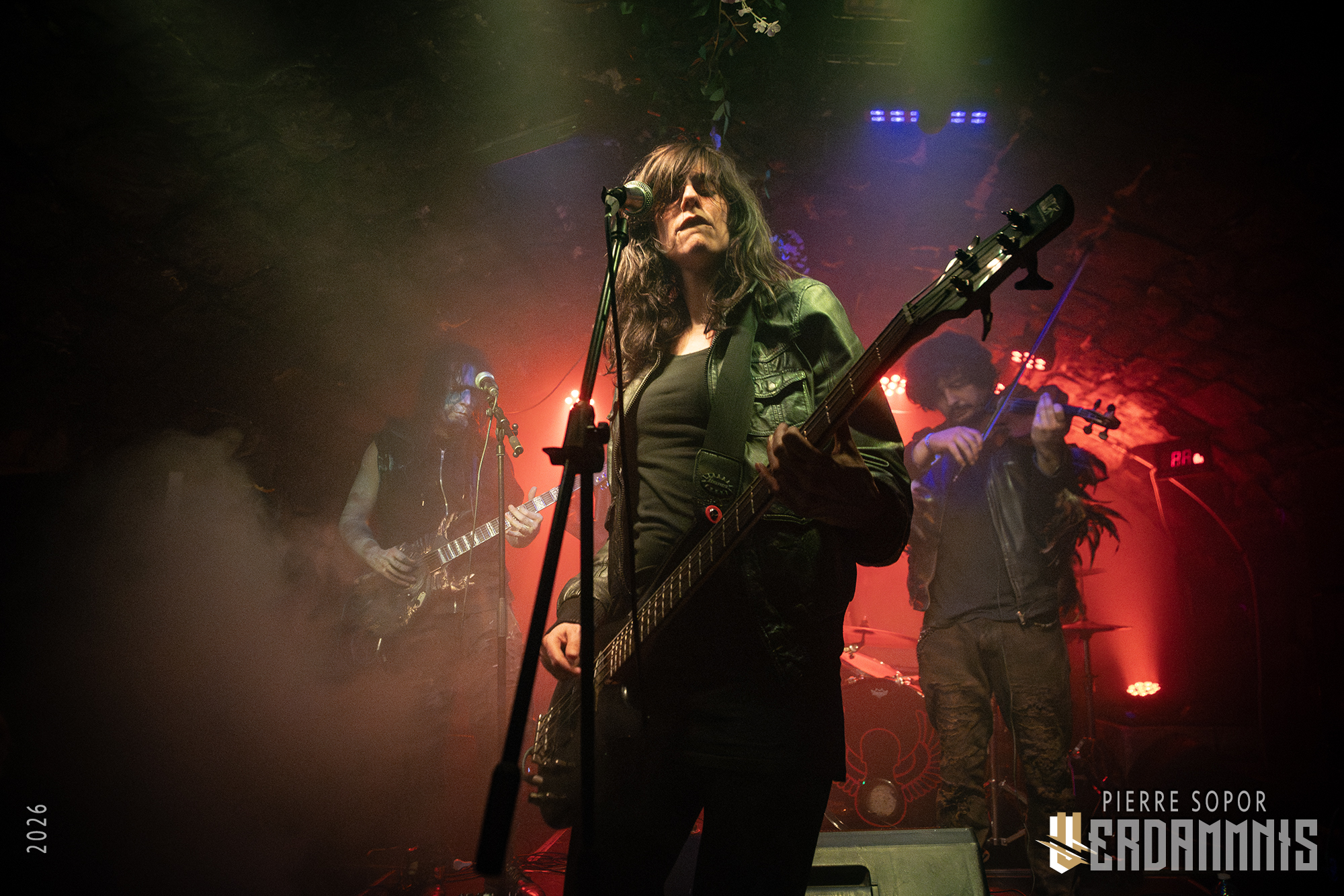
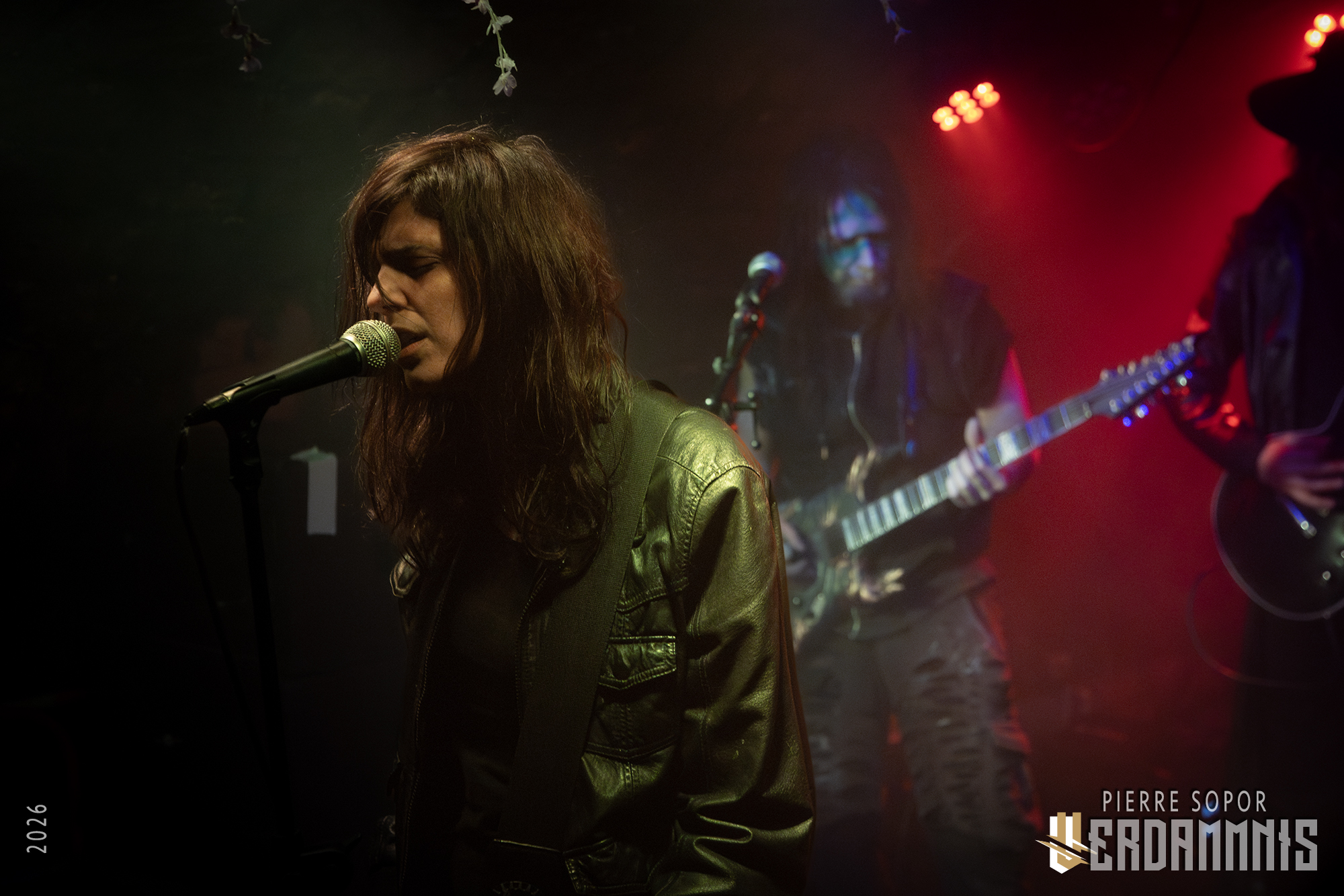
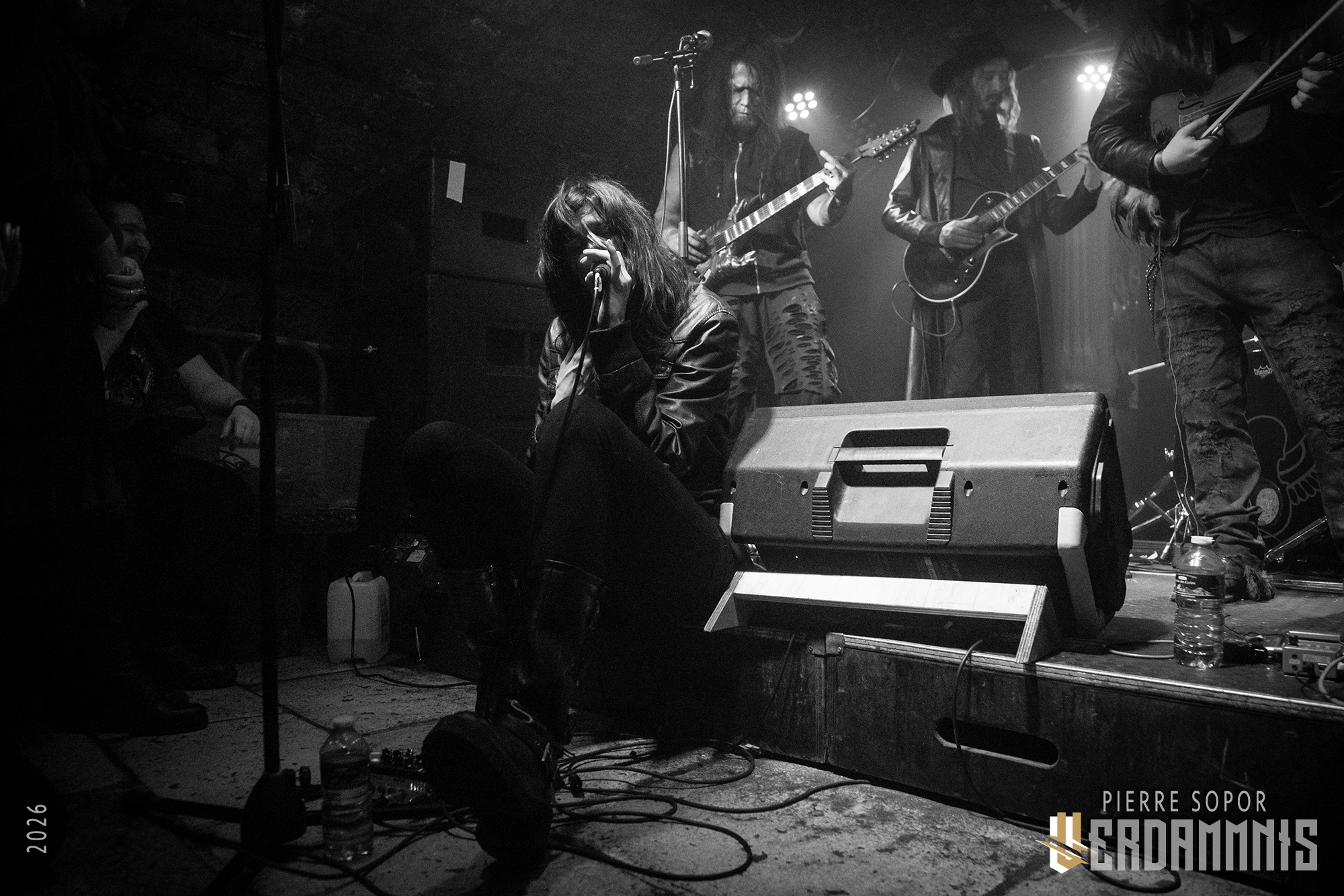
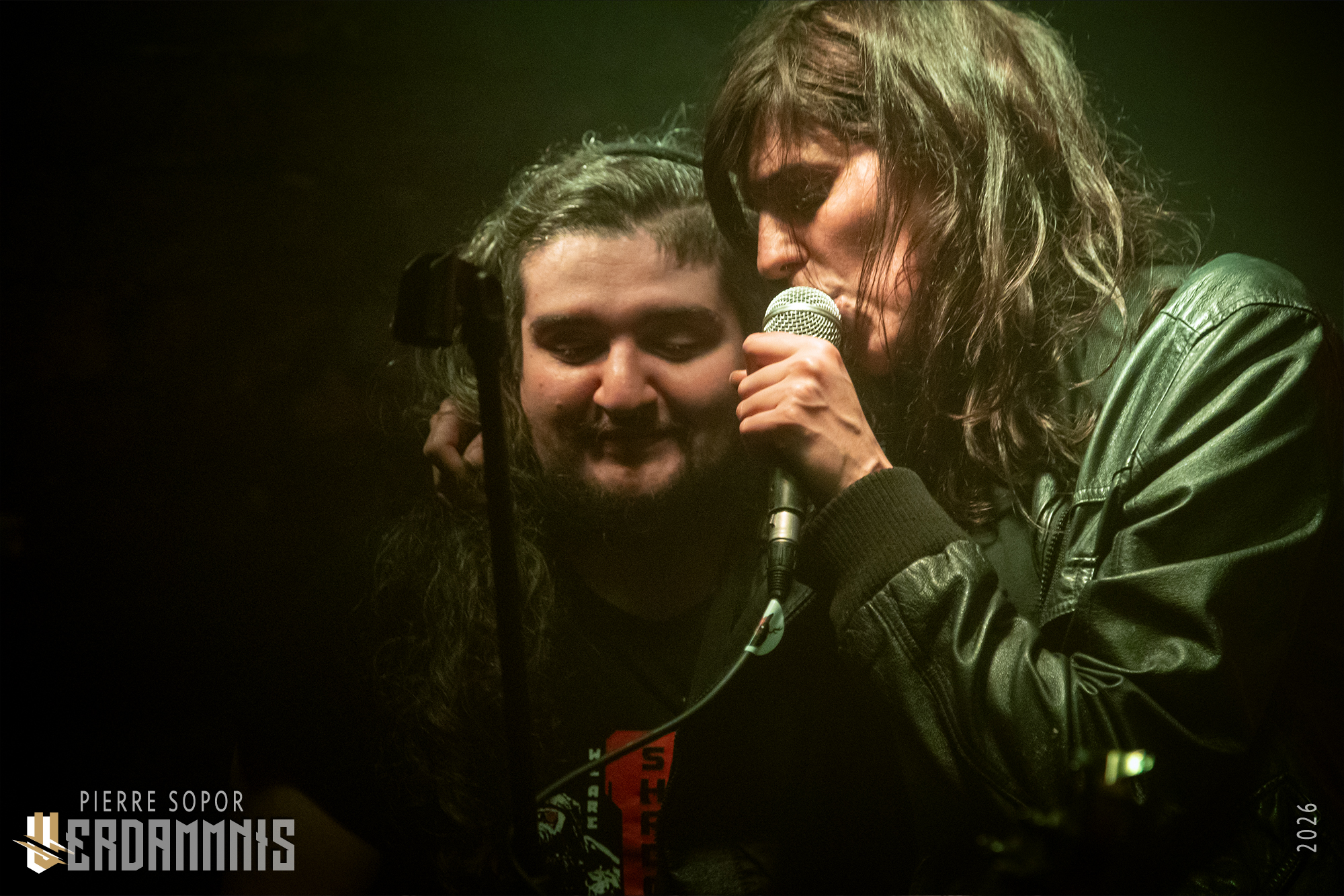
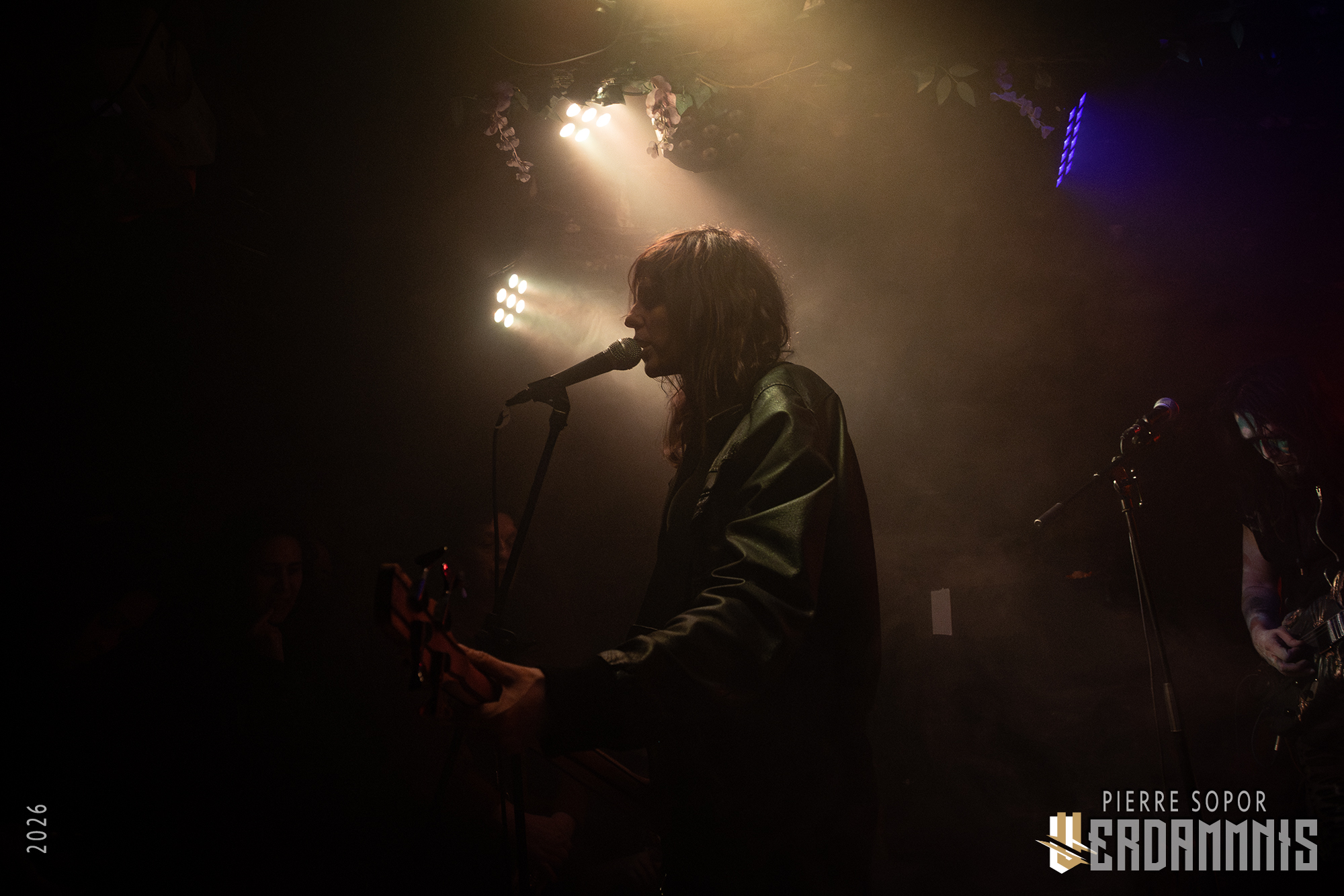
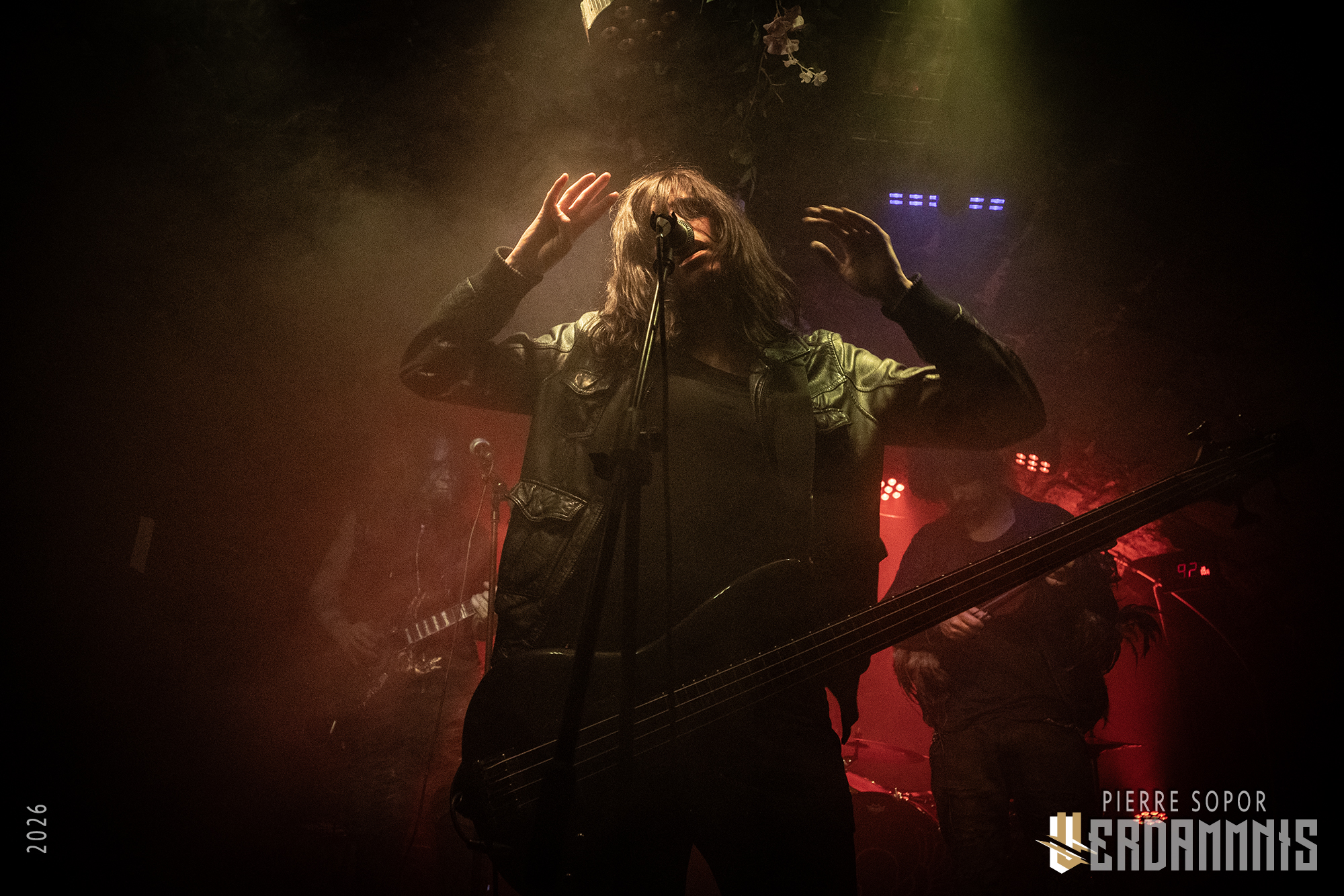
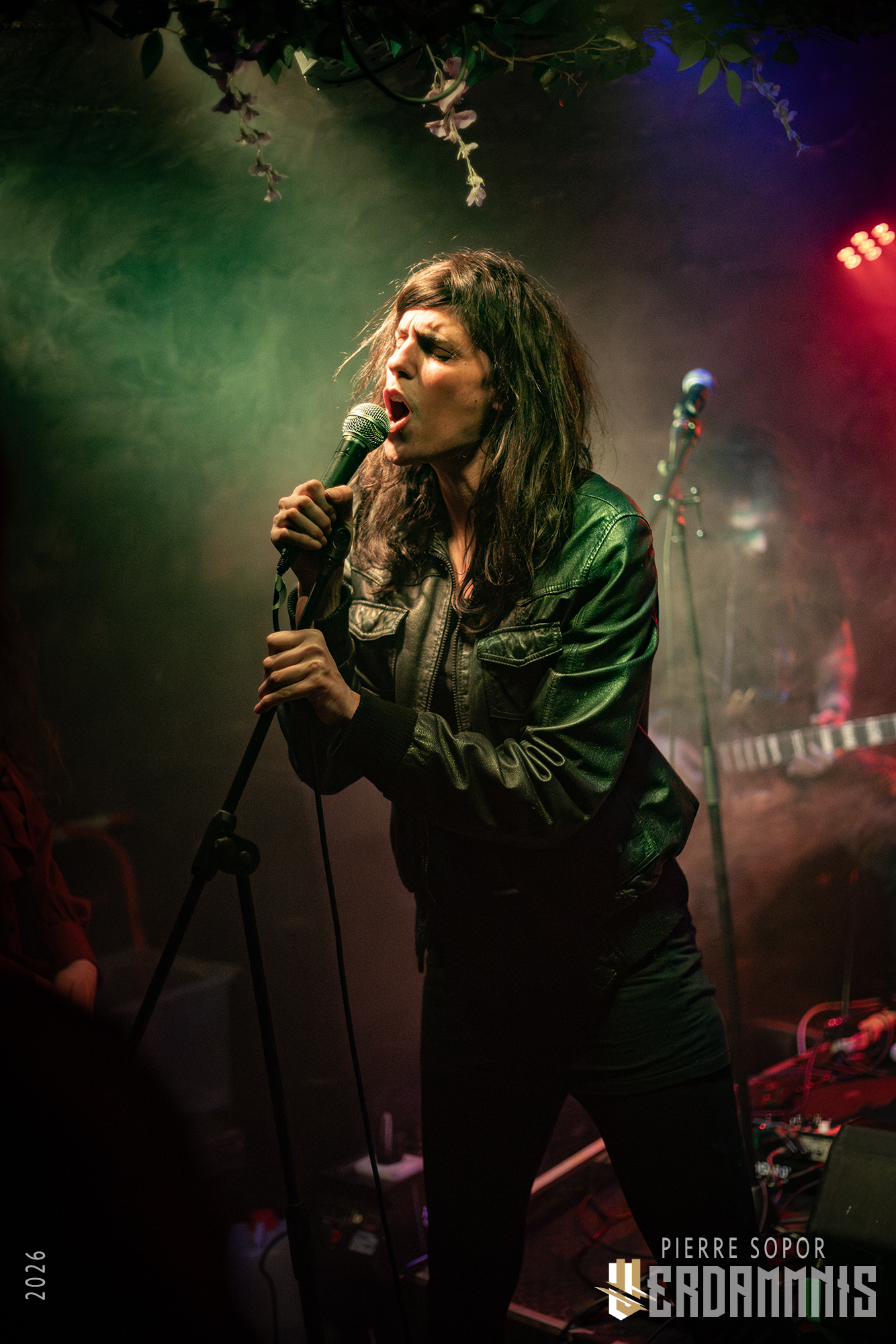
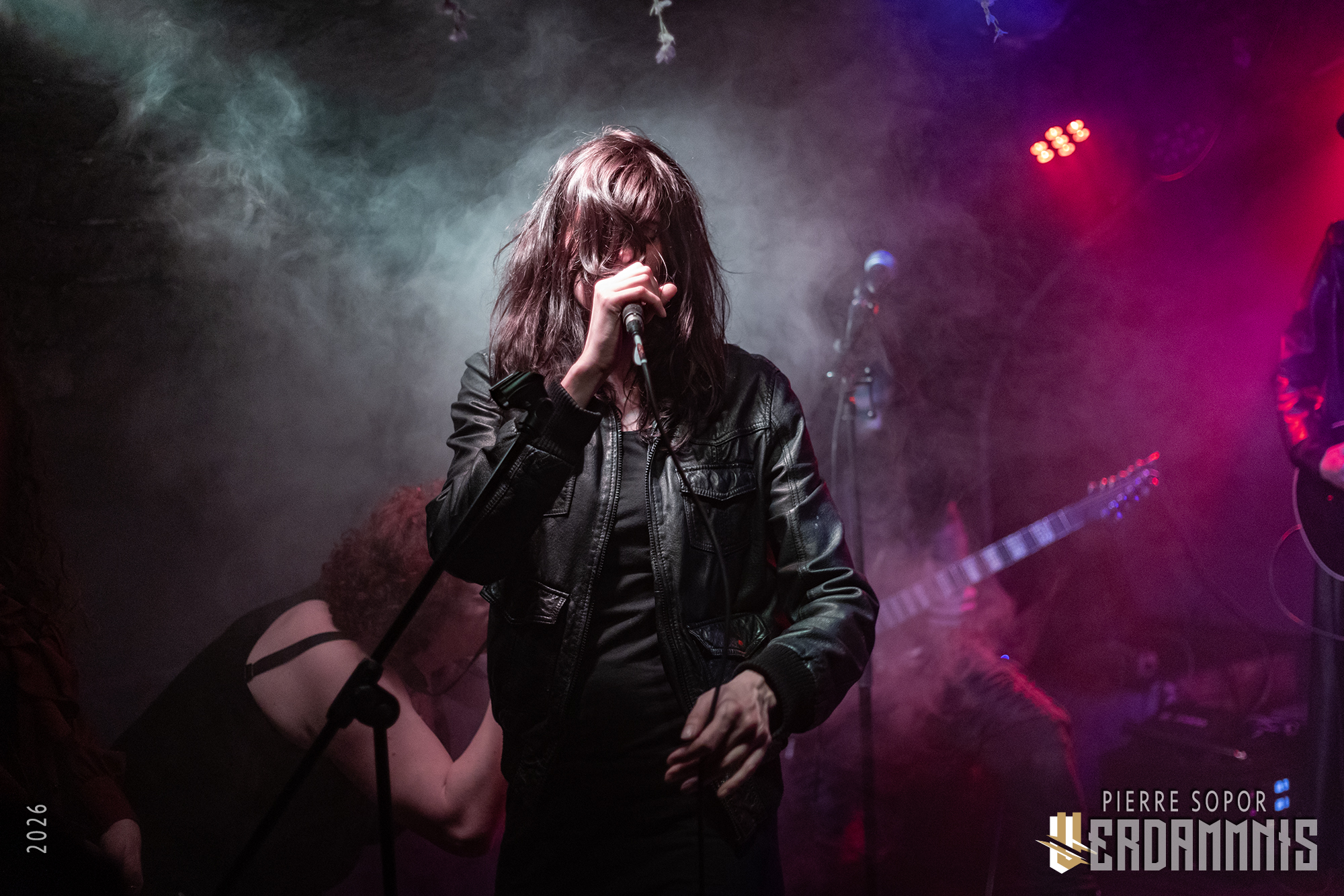
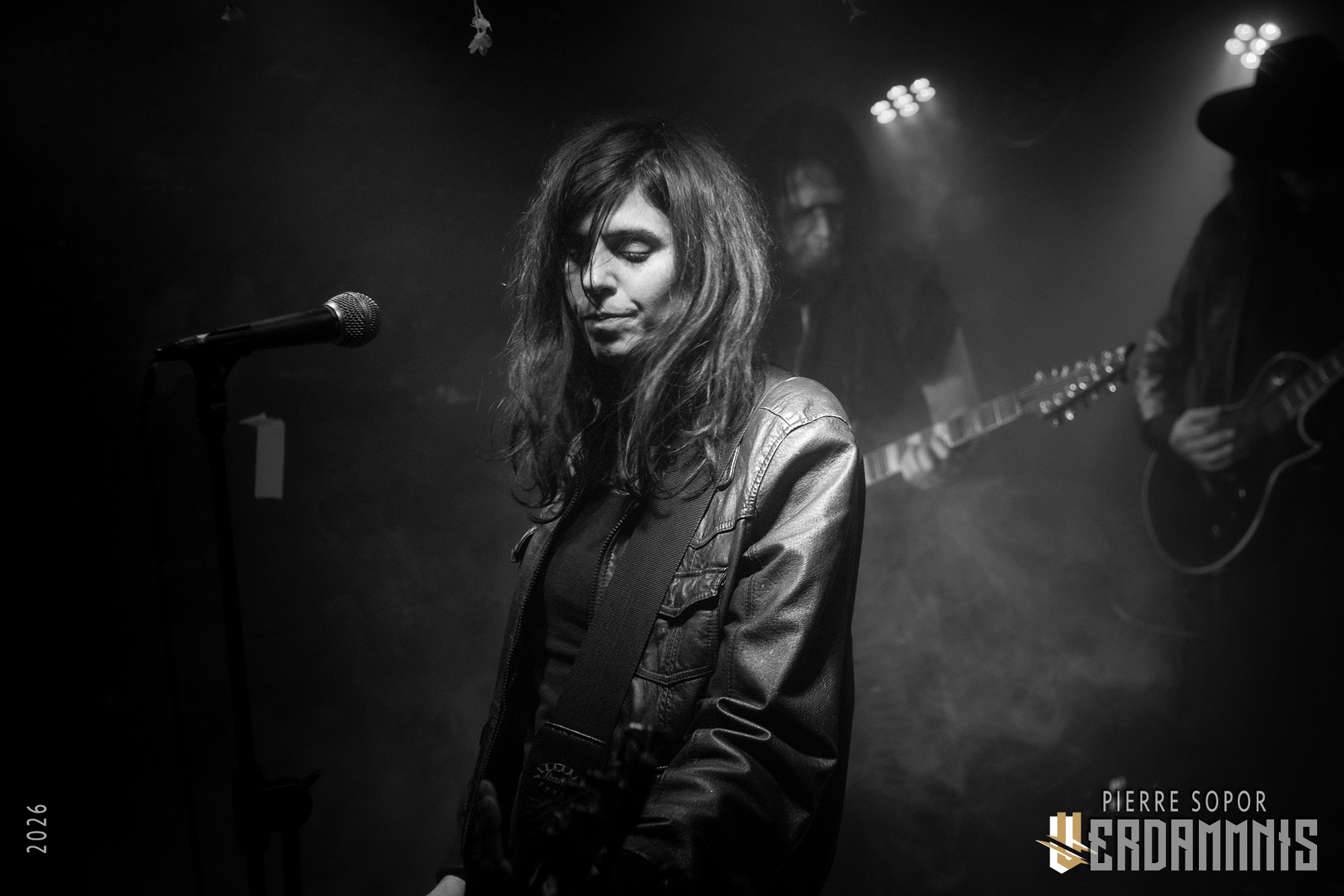
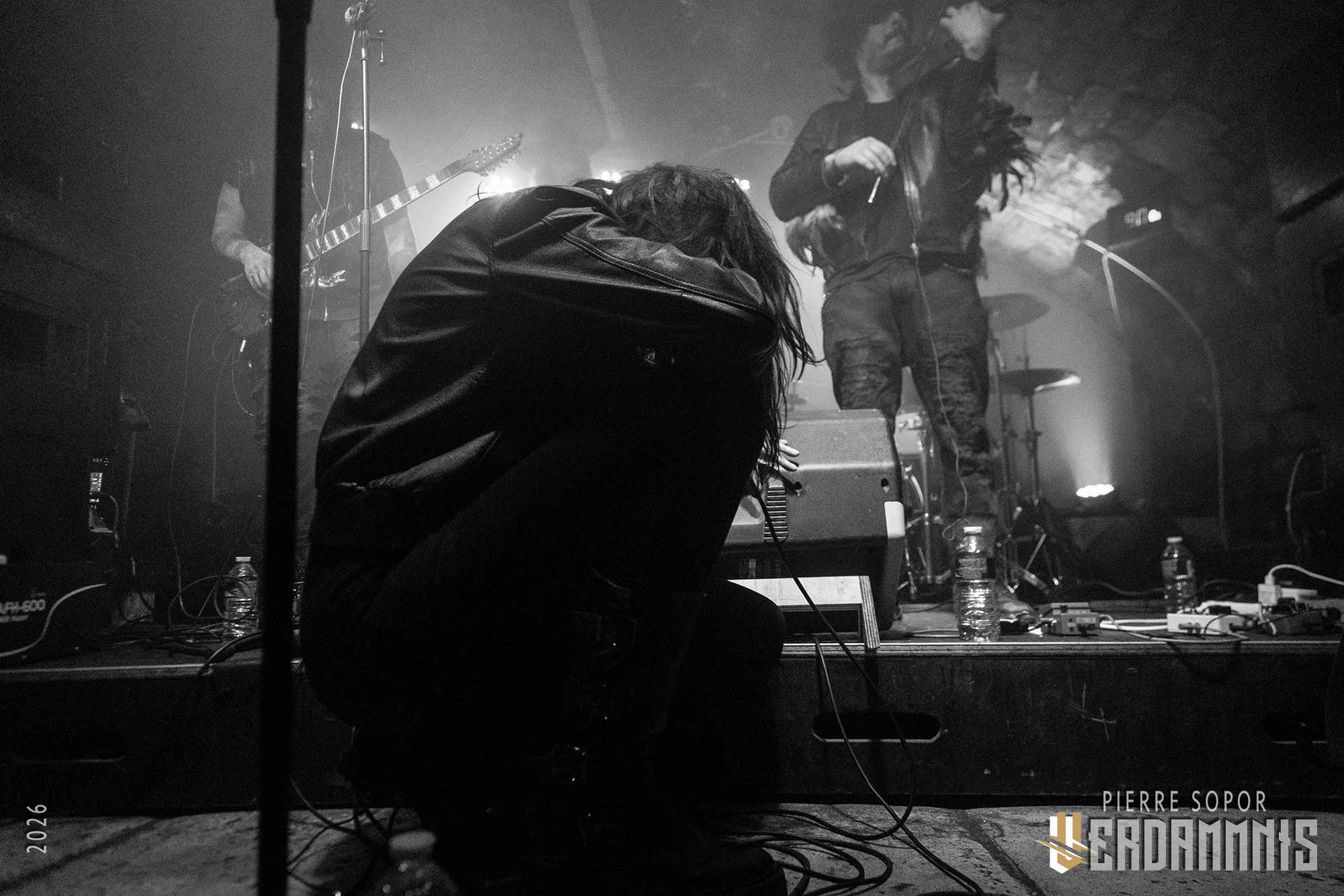
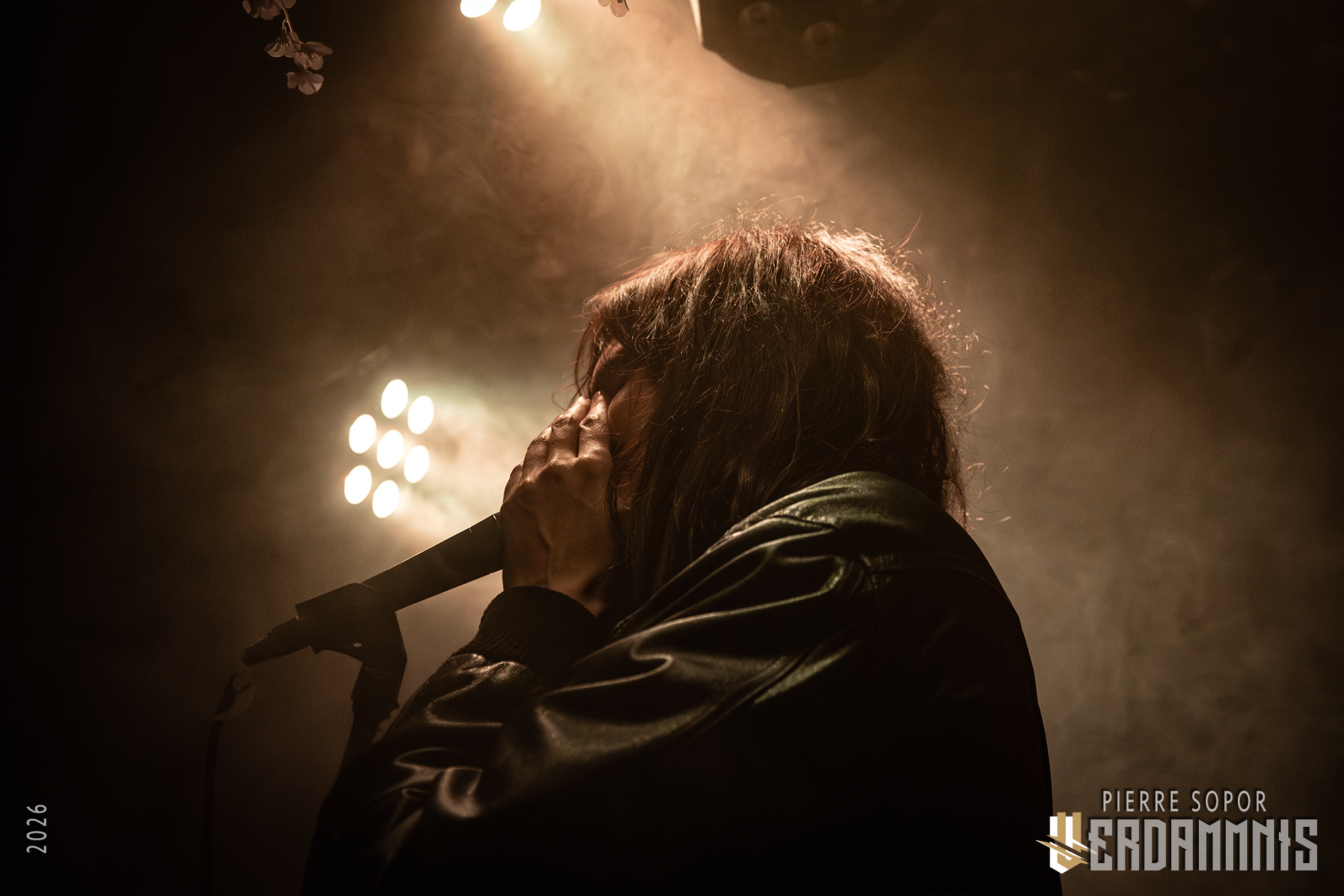
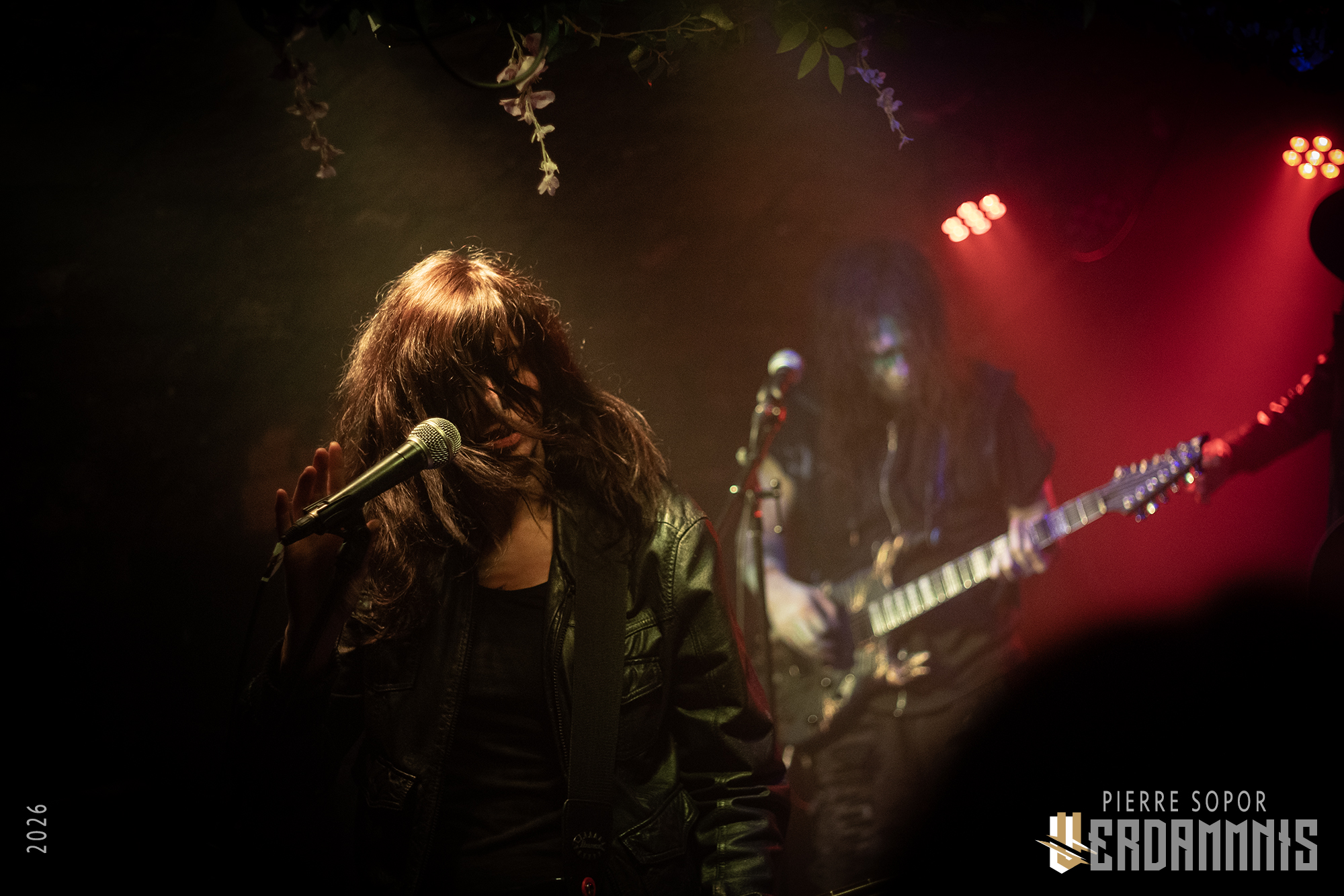
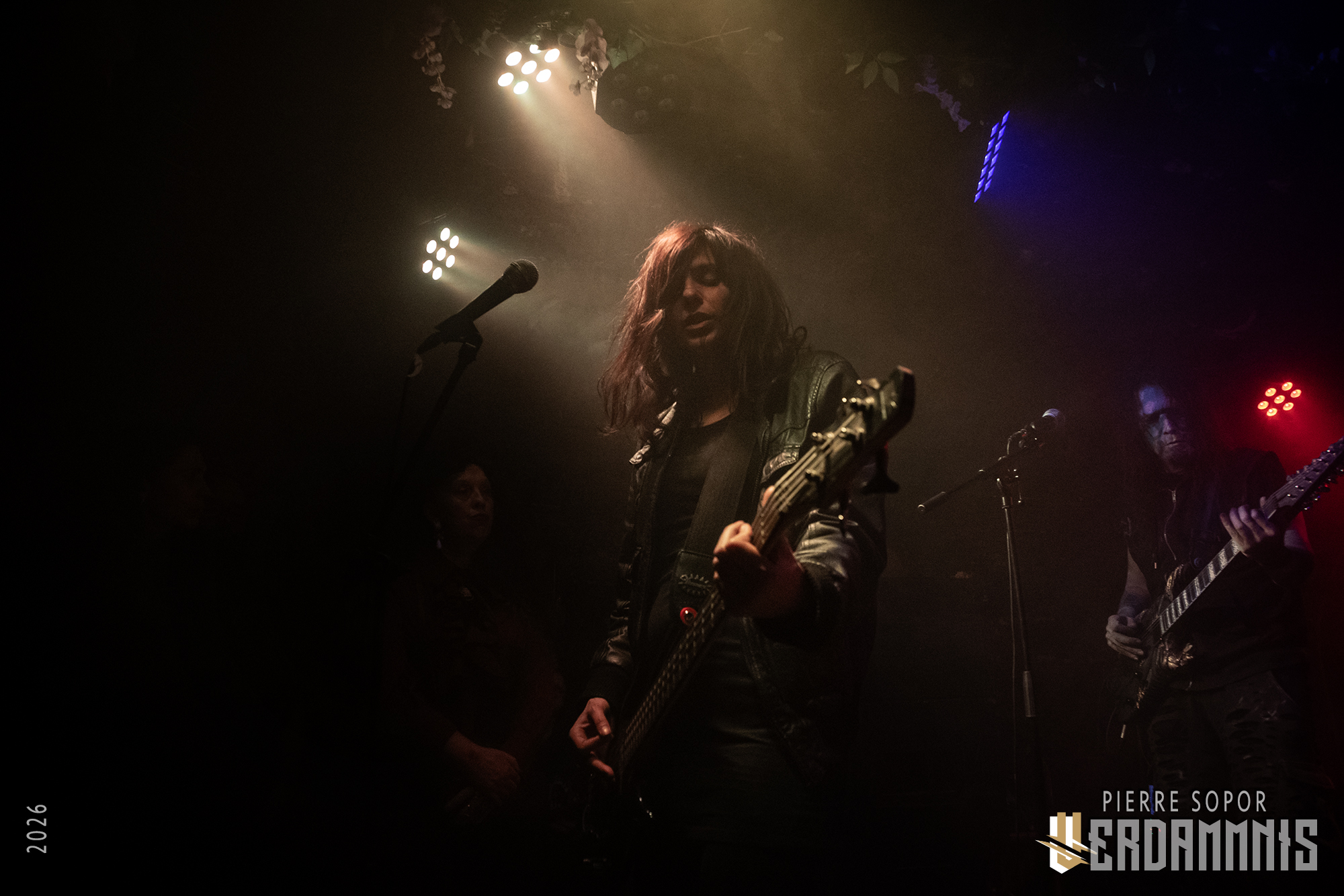
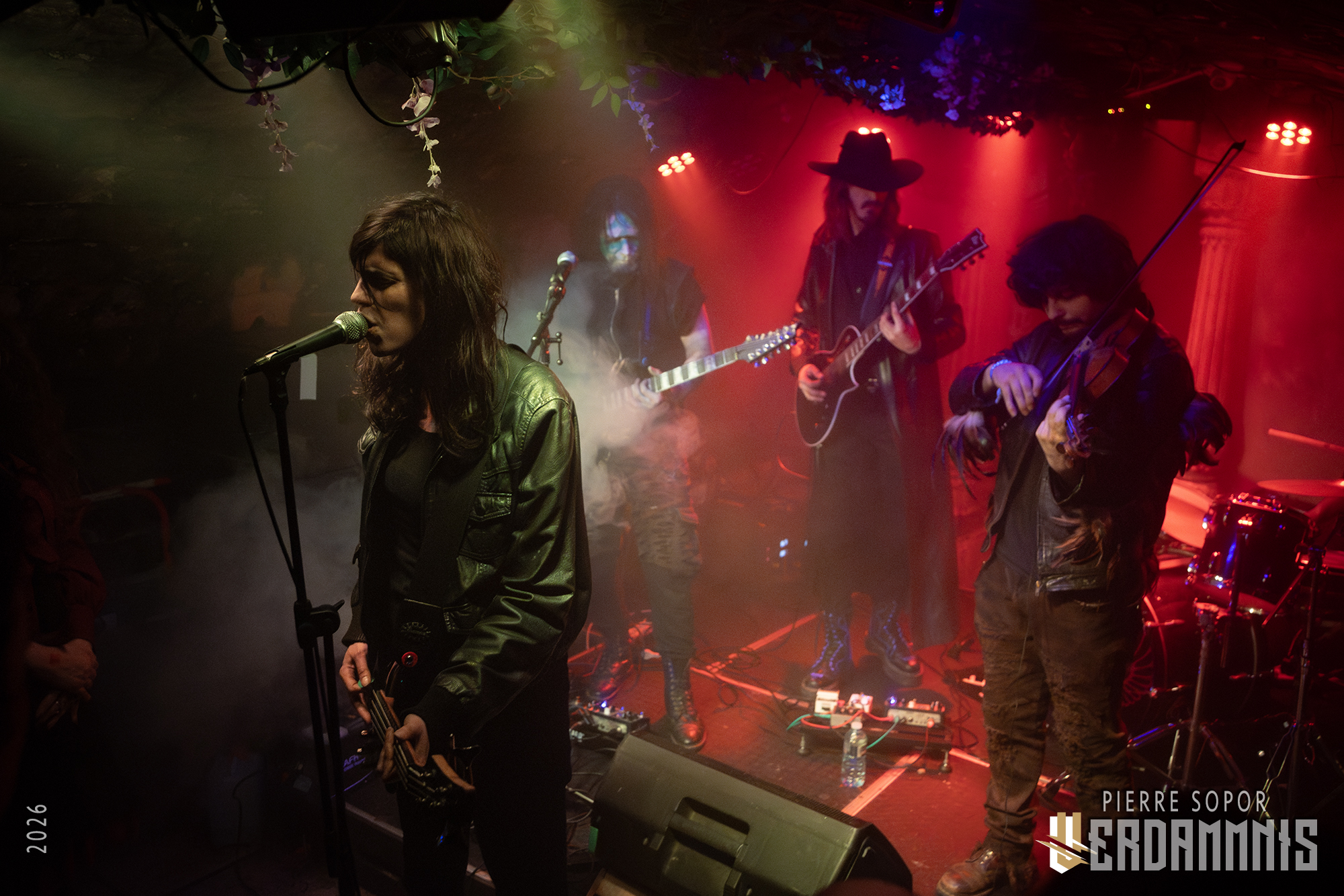
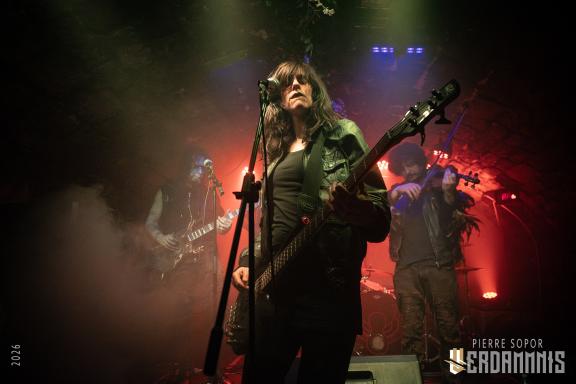
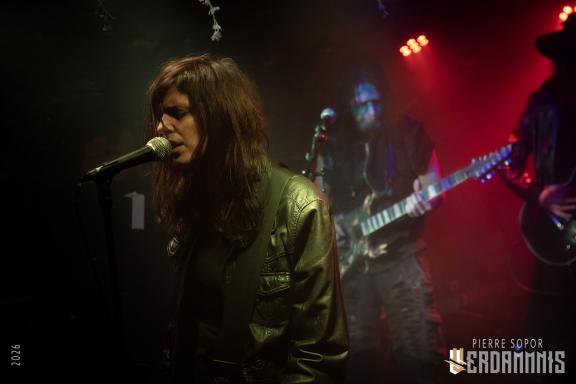
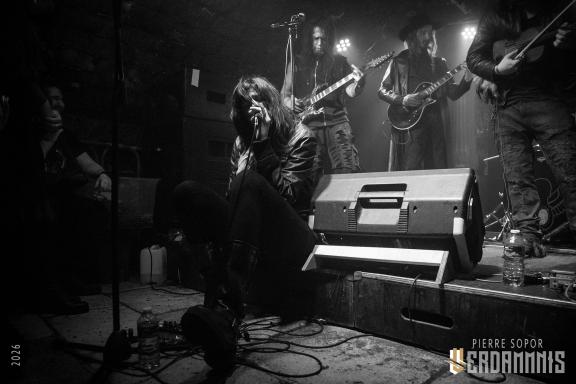
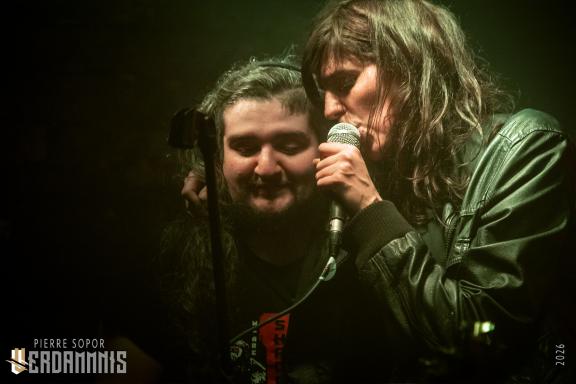
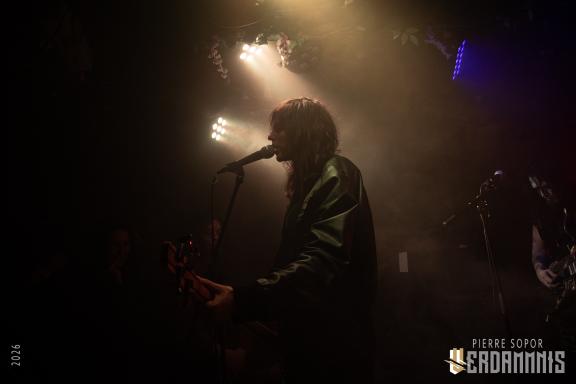
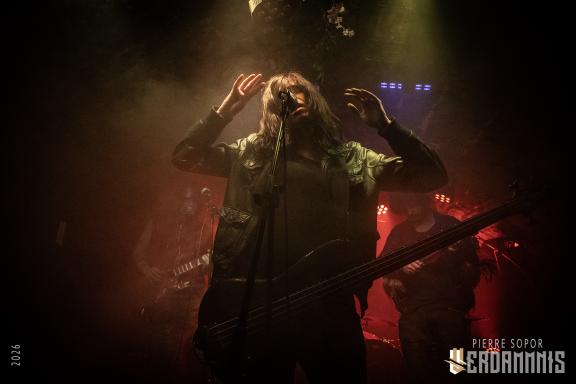
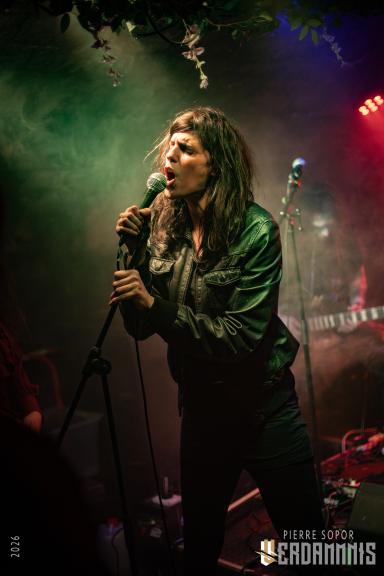
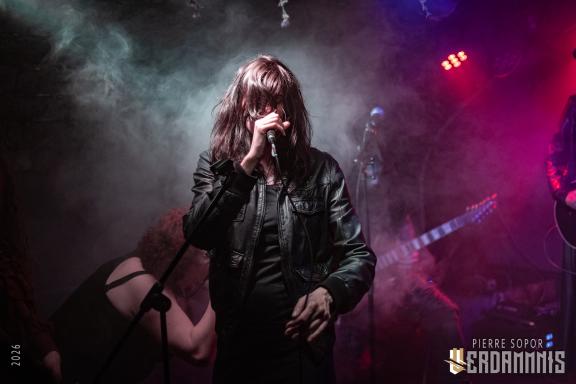
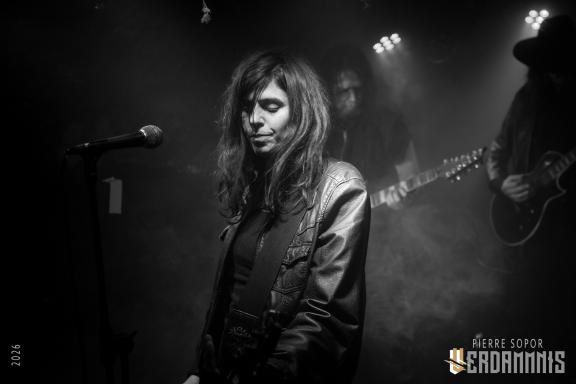
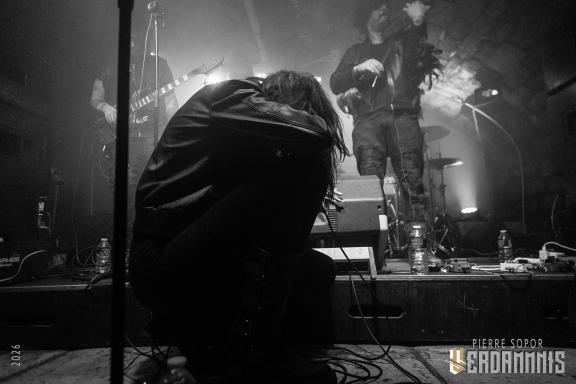
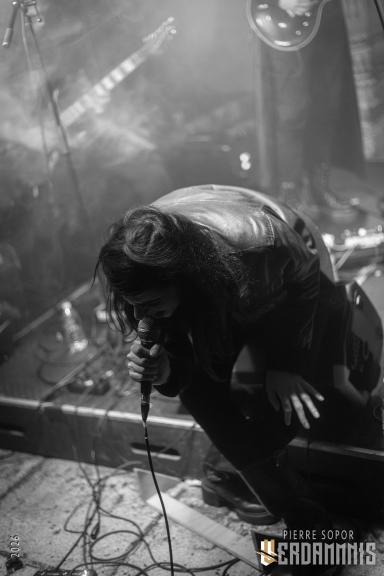
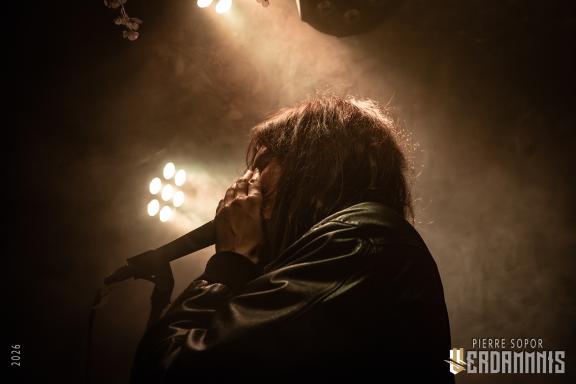
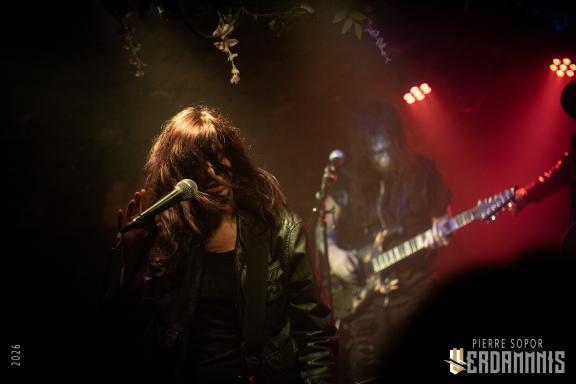
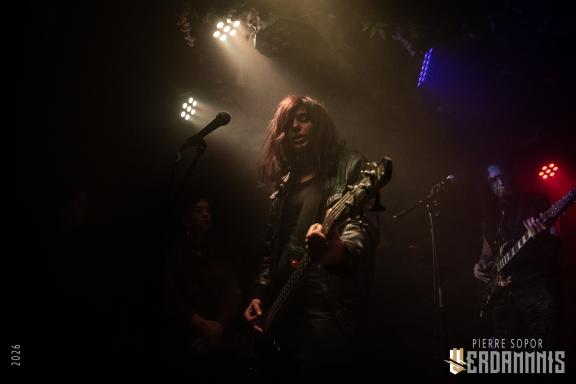
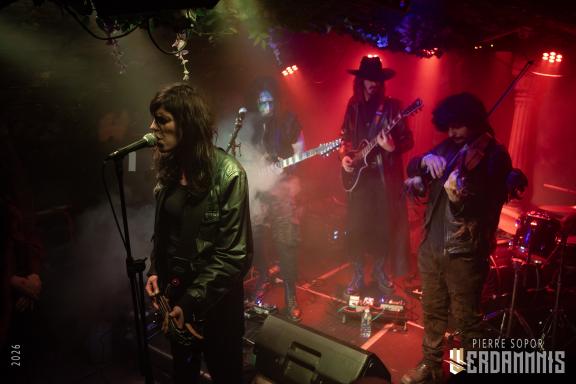
There are a lot of people on stage. Too many for Laure Le Prunenec to fit in. And then, as she would later say, she is a little too tall anyway: flowers hang from the ceiling and would have tickled the top of her head. How would that have looked? So she spends the whole concert in the audience. We huddle under the arches, approaching the microphone stand while trying to maintain a respectful distance, especially as the artist is waving his bass around and we'd rather not die just yet, and then, without further ado, the ritual begins.
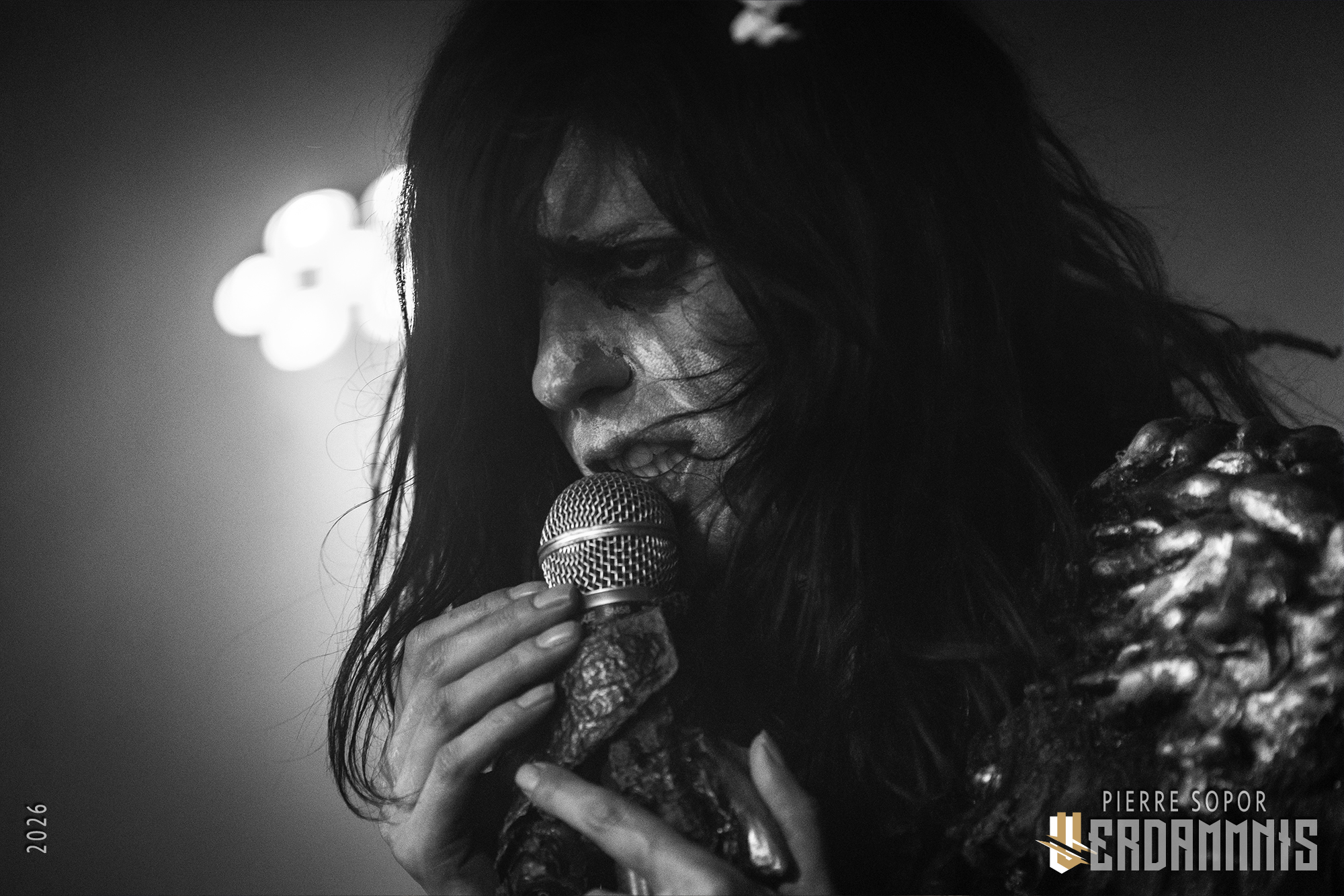
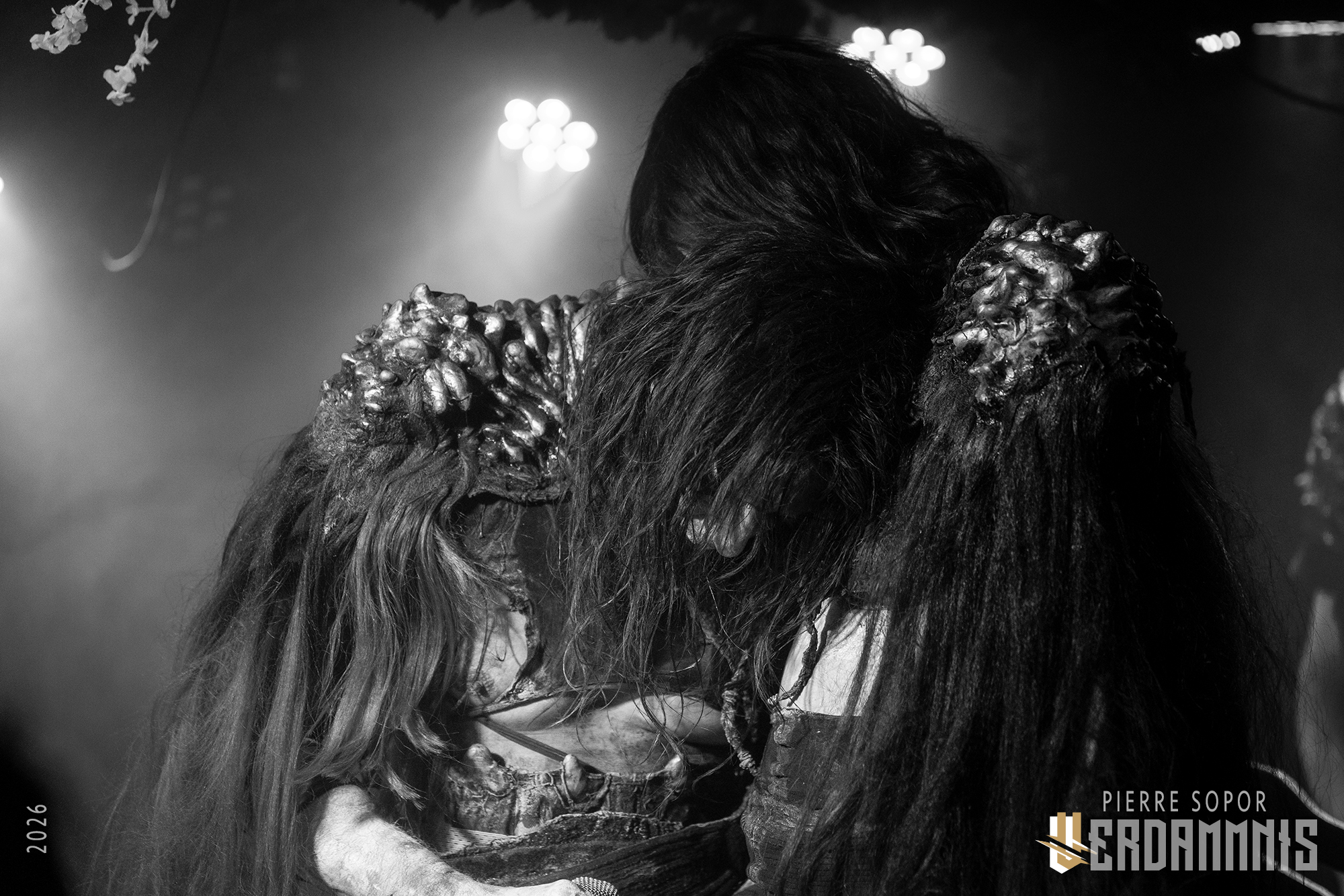
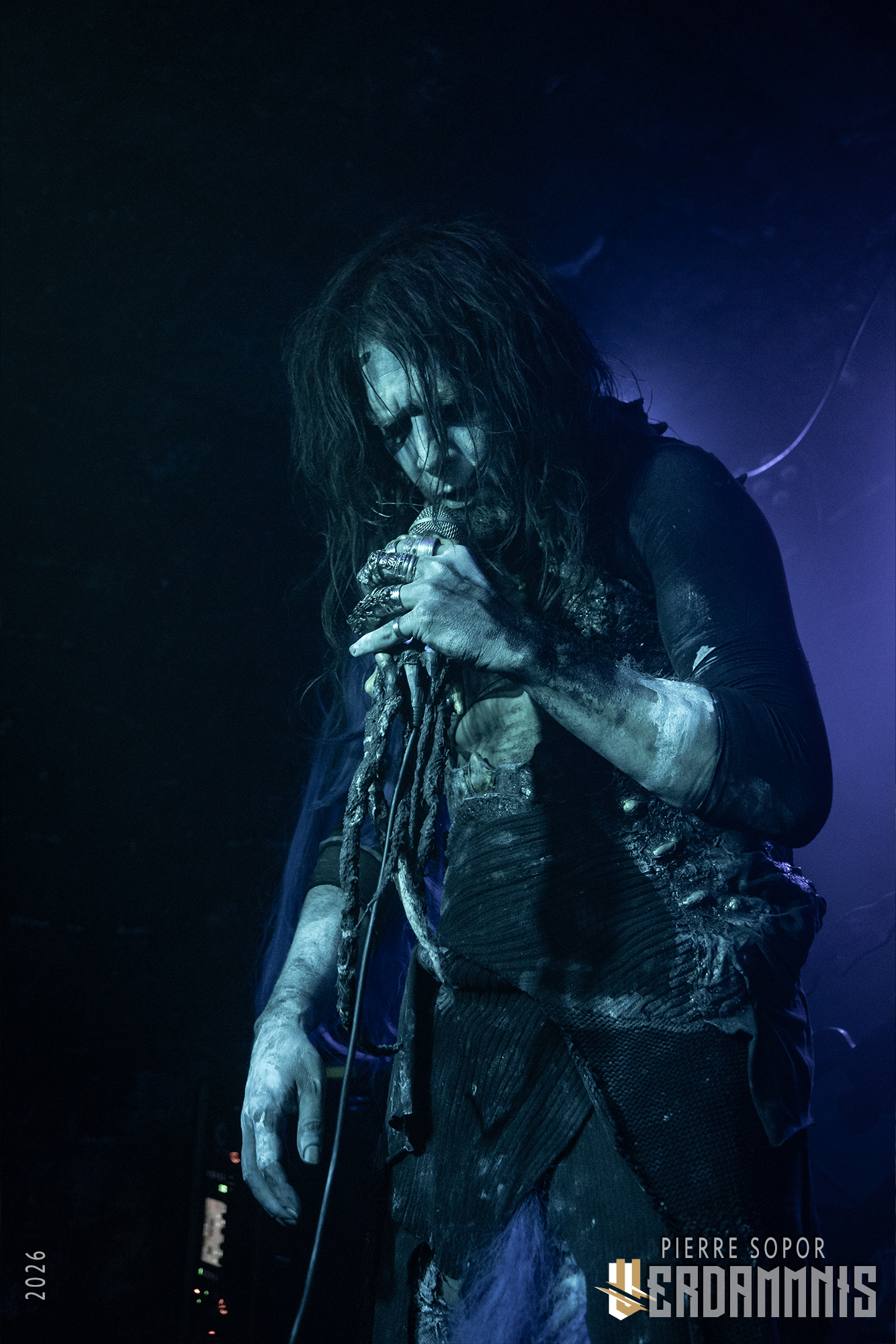
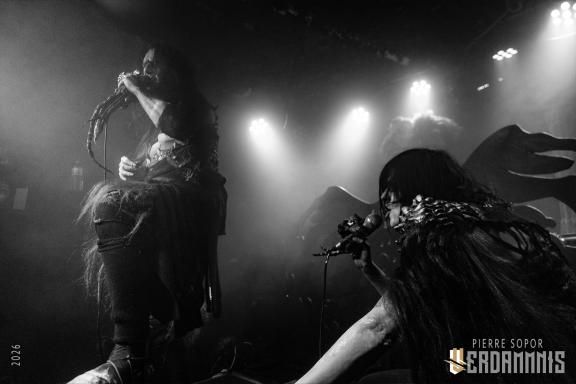
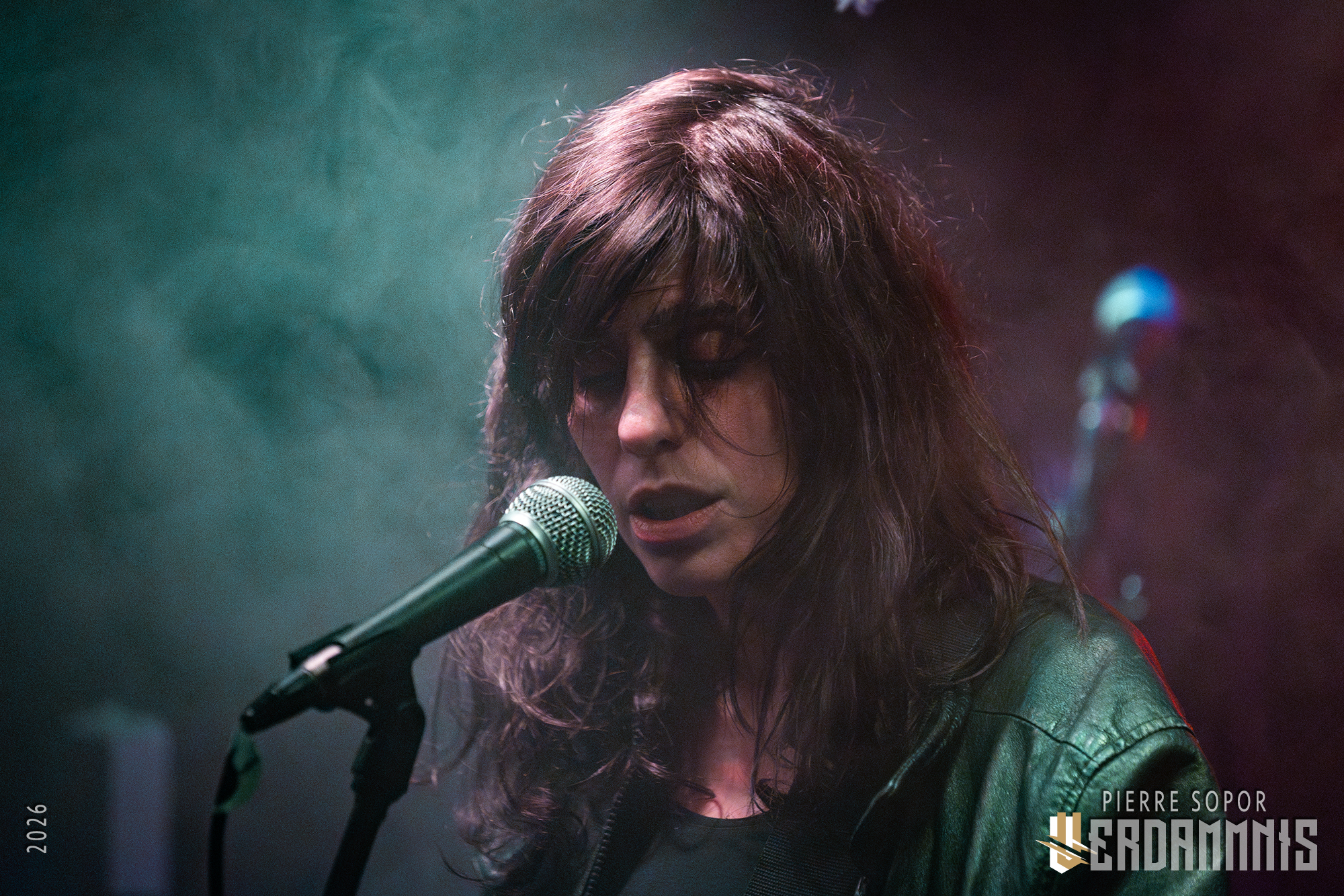
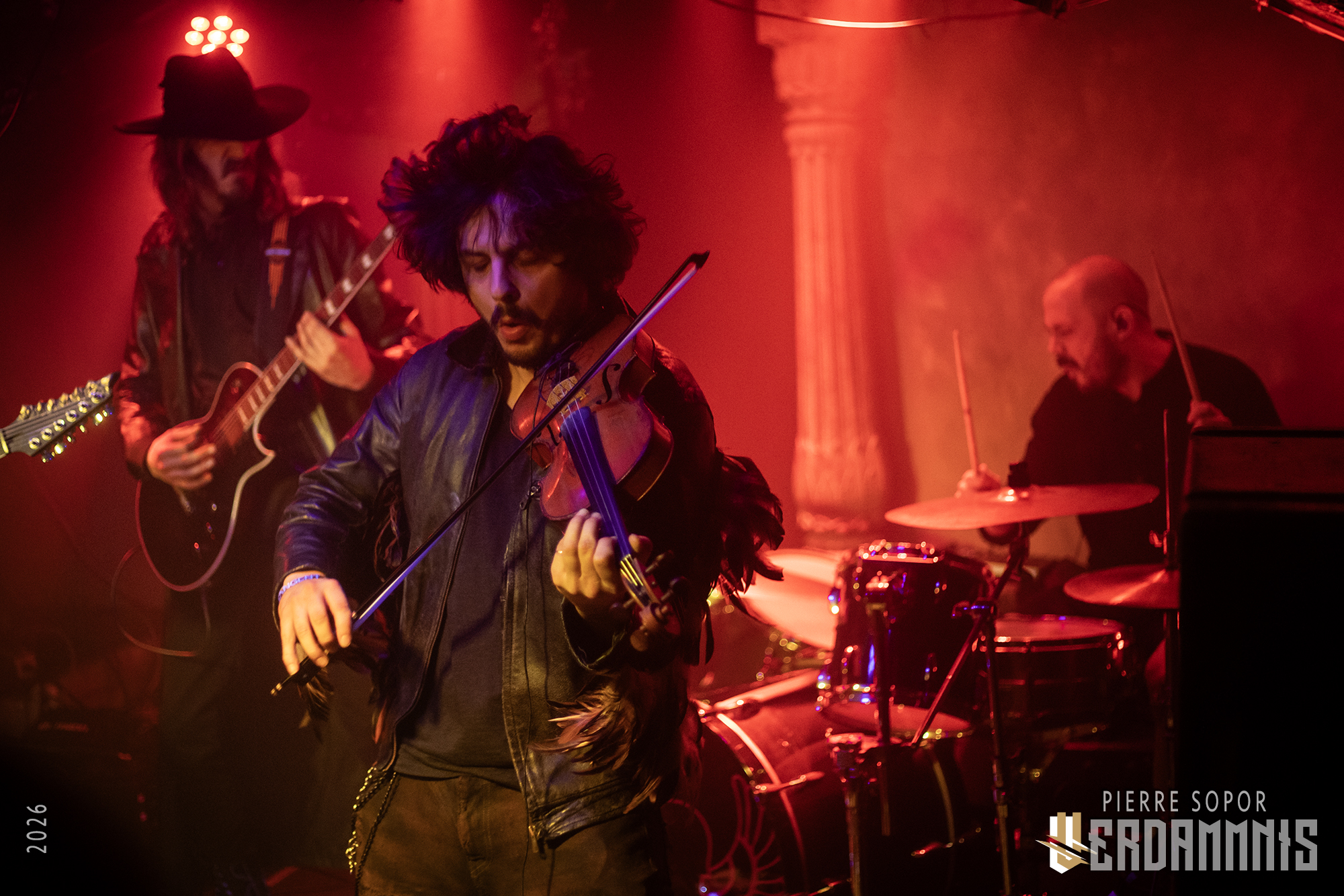
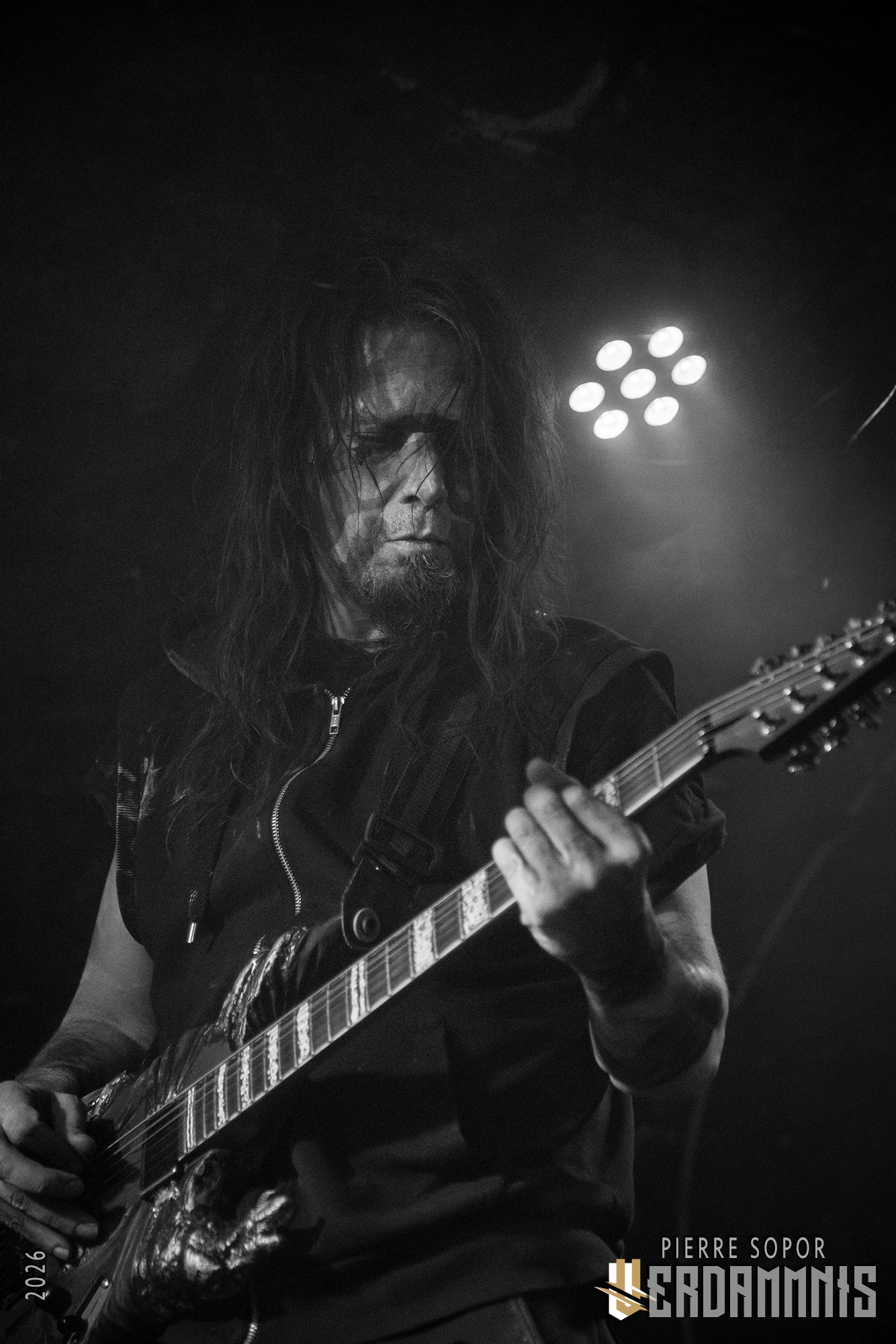
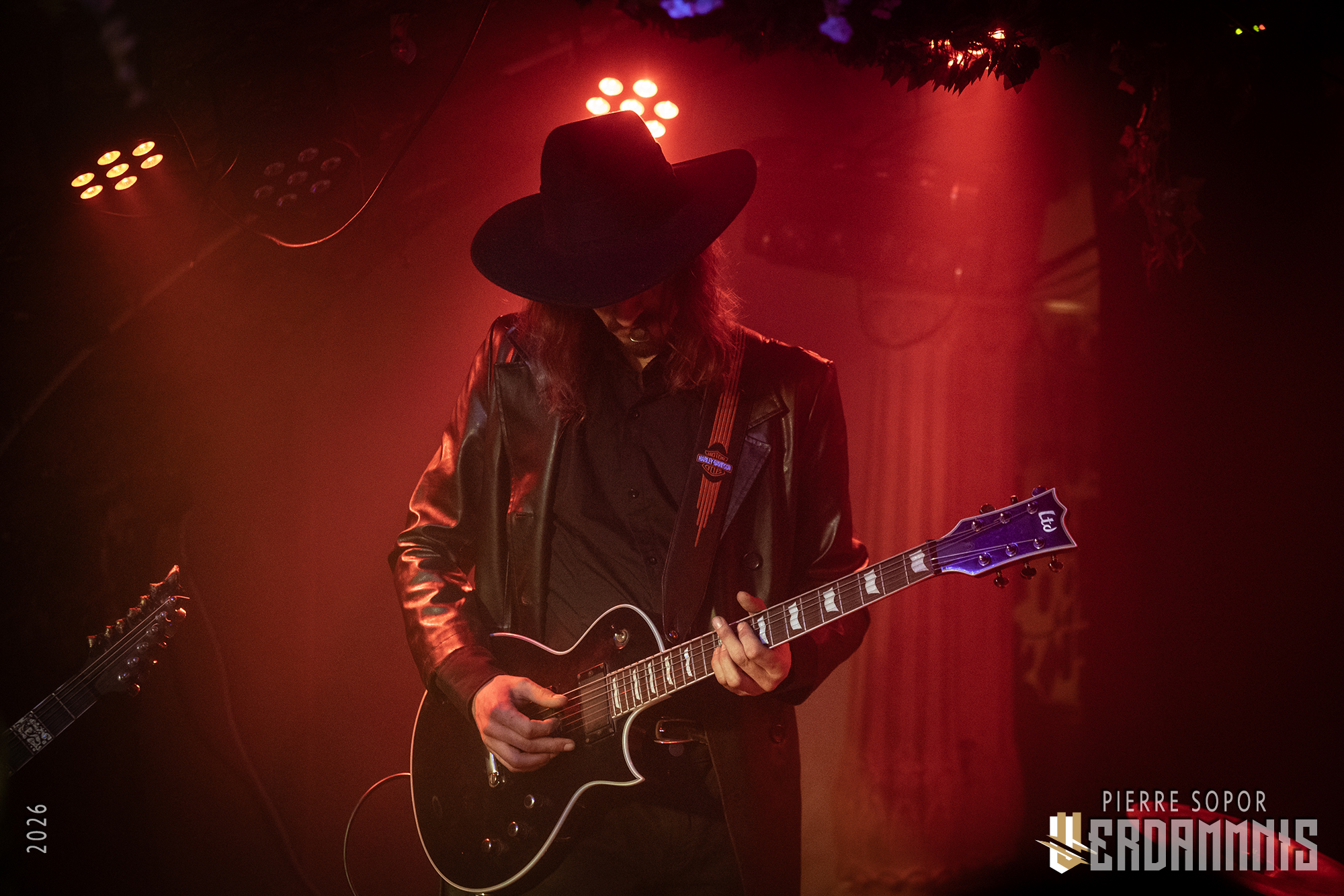
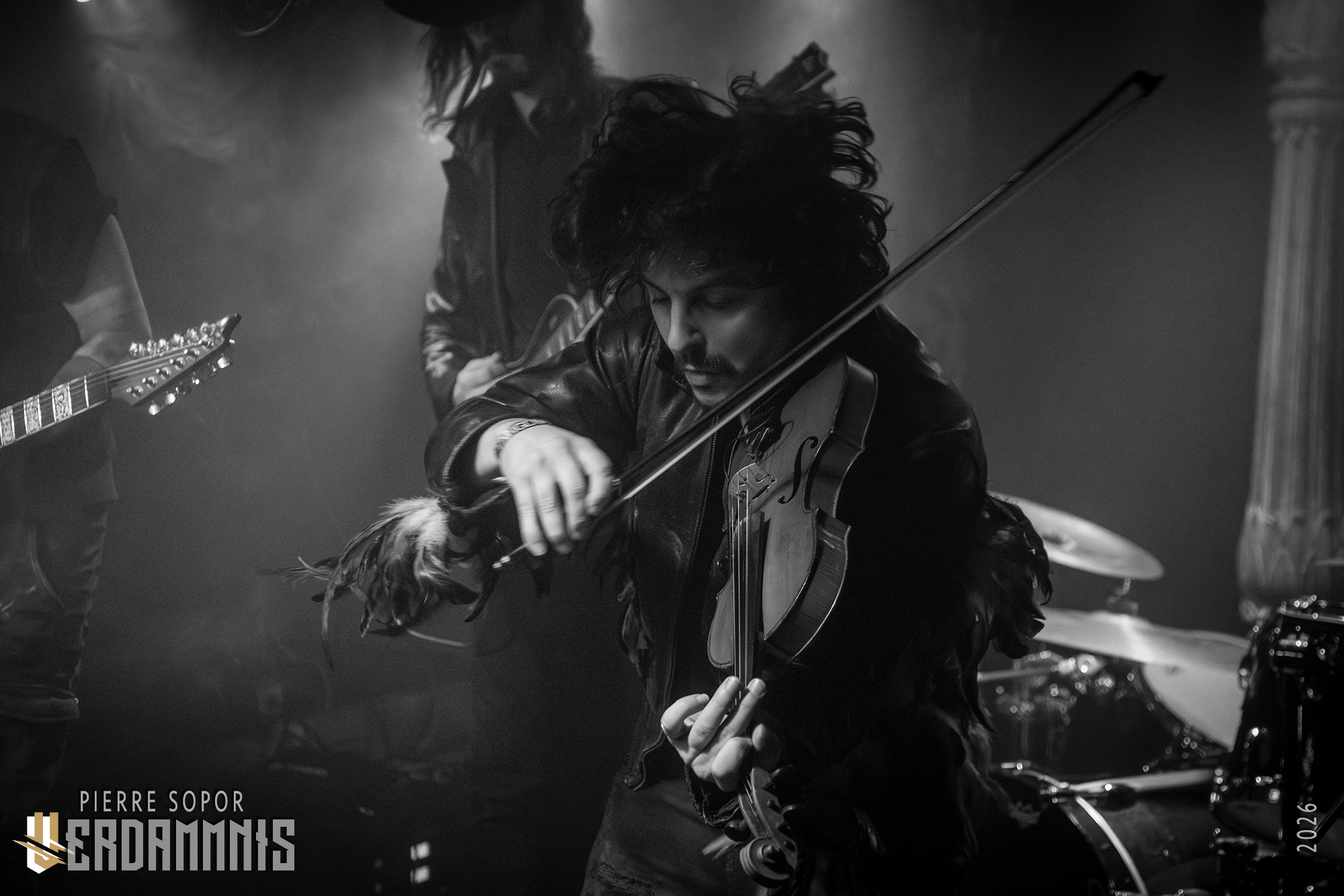
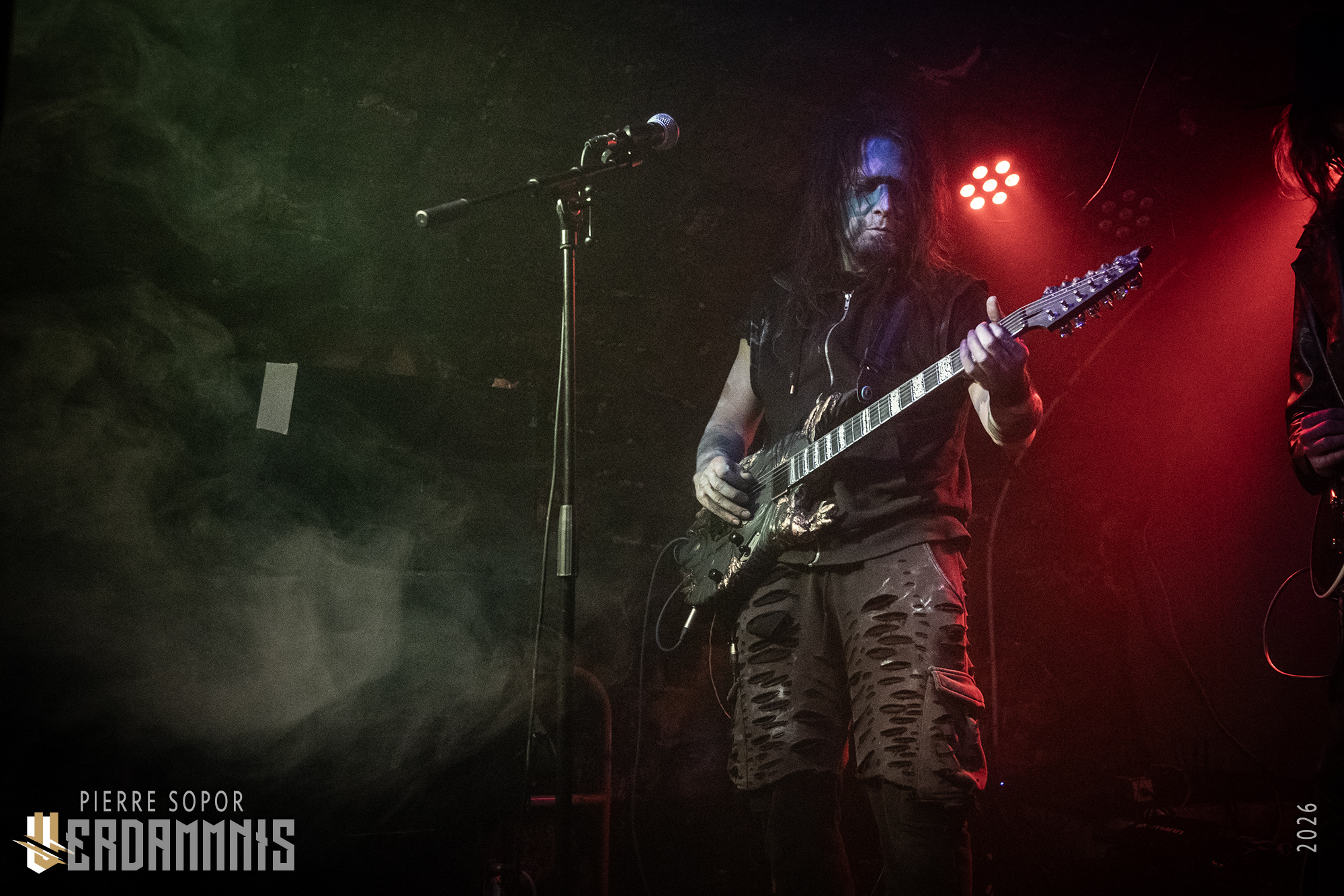
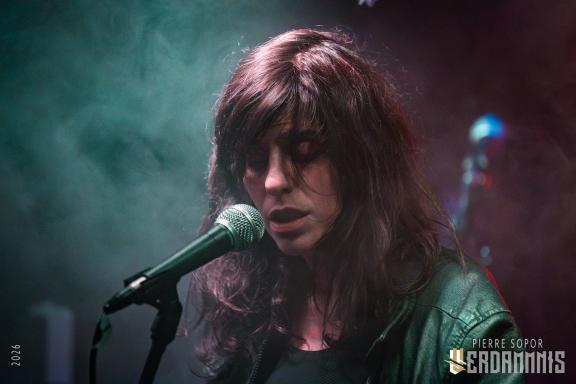
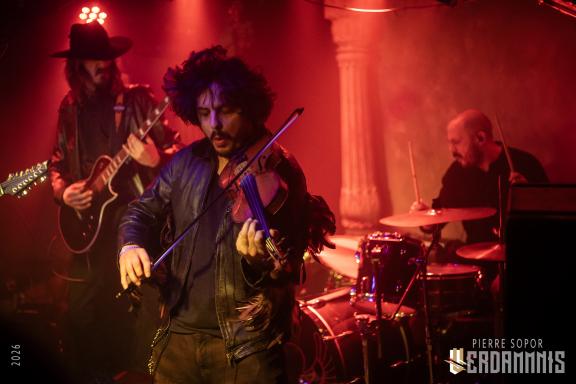
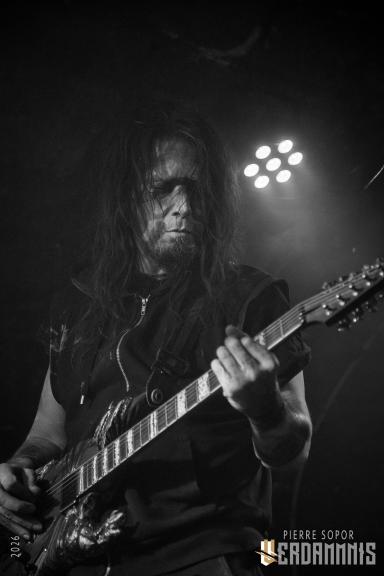
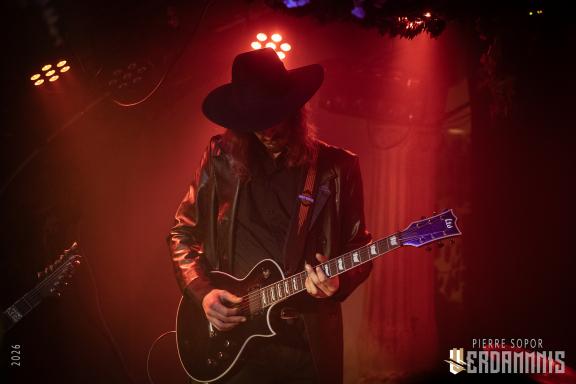
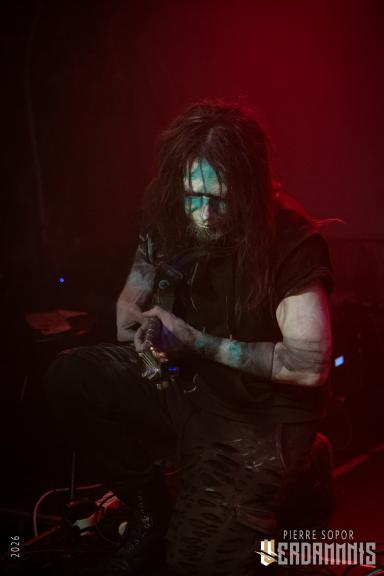
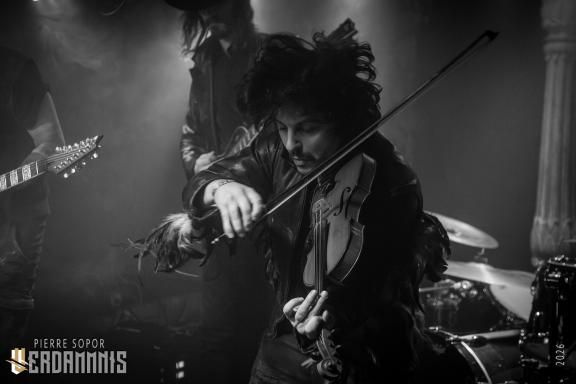
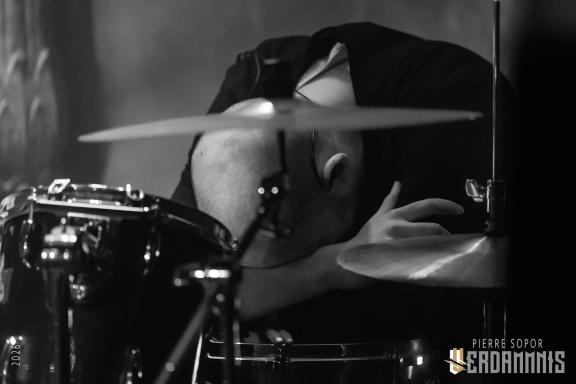
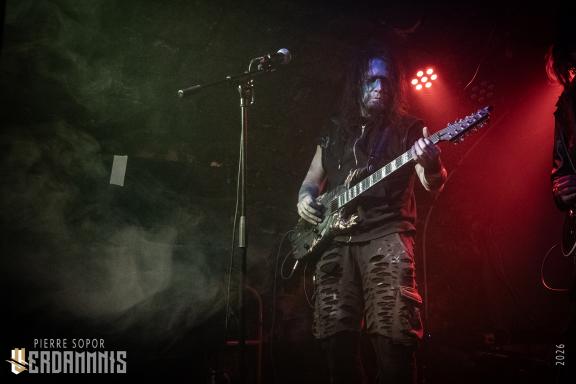
Rïcïnn is a fascinating monster, a hybrid creature that intrigues and amazes. We are immediately blown away by the power of Laure's voice. Several times, she turns to Clémence, the most iconic sound engineer in the Parisian underground and bassist for Shaârghot, and asks her for a hand holding her microphone stand, but frankly, she could almost do without it, such is the resonance of her voice on the stone. Then, it's the energy of the music that grabs us. Live, Rïcïnn sounds much more rock, more in-your-face, than we remember from her two albums (although Nereïd was sometimes heavier and more tense). The band is on point, going in all directions. While our eyes are obviously often drawn to Laurent Lunoir because of his make-up and monolithic presence, our ears are completely blown away by a virtuoso and theatrical violinist who is completely crazy. What's more, the guy wears a jacket decorated with feathers, which no one mentions, as if it were normal, as if having feathers on your jacket were a commonplace thing. Come on, regulars of the Parisian underground scene, stop acting like you've seen it all. A feathered coat is a real talking point!
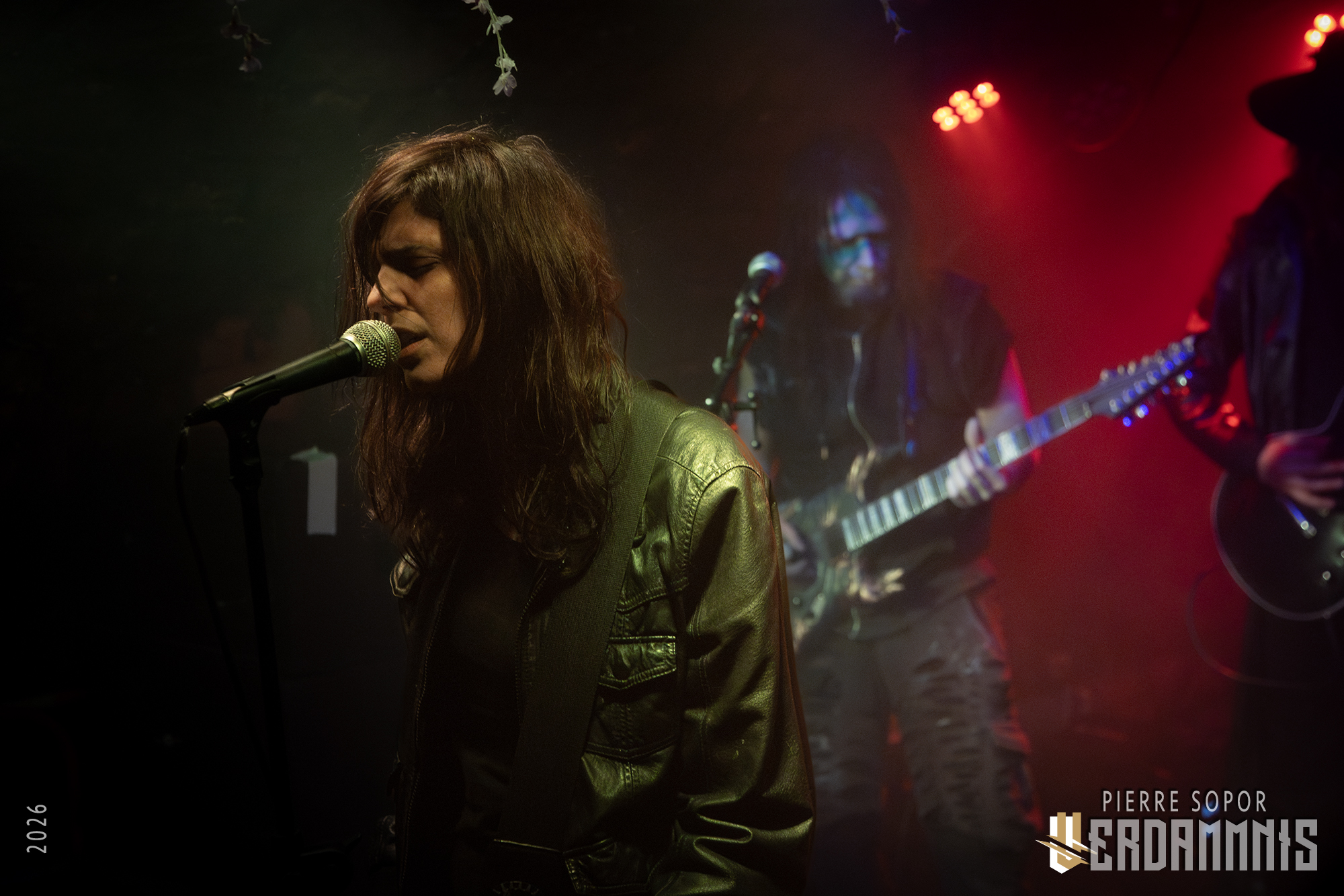
The tracks are long. We recognize Doris, Artaë's mystical incantations and her restrained tension, or the more baroque Orpheus from the first album Lïan. Underground, we blindly follow this poetess to guide us out of the Underworld. Her impressive mastery can ultimately be appreciated in one detail: Laure Le Prunenec doesn't always need to blow us away with her technique, she also knows how to let out less controlled, sincere cries, things that break and knock us off our feet. And then, between two moments of poetry, she jokes with her audience. We are treated to the microphone sketch mentioned above, but also to the cruel dilemma of the jacket: when it's 800 degrees, do you take it off or do you have to keep up your rocker image? You don't know? Well, neither does she: she takes it off, puts it back on, takes it off again, puts it back on again.
We were treated to some new songs. Let's hope that a new album will be released soon and that more concerts will follow. It was beautiful and generous (the concert lasted almost an hour), and the people in the front row were singled out (notably the iconic Clem, who found herself unexpectedly catapulted onto the stage during one song). At the front, we also noticed that Rïcïnn cheats a little: on the setlist, no one took the time to write all the umlauts in the song titles! As the spell ends with an encore in reduced formation, Laure gives us one last look, condemning us to wander a little longer in Hell. So much the better, because beautiful things are still to come.
DÉHÀ
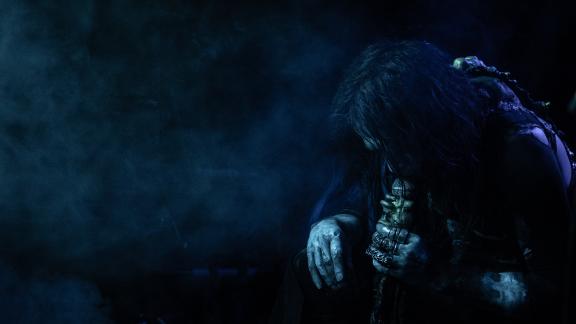
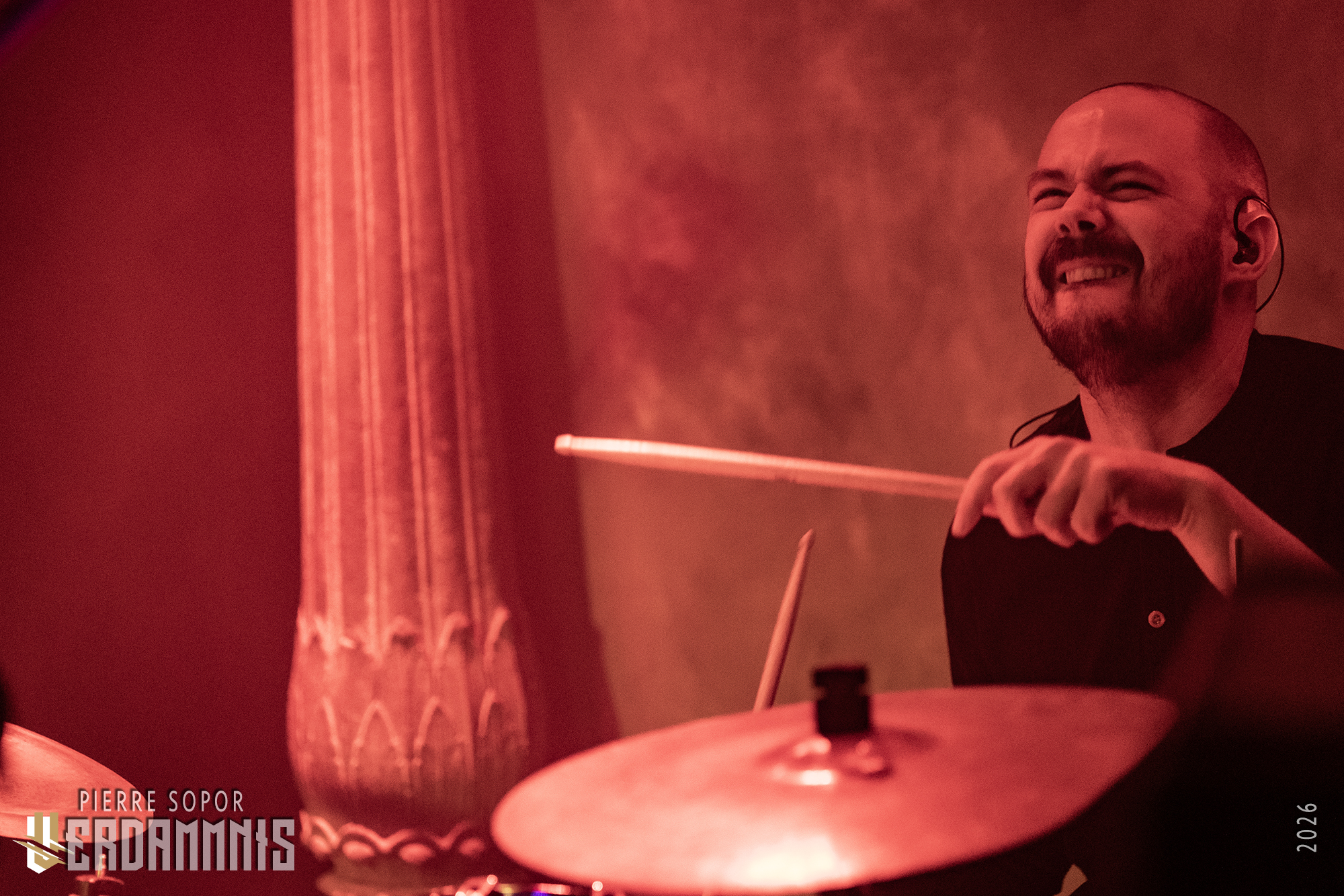
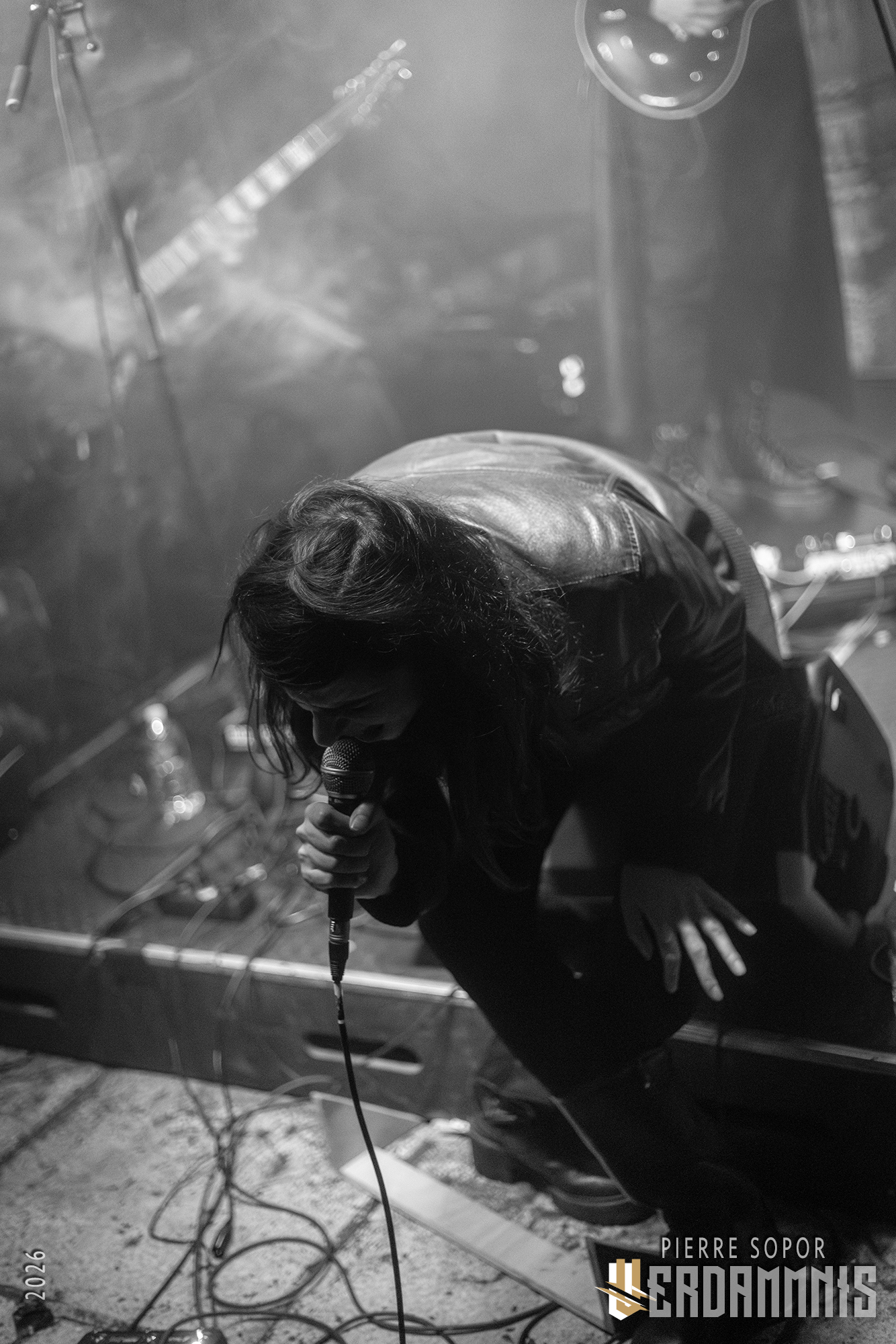
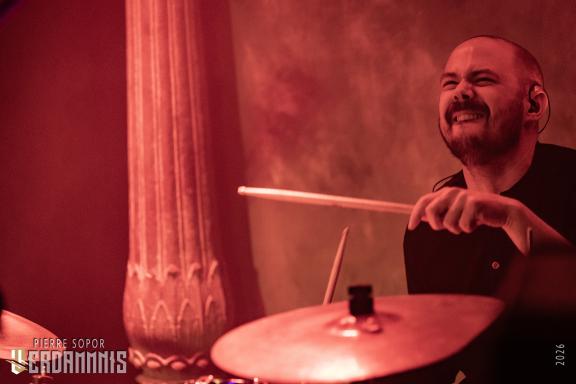
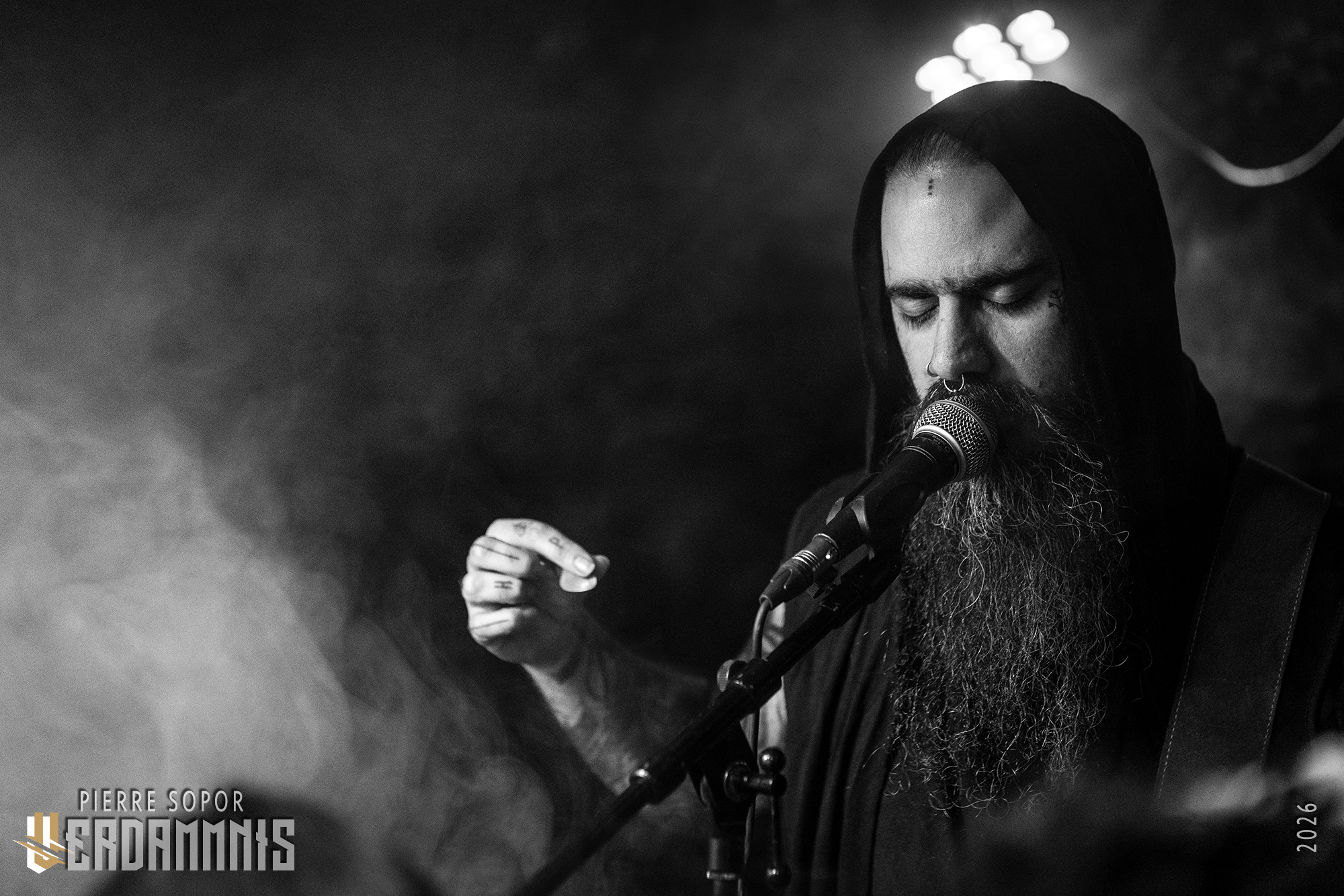
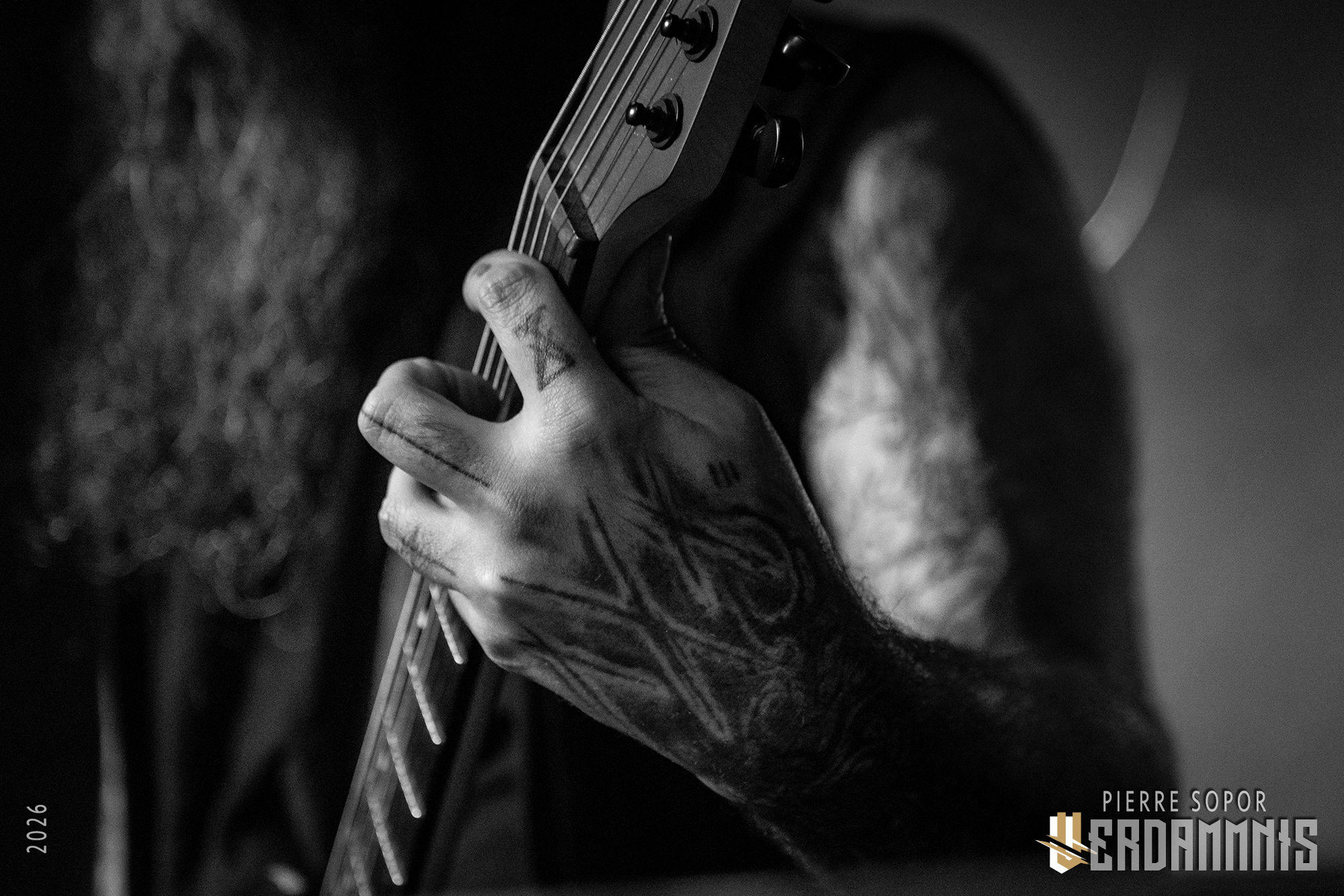
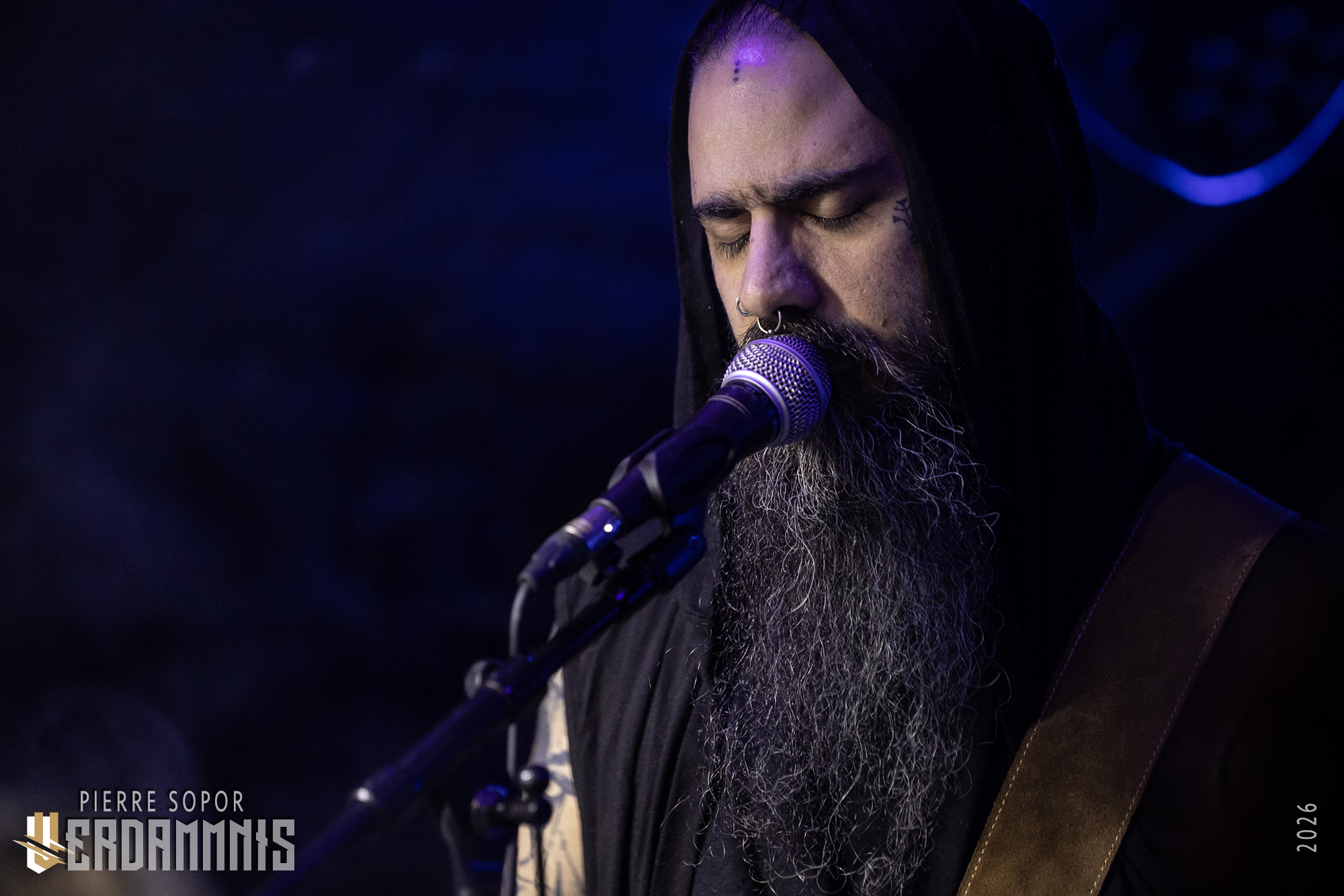
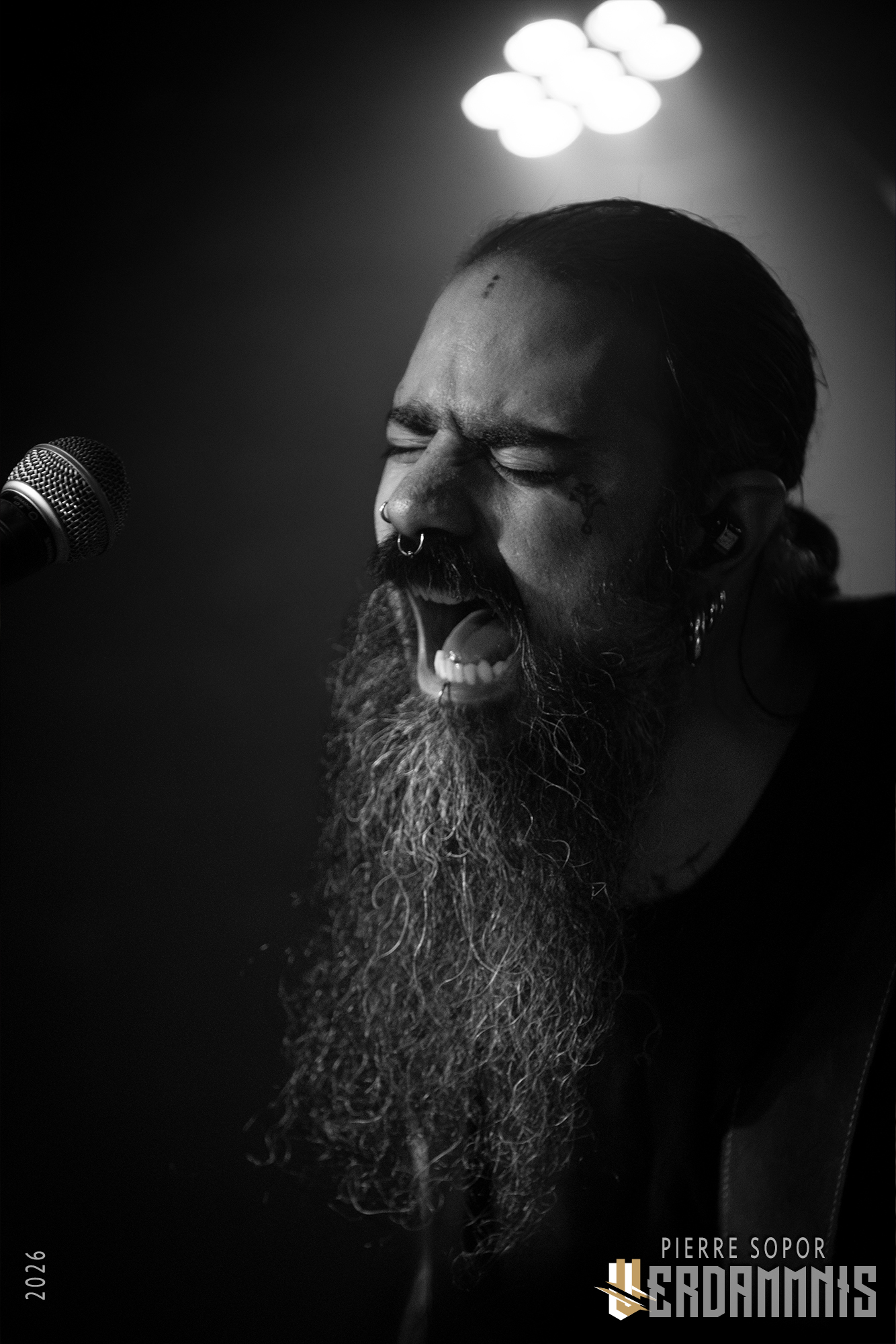
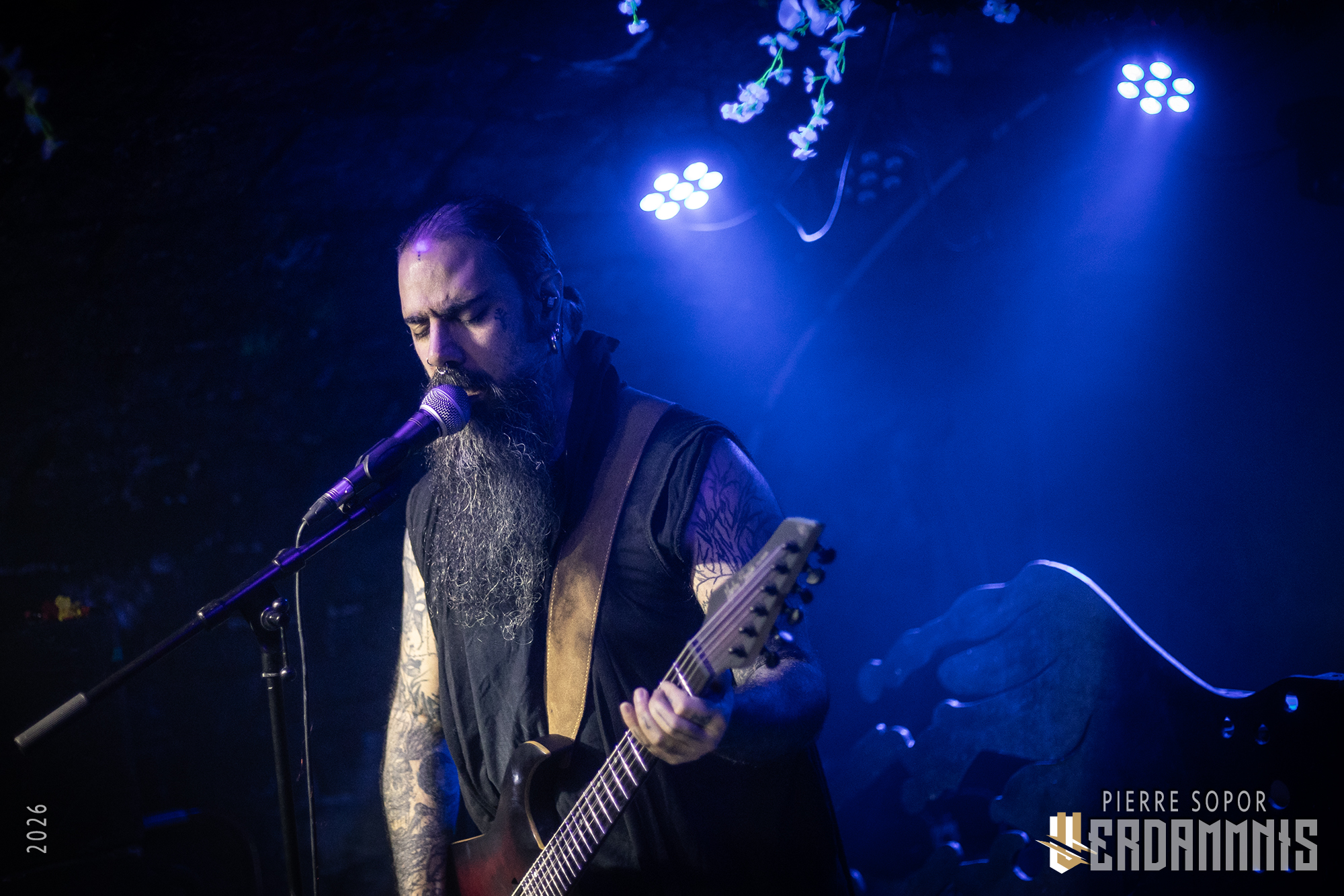
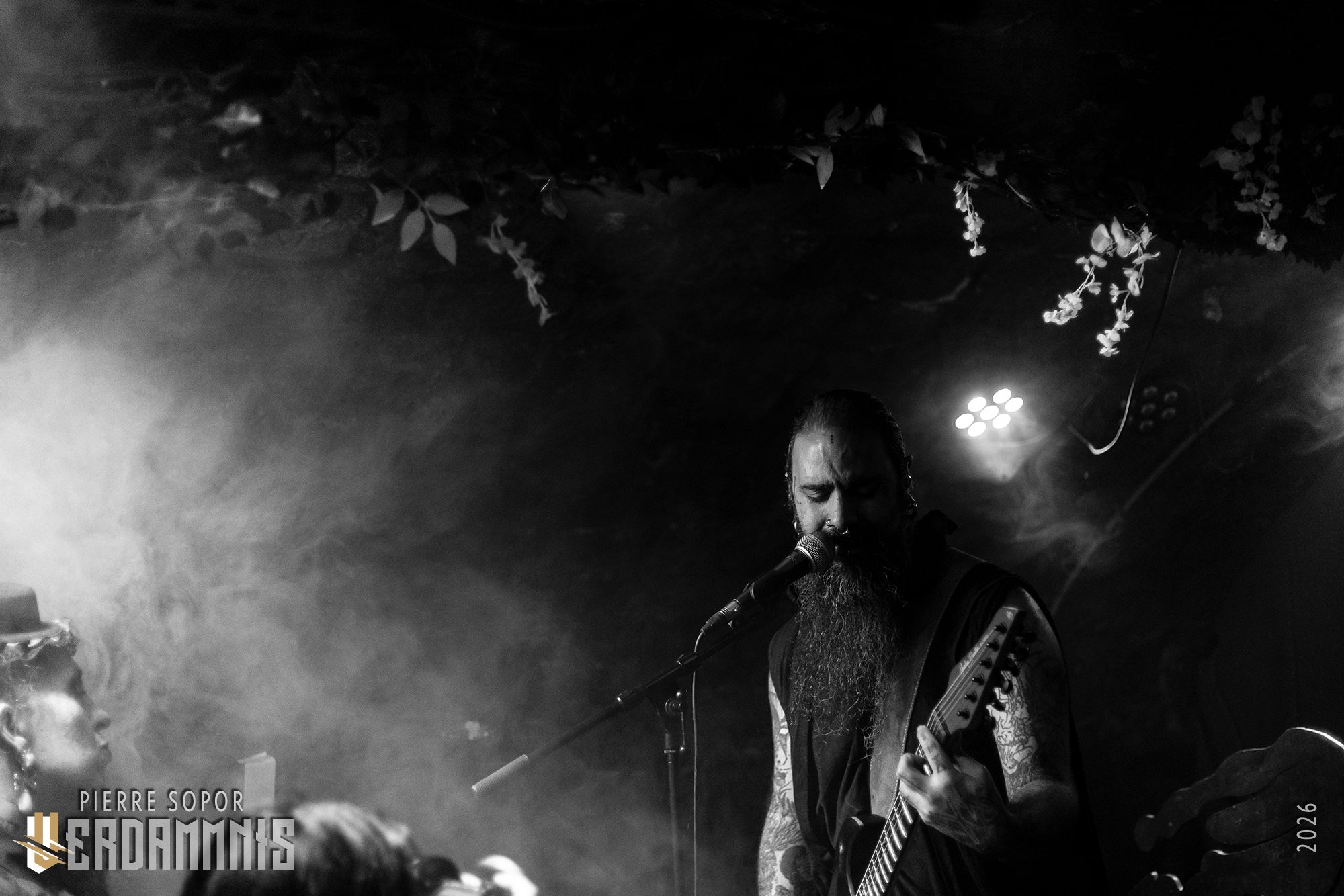
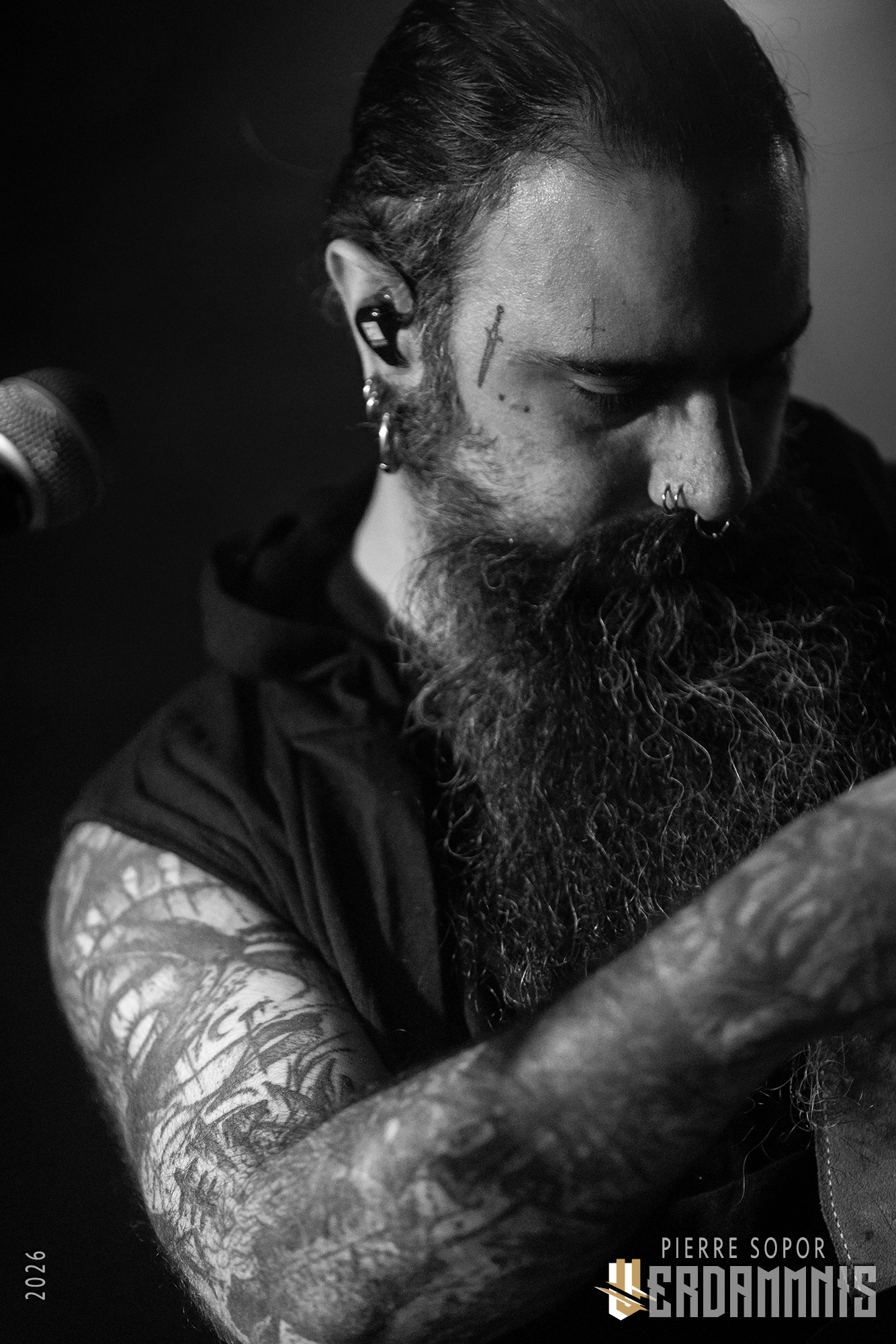
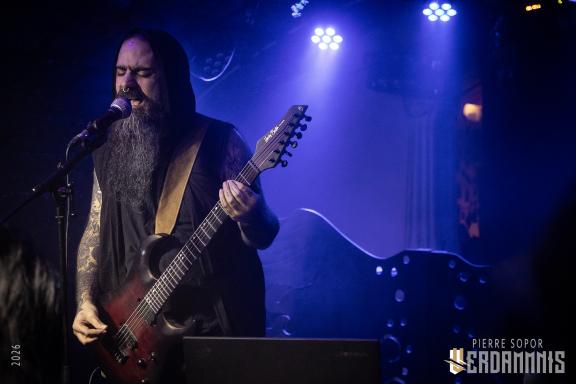
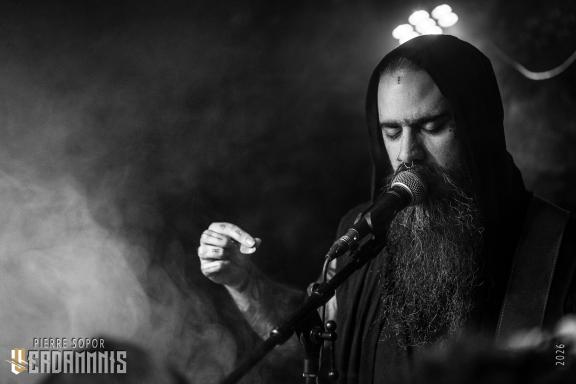
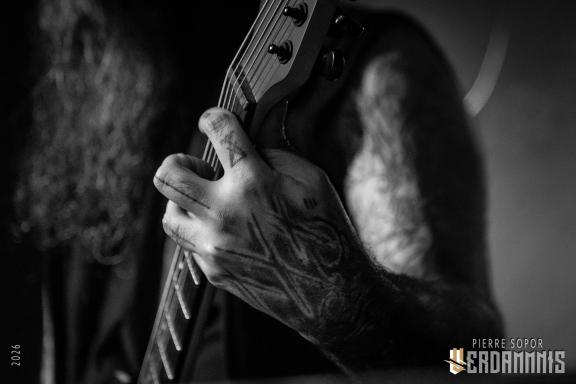
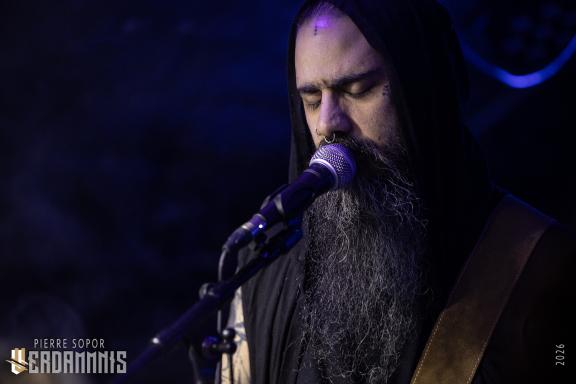
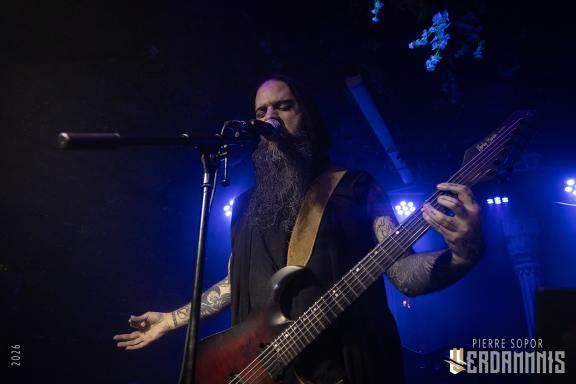
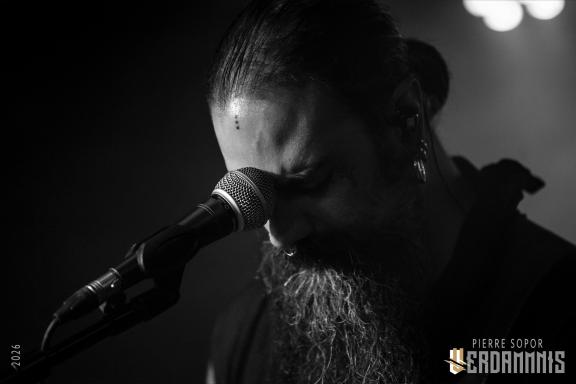
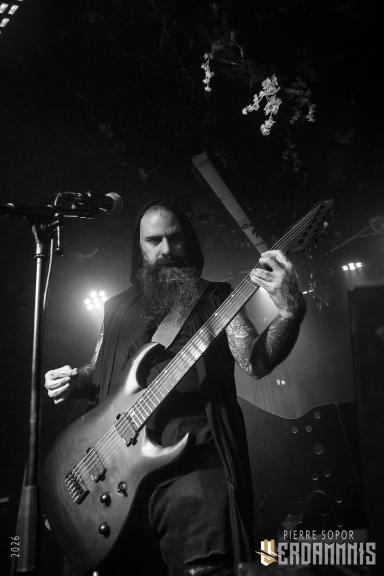
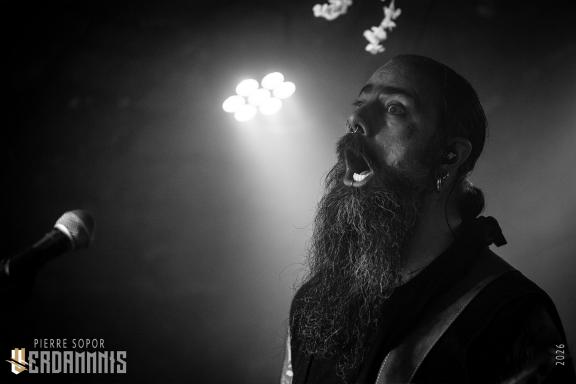
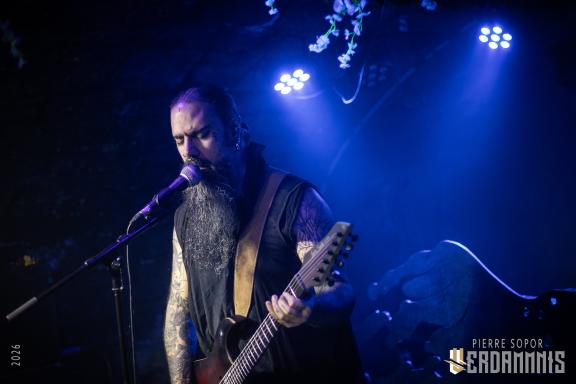
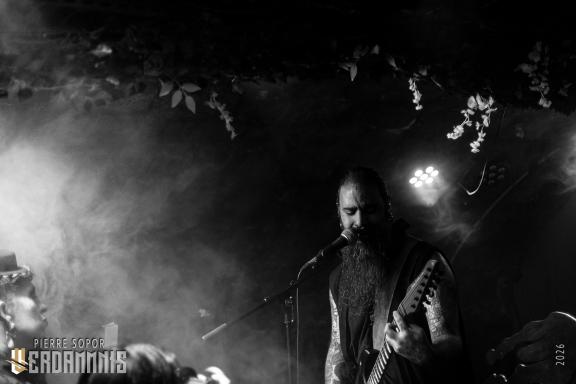
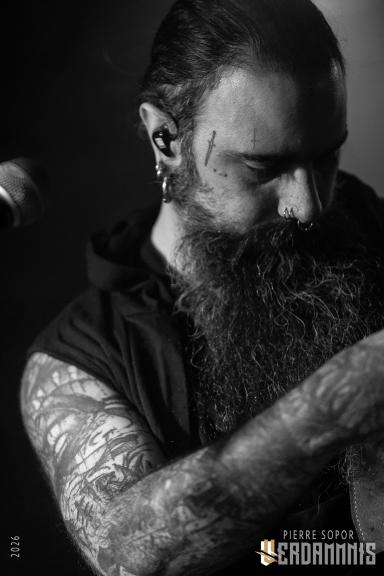
Just the thought of it makes you shiver: listening to Déhà under the ground is a bit like being buried alive while still conscious. Too cool. Déhà is rare, he doesn't like touring, that's common knowledge. Yet we saw him a few months ago before Wolvennest (live report) and it was one of the most moving live moments of last year. He doesn't like it, so he diverts attention, which, probably to his great despair, makes him immediately endearing: “Tonight, my name is Jean-Michel funeral doom... good luck,” he says laconically before starting. Modesty hidden behind humor, tenderness disguised as a sulky attitude. Déhà is super dark, Déhà is too cute (don't go telling him that, it would really make him grumpy).
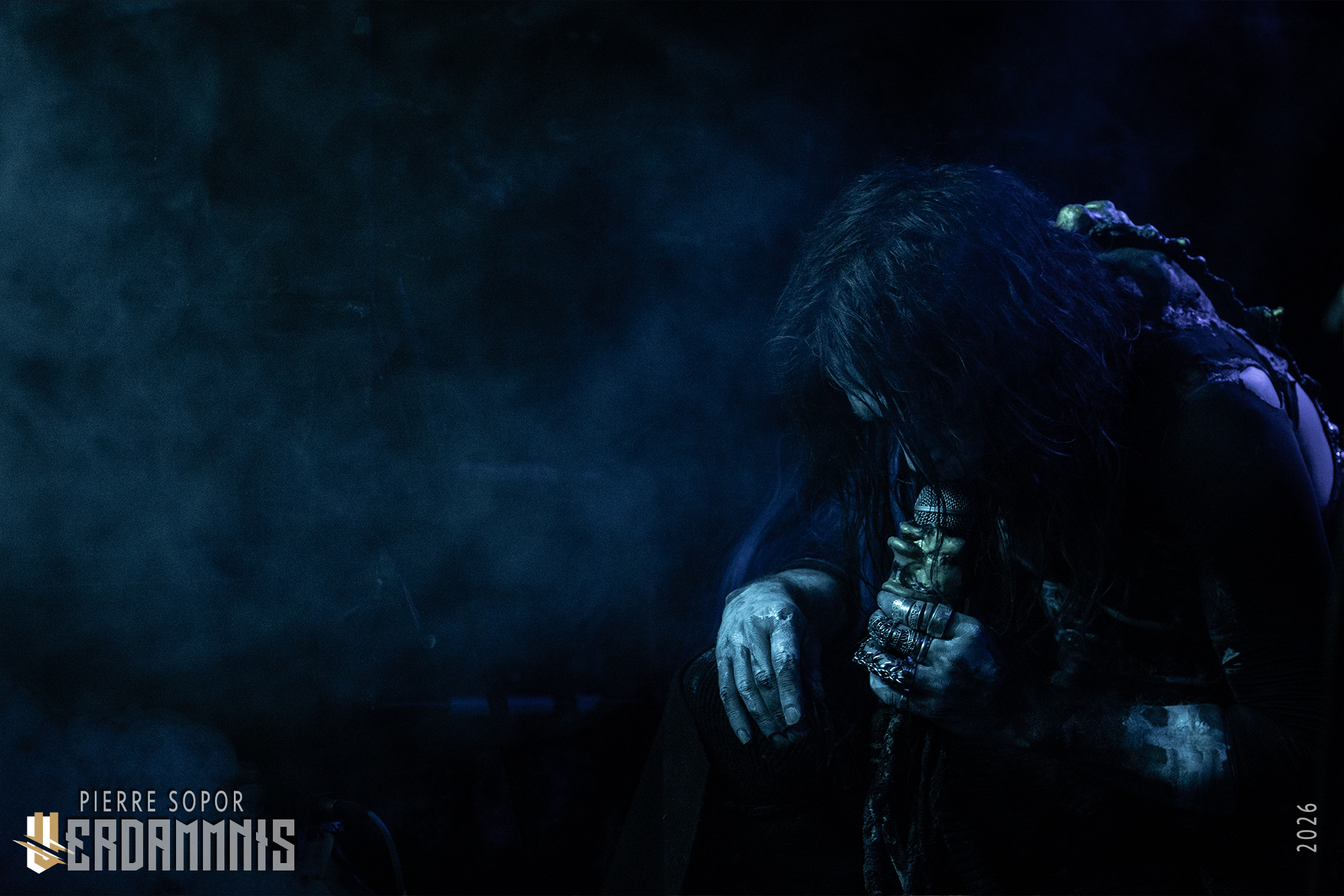
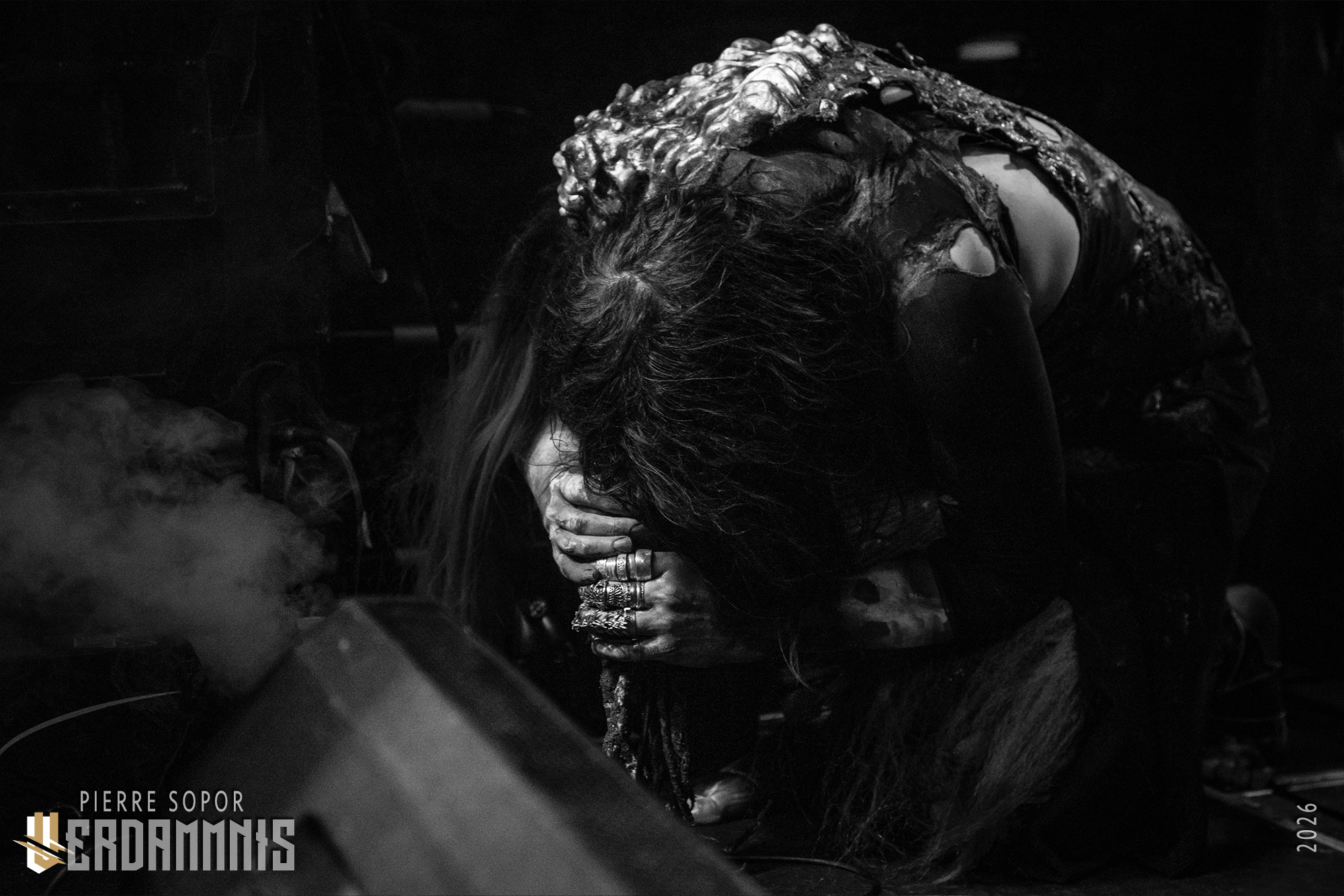
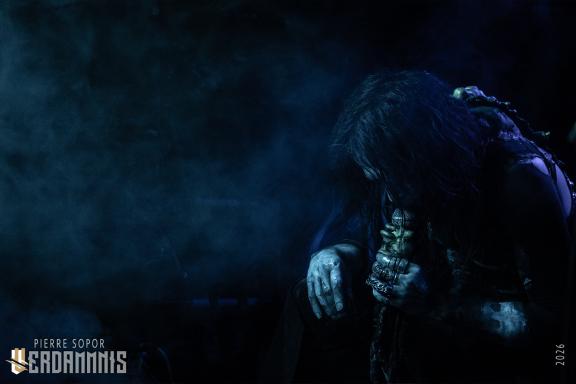
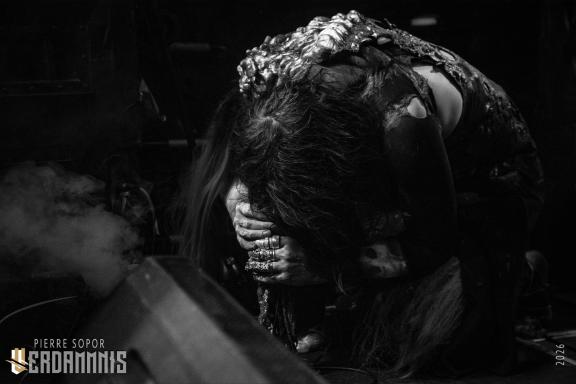
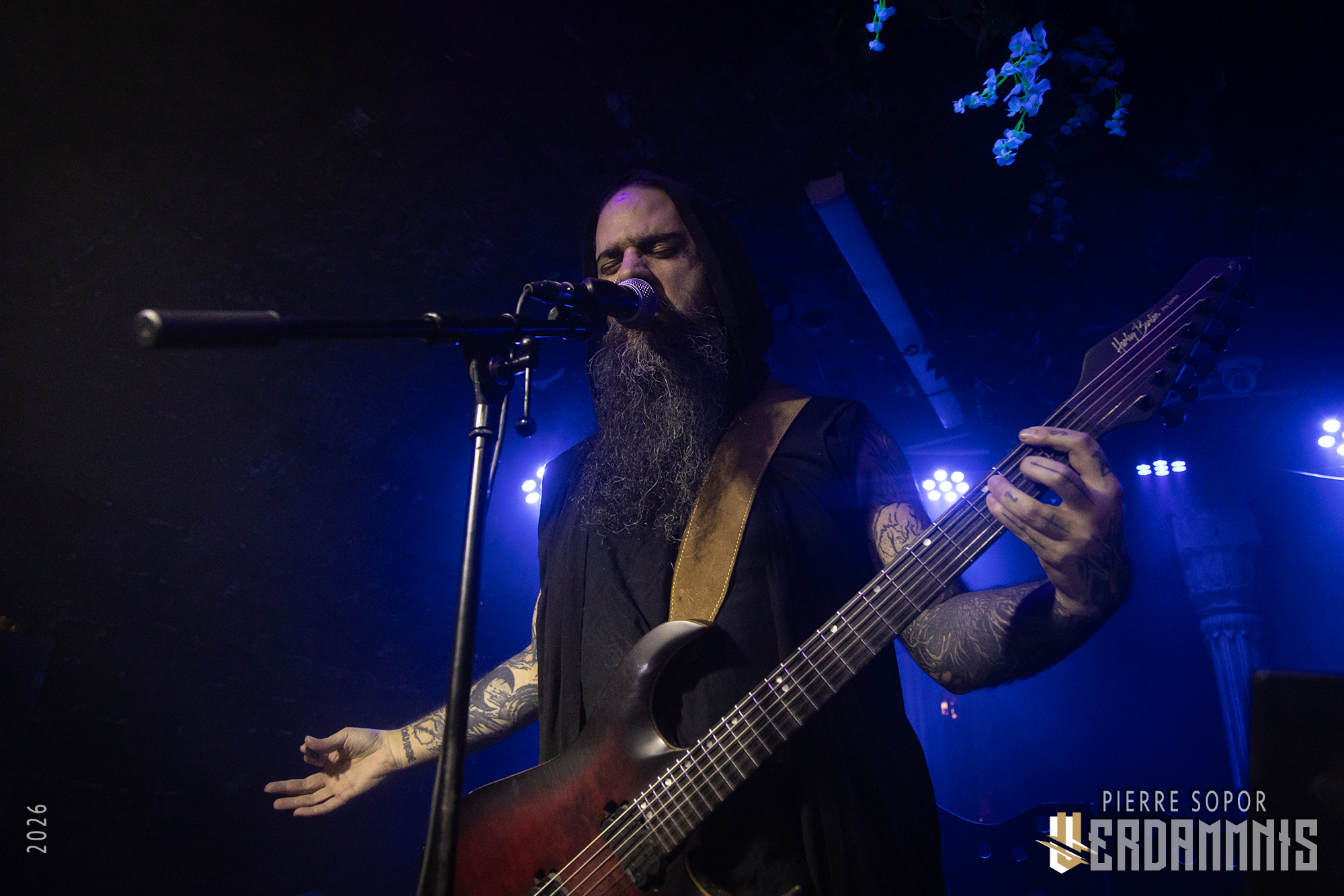
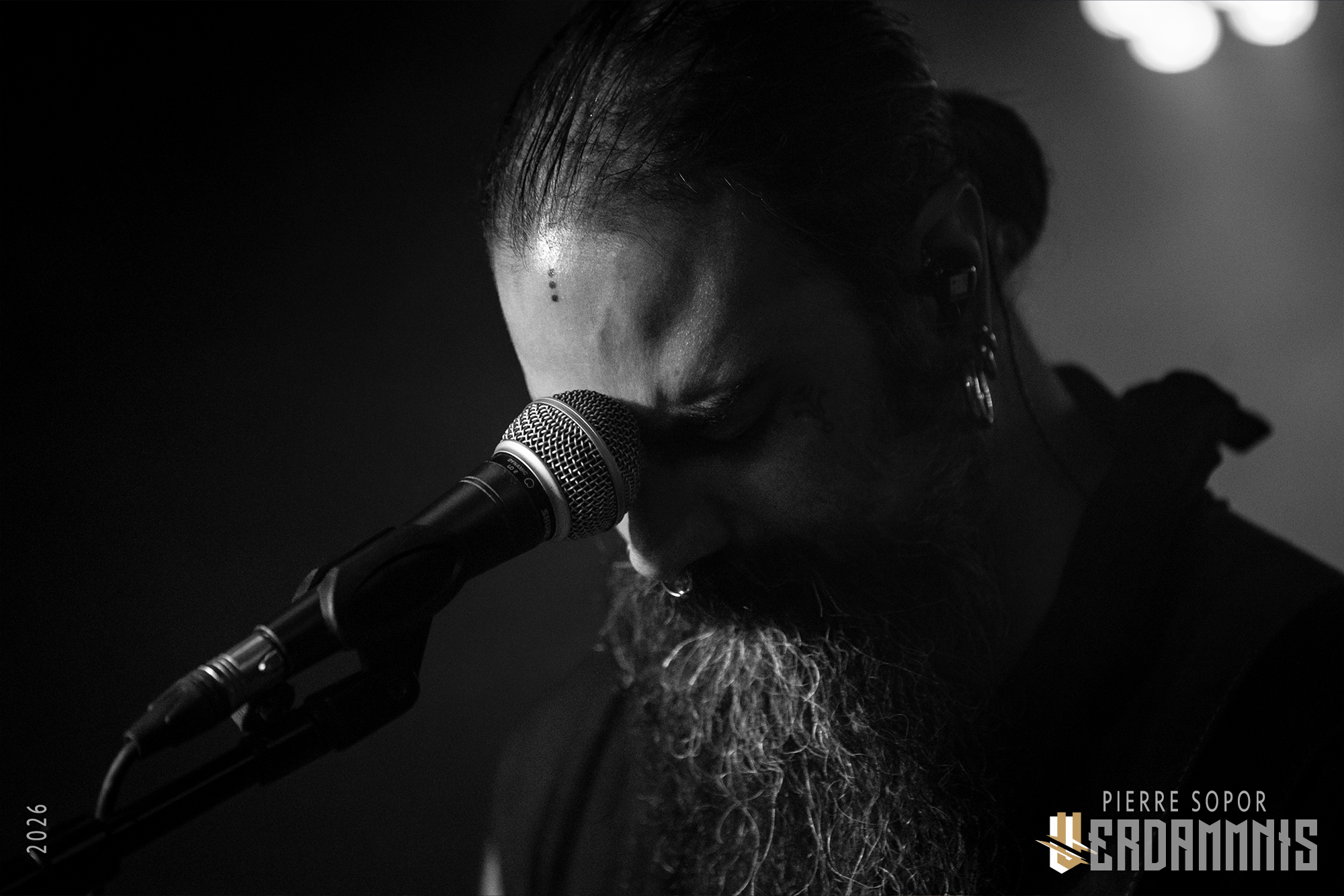
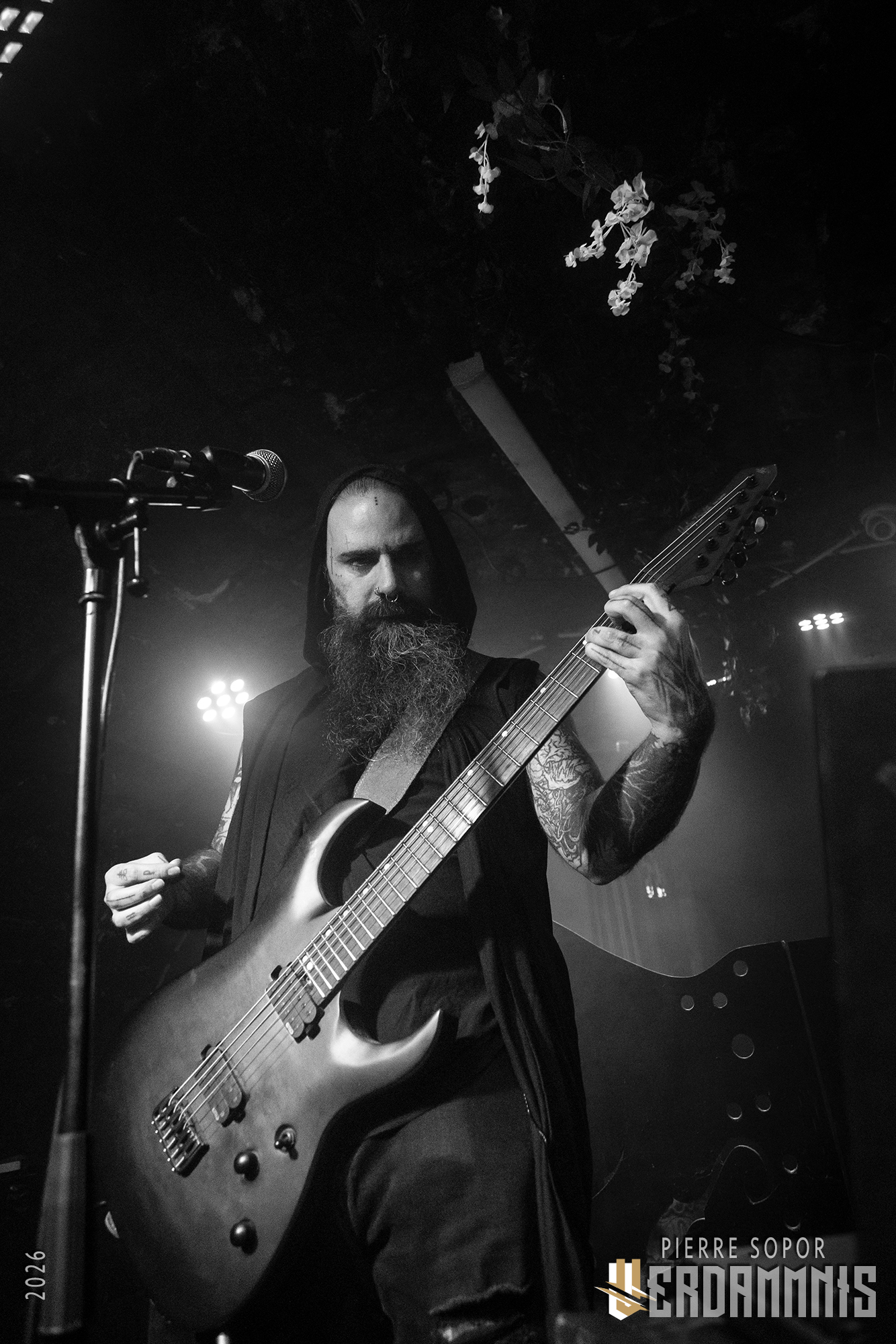
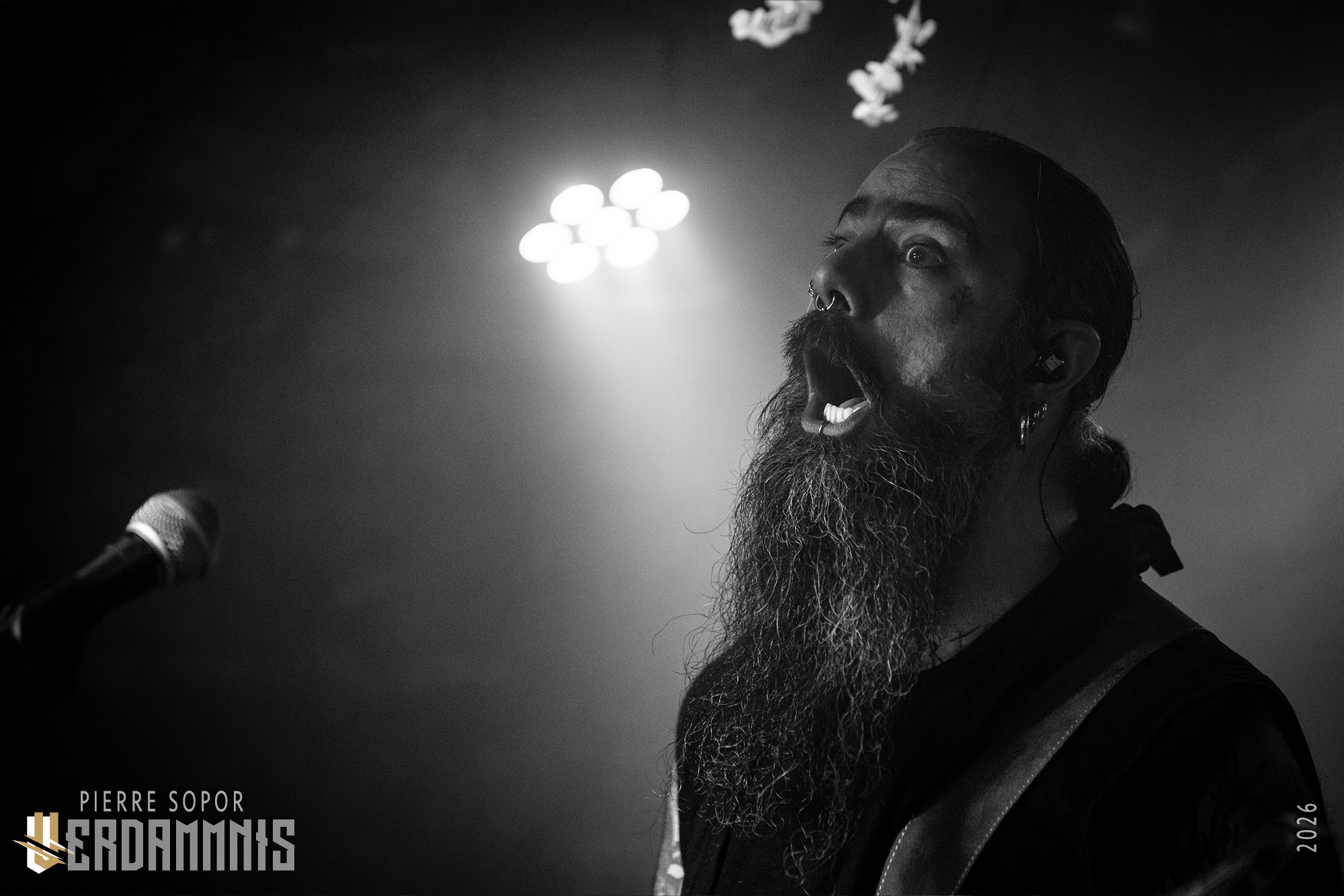
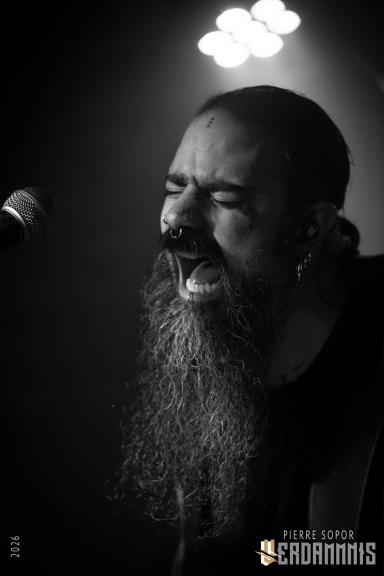
His music is his own business. He is alone on stage. It is heavy, even overwhelming. The full weight of existence crushes us in the darkness, suffocating us with its anguish. Even the smoke machine seems intimidated. His guttural voice emerges from the depths, the slowness giving the music all its majesty but also its mournful, dramatic, and solemn tone. And then he turns and lets out a scream, his back to the microphone, something heart-wrenching, something that hurts when it comes out and hurts to hear. It hurts, but it feels good afterwards, because life goes on, perhaps. It feels good, but it still hurts too, because life goes on, and it doesn't care.
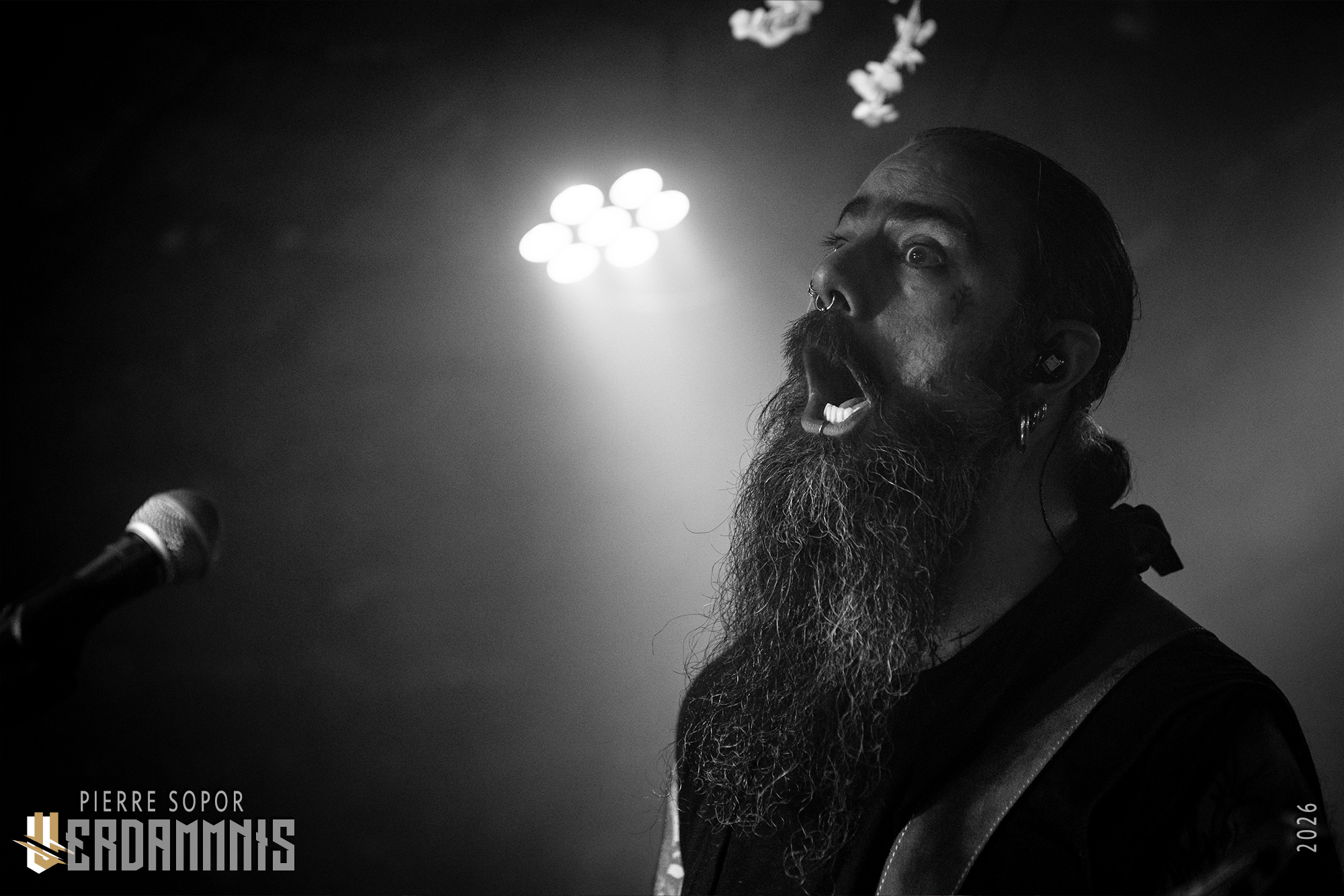
For half an hour, the audience listens respectfully to this guy who pours his heart out for us. Déhà's approach is one of rare authenticity, art without pretense, an expression as vital as it is sometimes dangerous, something that doesn't try to be pleasant, a space where you can confront the darkness. You don't come out unscathed, and it's not for everyone (after four notes, or about fifteen minutes, people start to sit down). Déhà only plays one song, which lasts half an hour. Afterwards, he speaks. He explains that normally he's a little afraid of touring, that he prefers to stay in his basement, but that now he's forty, so he doesn't give a damn, he's a big boy now, he can come out of the basement. And anyway, tonight we were also in a basement, which he has made his own, and we were happy to share it with him. He tells us that he doesn't know us but he doesn't care, he loves us. He tells us about his sick mother, he tells us about Oscar, his friend and roommate who died a few months ago, he tells us about this light that we seek but that hurts so much. Then he tells us he can't play any encore because it would take another half hour and the others would not appreciate. Finally, he plays us a grindcore track: a one-second scream and that's it, he grumbles and concludes with “get lost, it's over.” Once again, that humor, that tenderness, that elegance, that modesty, that sincerity, that thing that grabs you by the gut and that you laugh off to defuse the tension, like a survival reflex, but which only serves to highlight the tragedy of life. What a guy.
ÖXXÖ XÖÖX
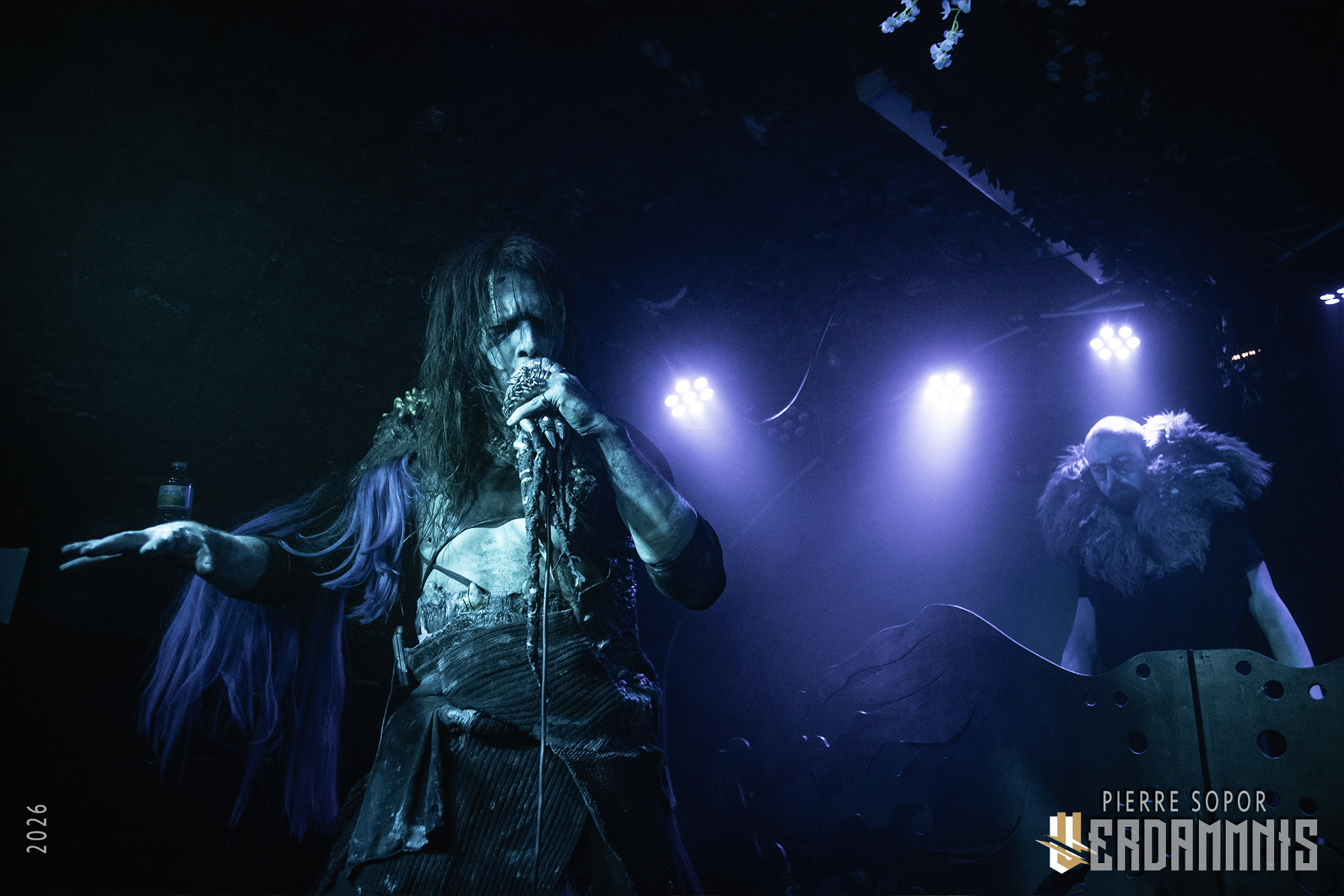
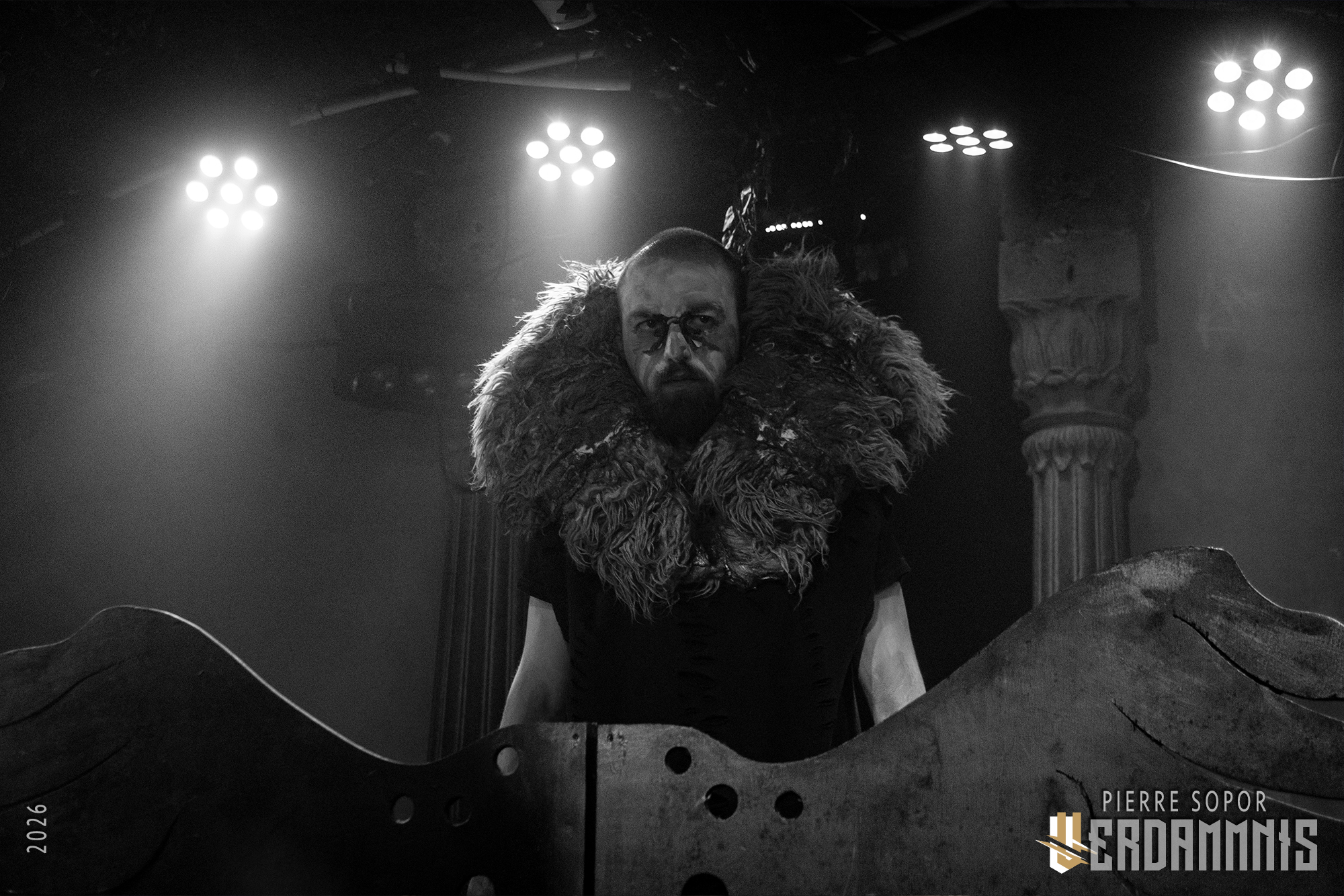
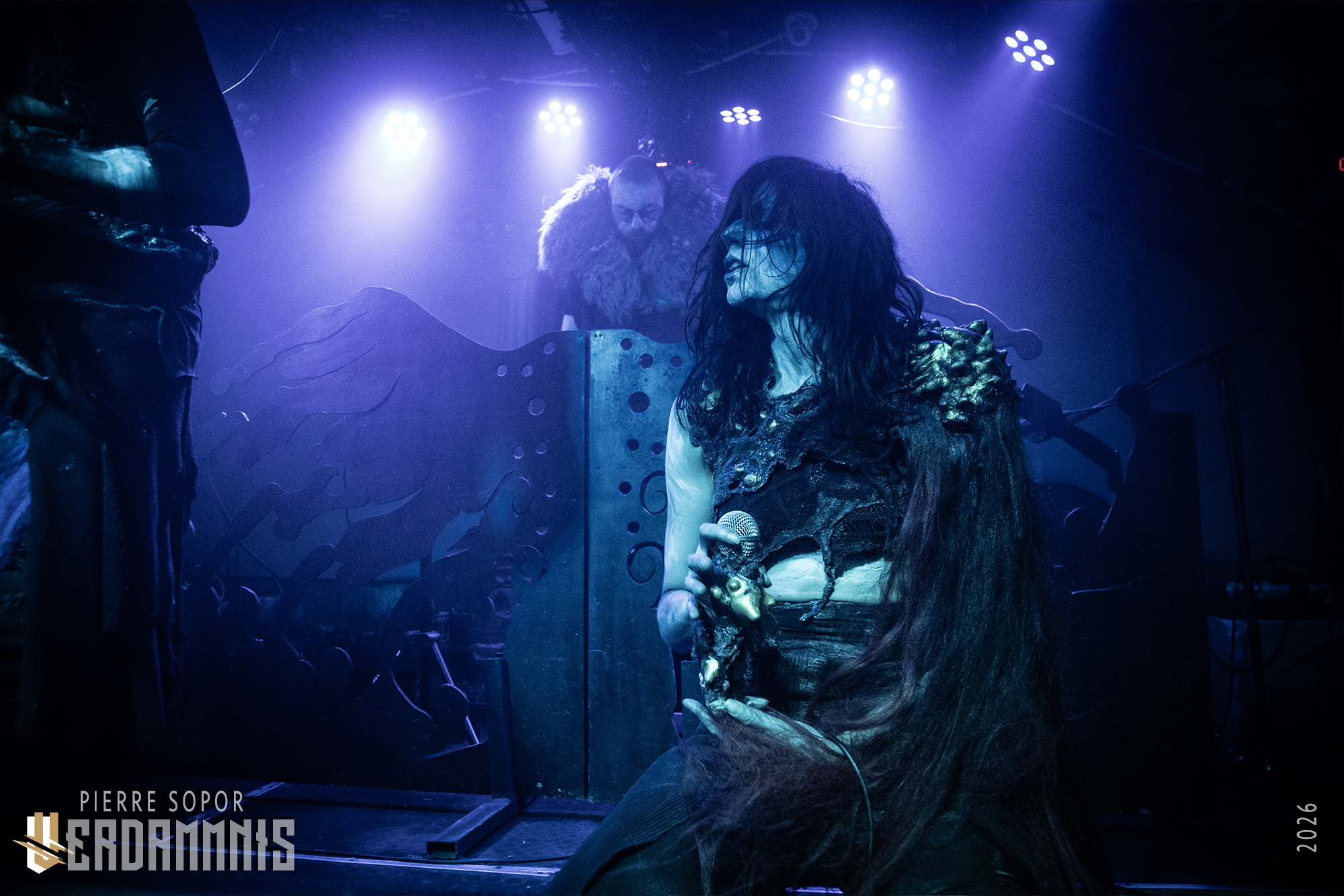
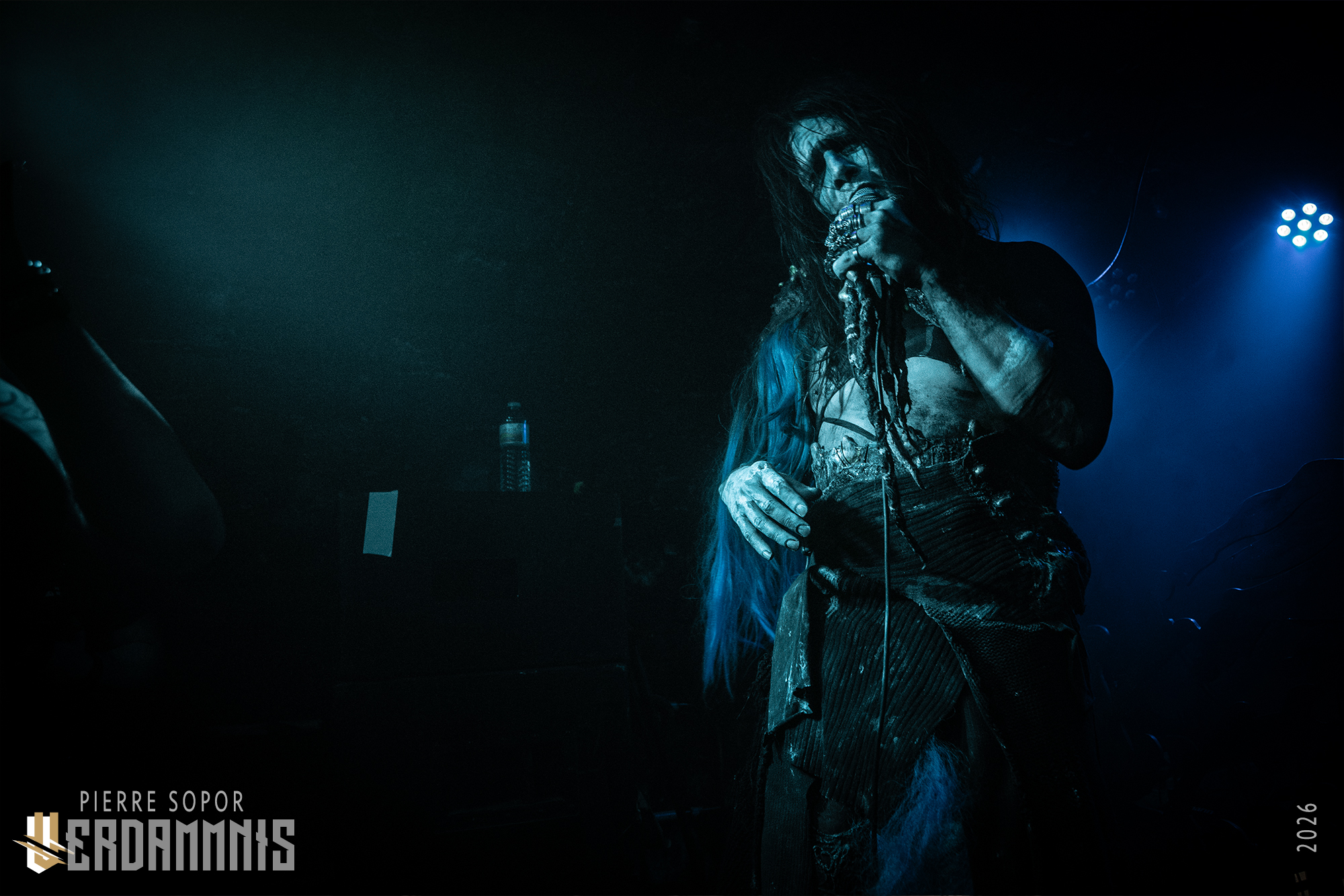
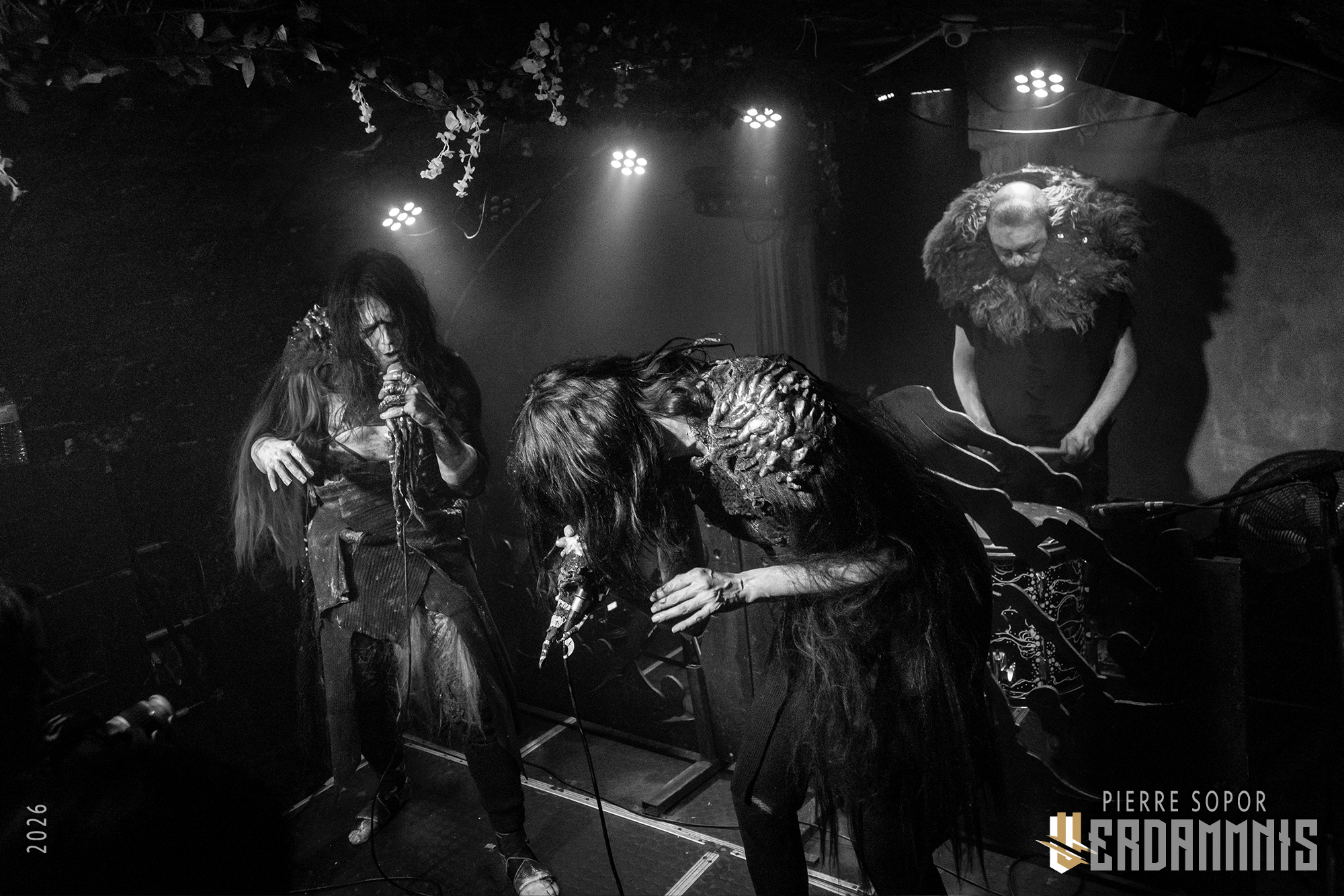
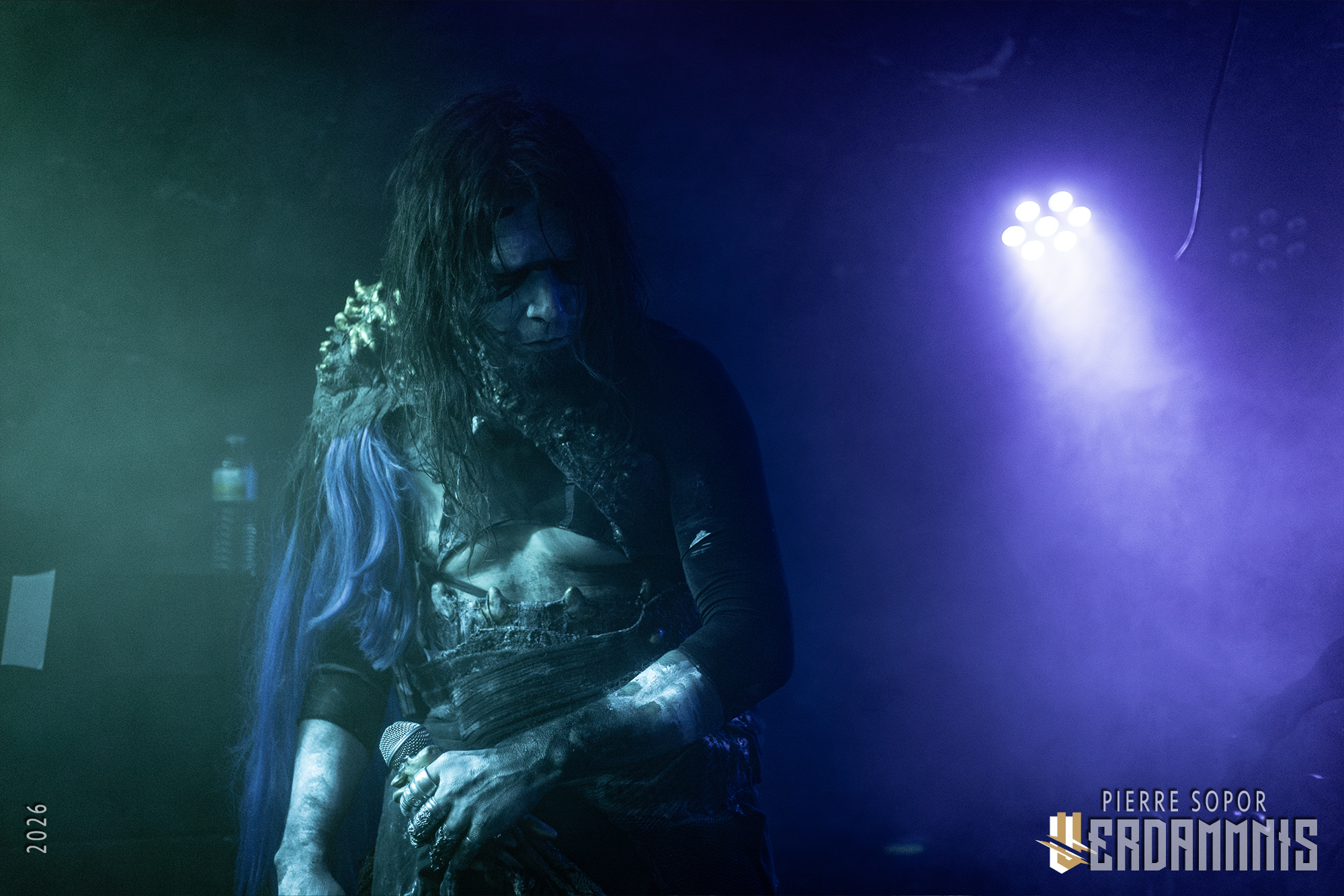
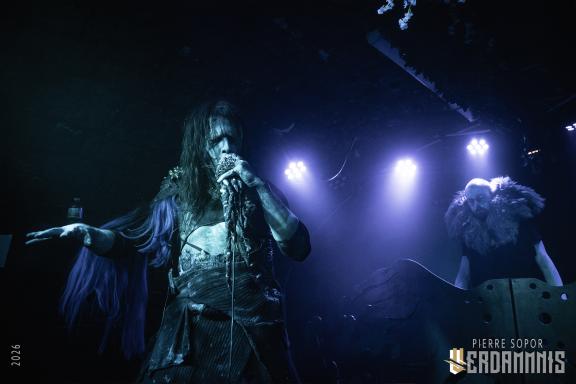
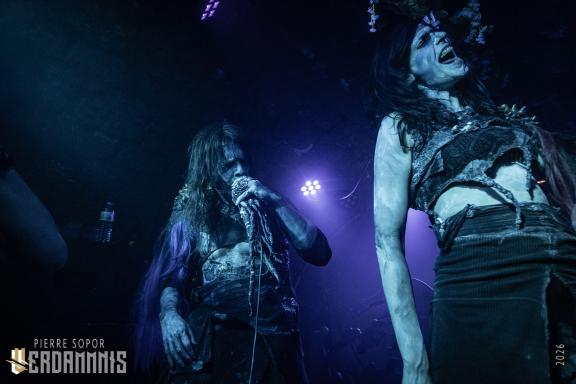
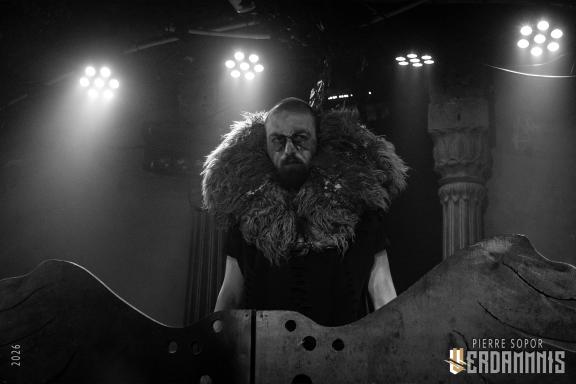
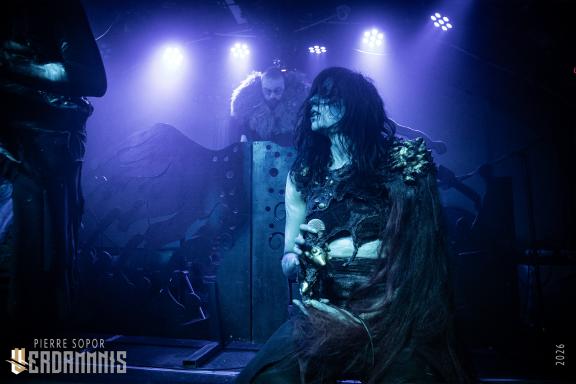
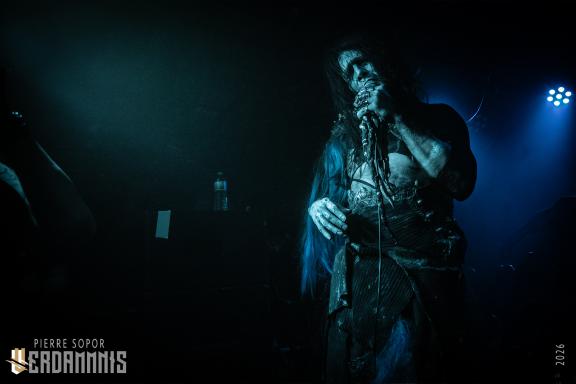
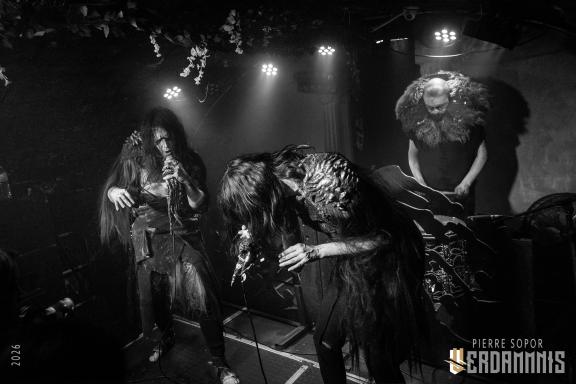
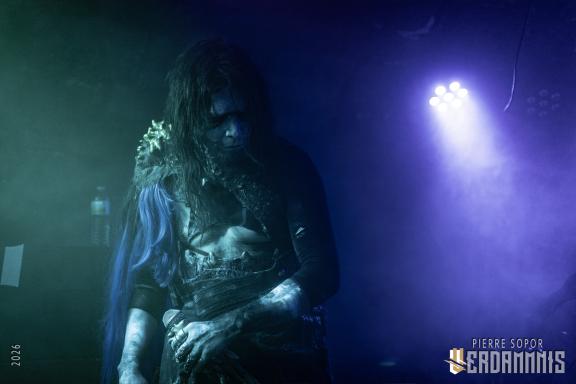
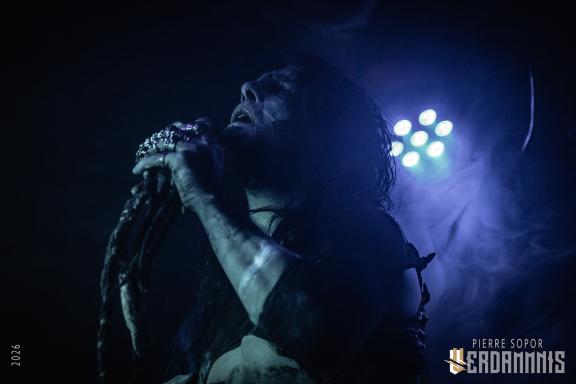
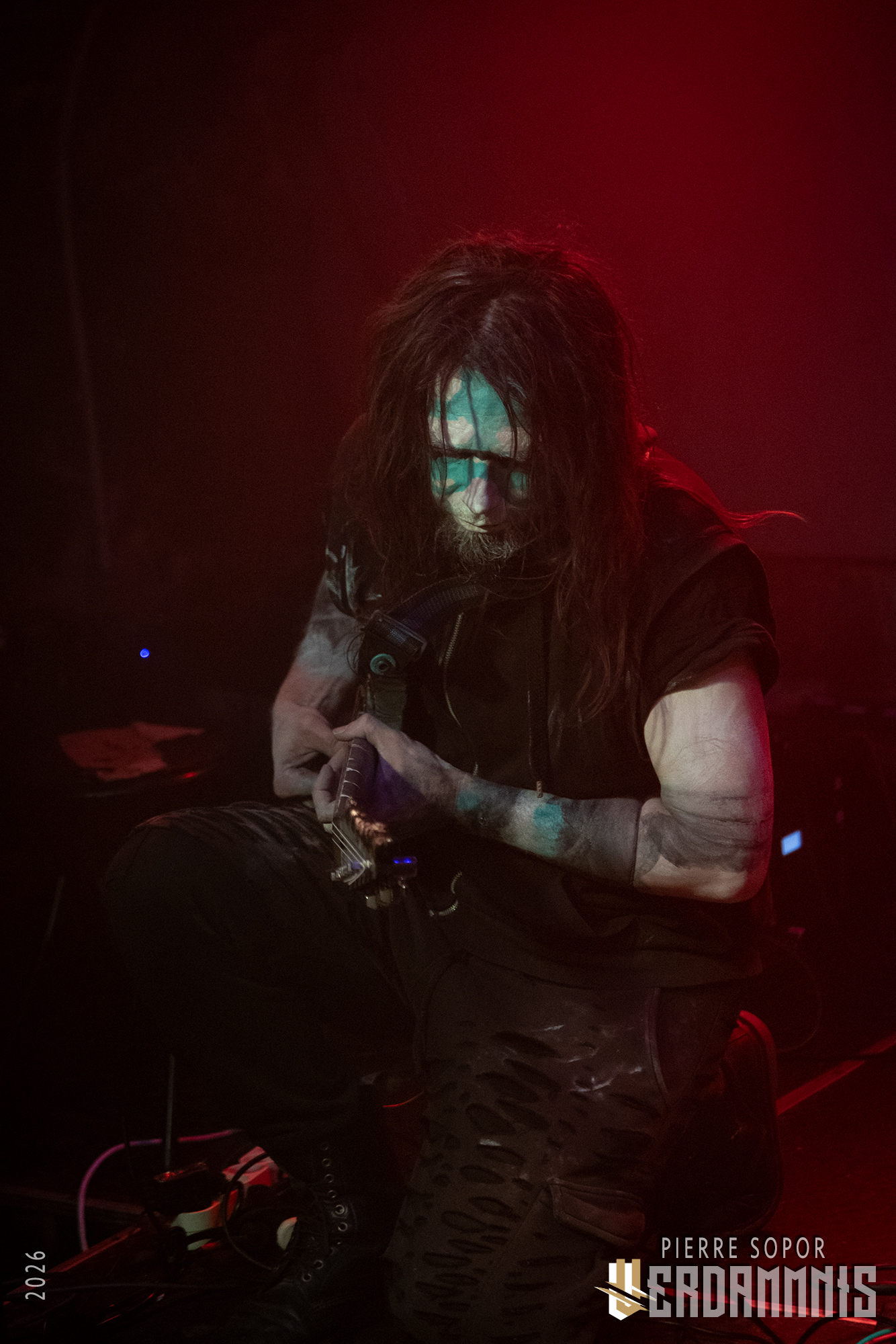
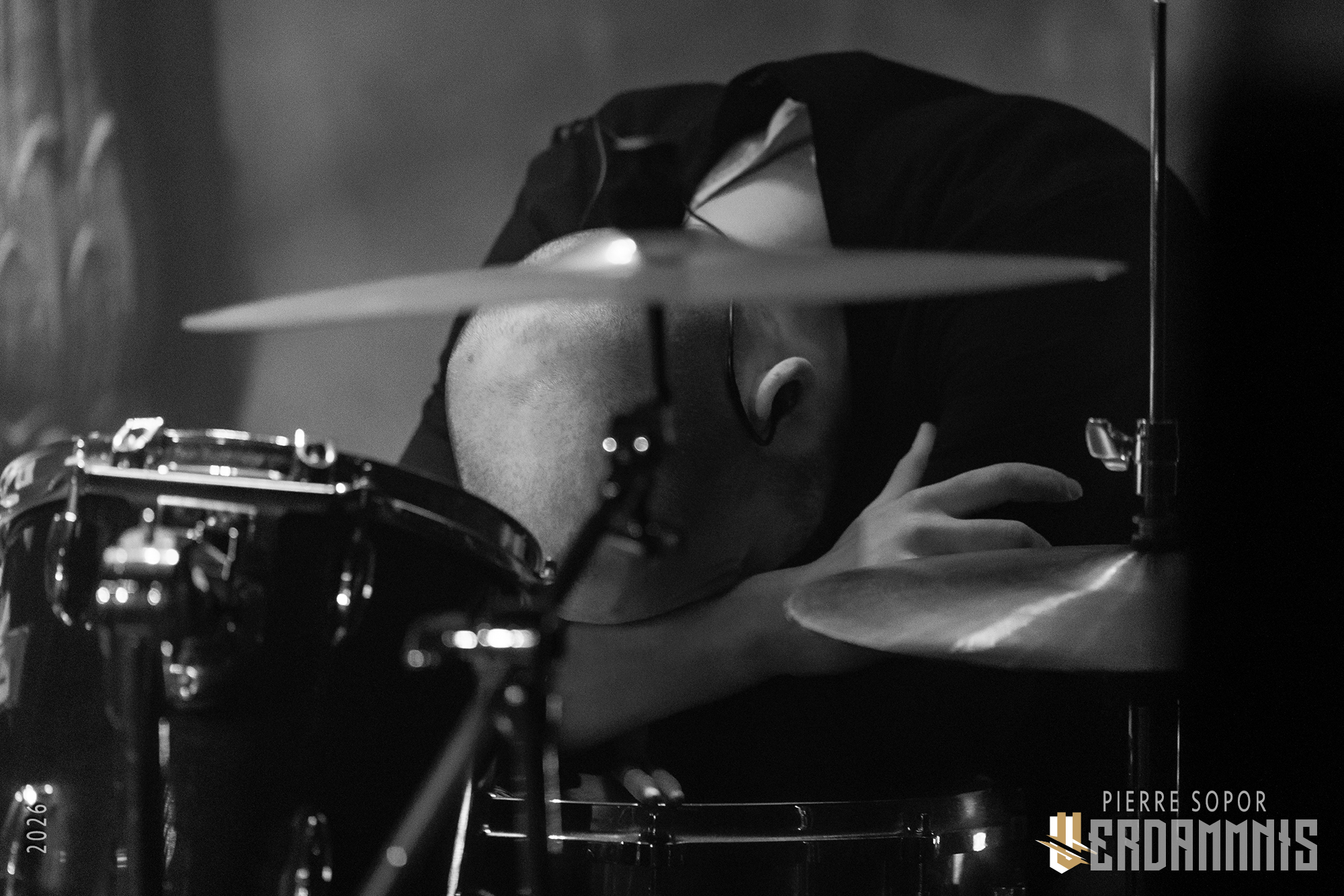
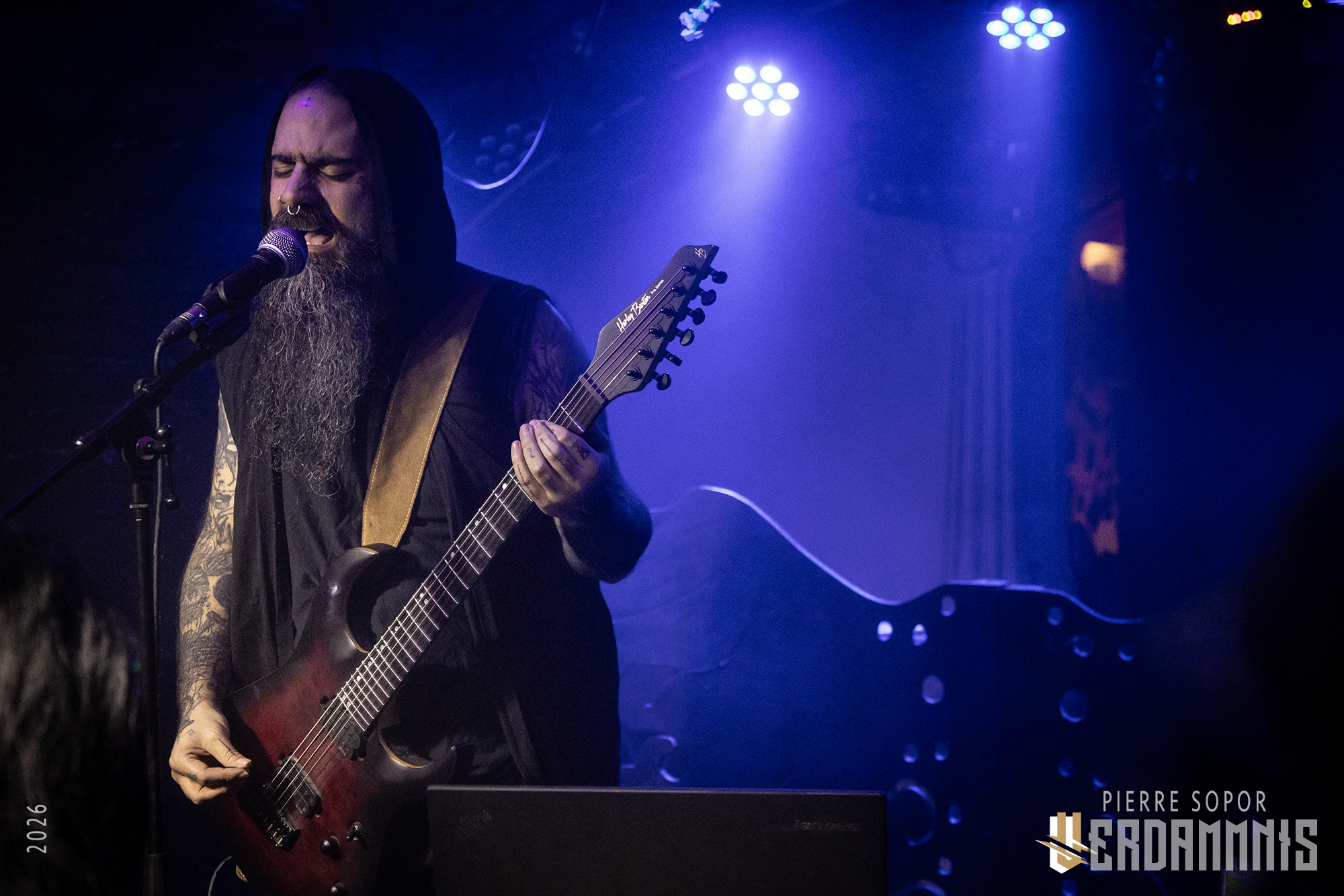
“I'll give you blue lights, is that okay?” Clem creates both the sound and the image. For Öxxö Xööx, it will be darkness, lots of smoke, and blue, reflecting the album +, an album that Laurent Lunoir associated with water, as opposed to Y, which was associated with fire. Depending on the possibilities, Öxxö Xööx takes several forms, from the full band to the Laurent-Laure duo. Either way, the two are accompanied by Sylvain Onodrim, who has put on his finest fur and takes care of the machines and percussion at the back of the stage.
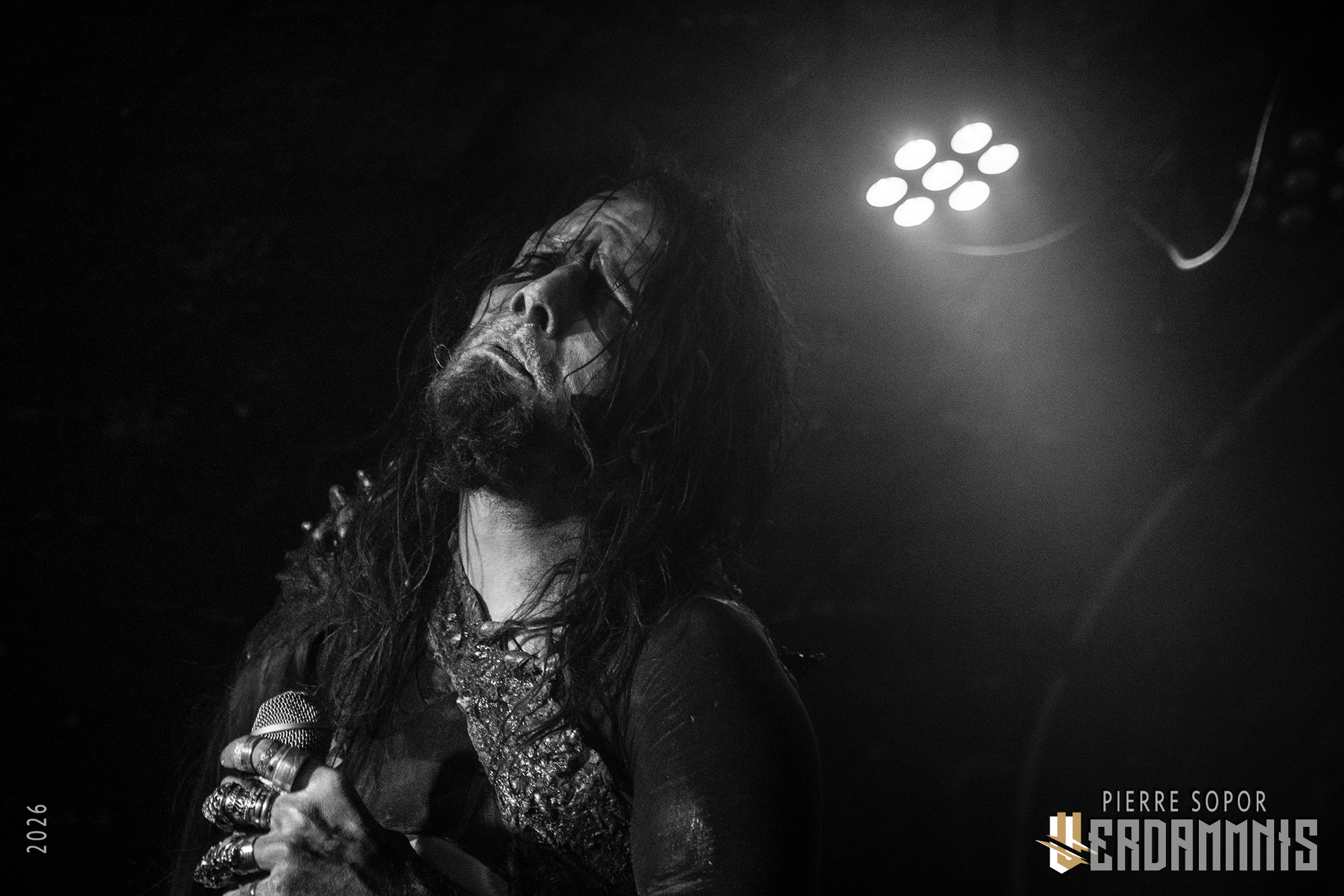
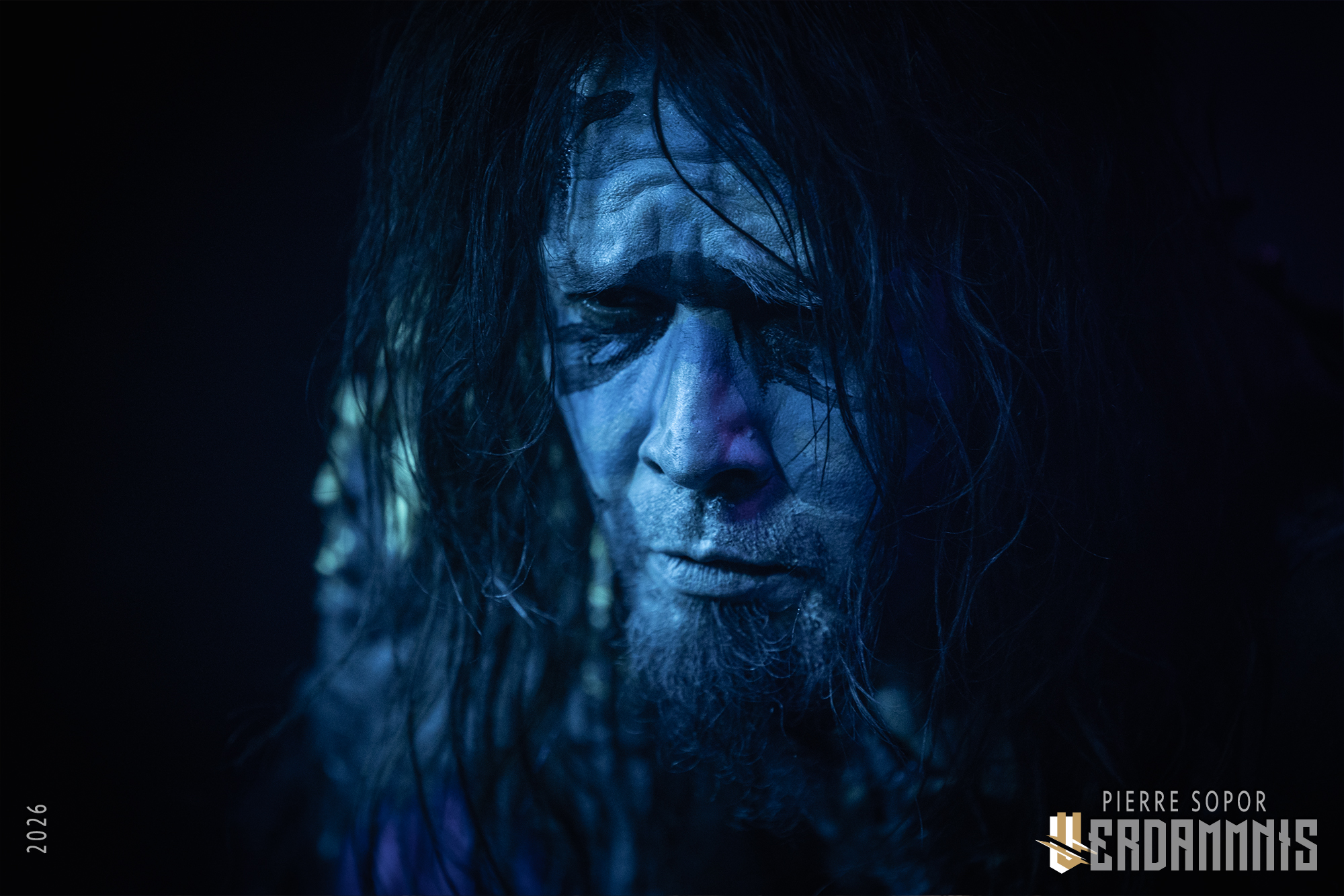
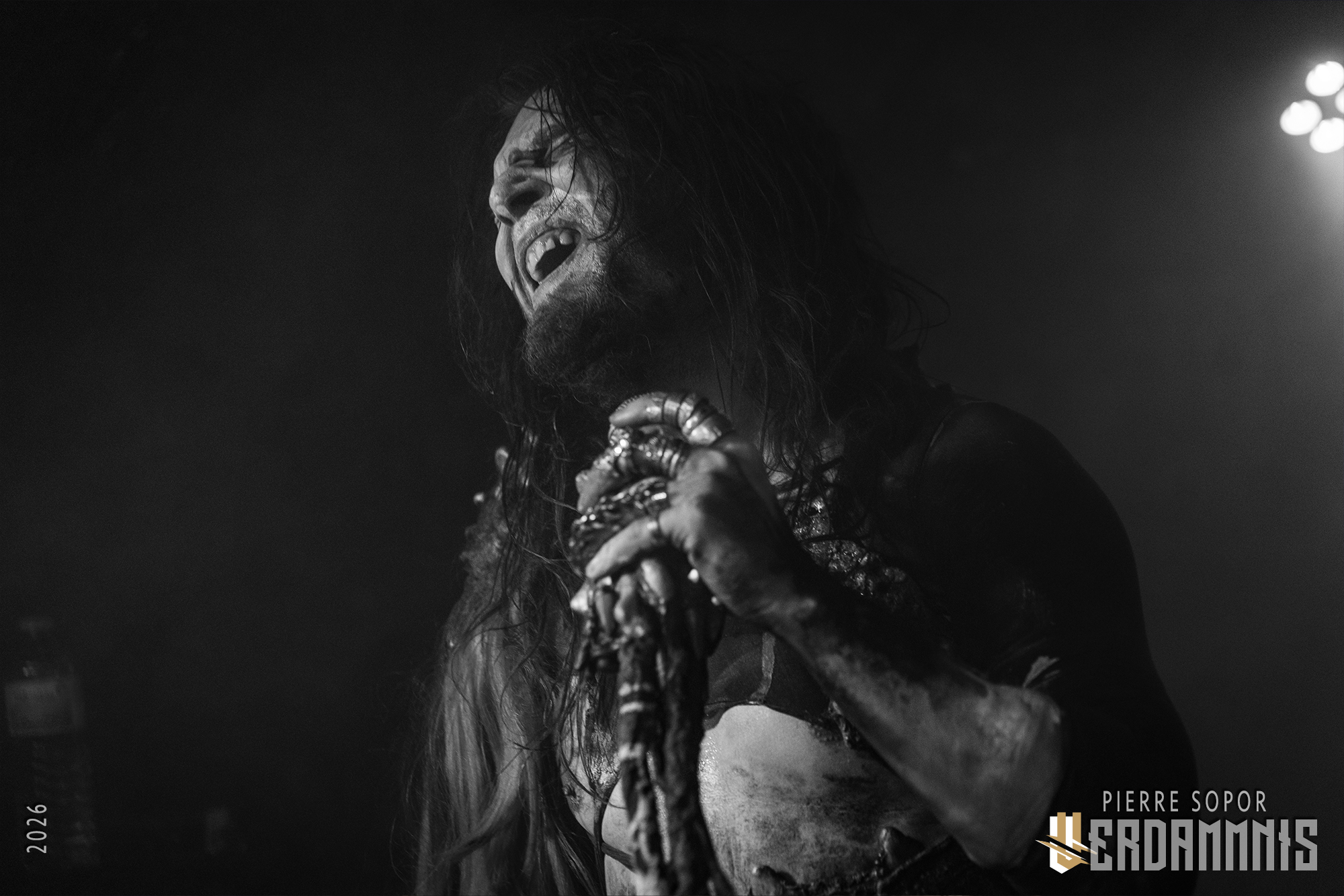
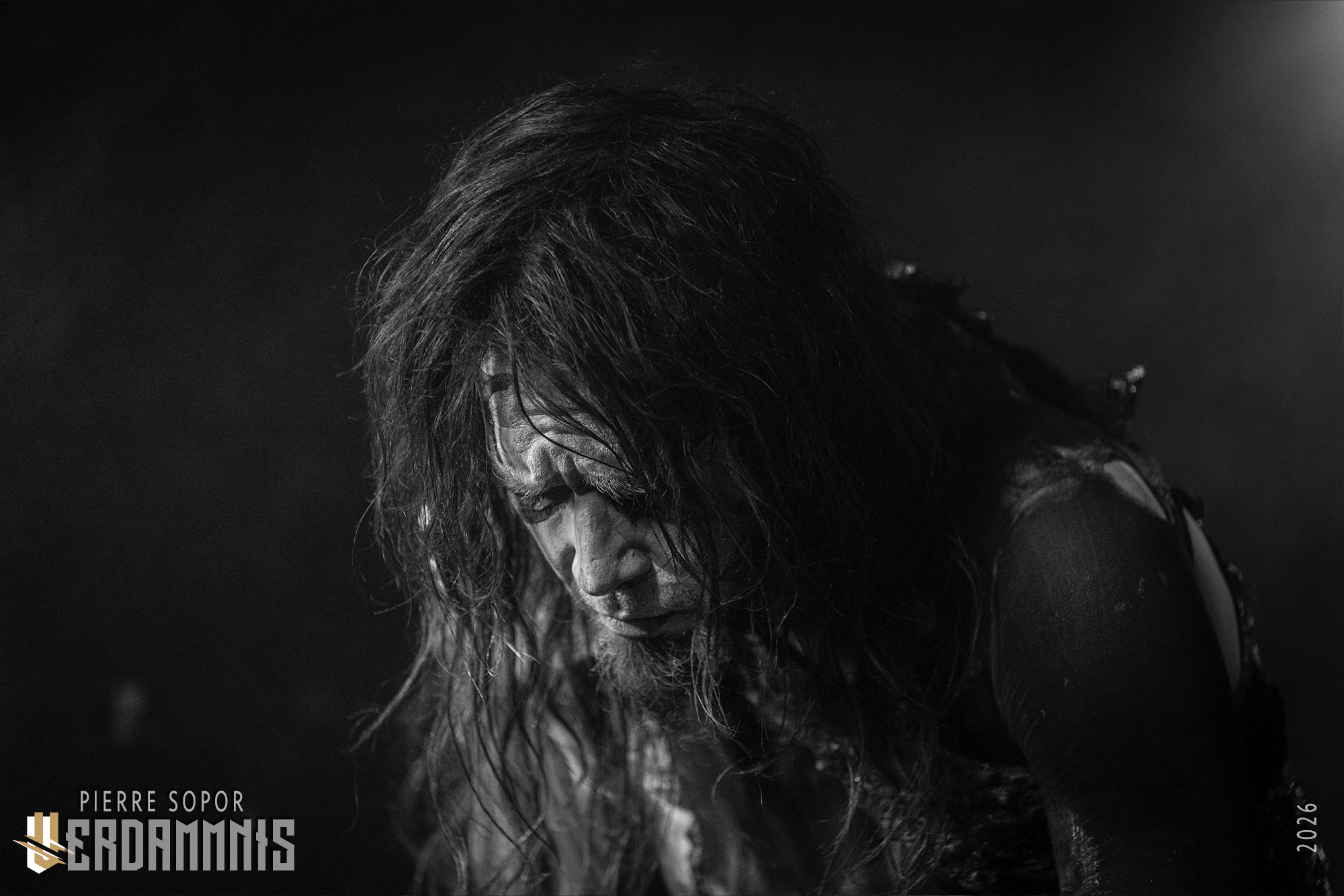
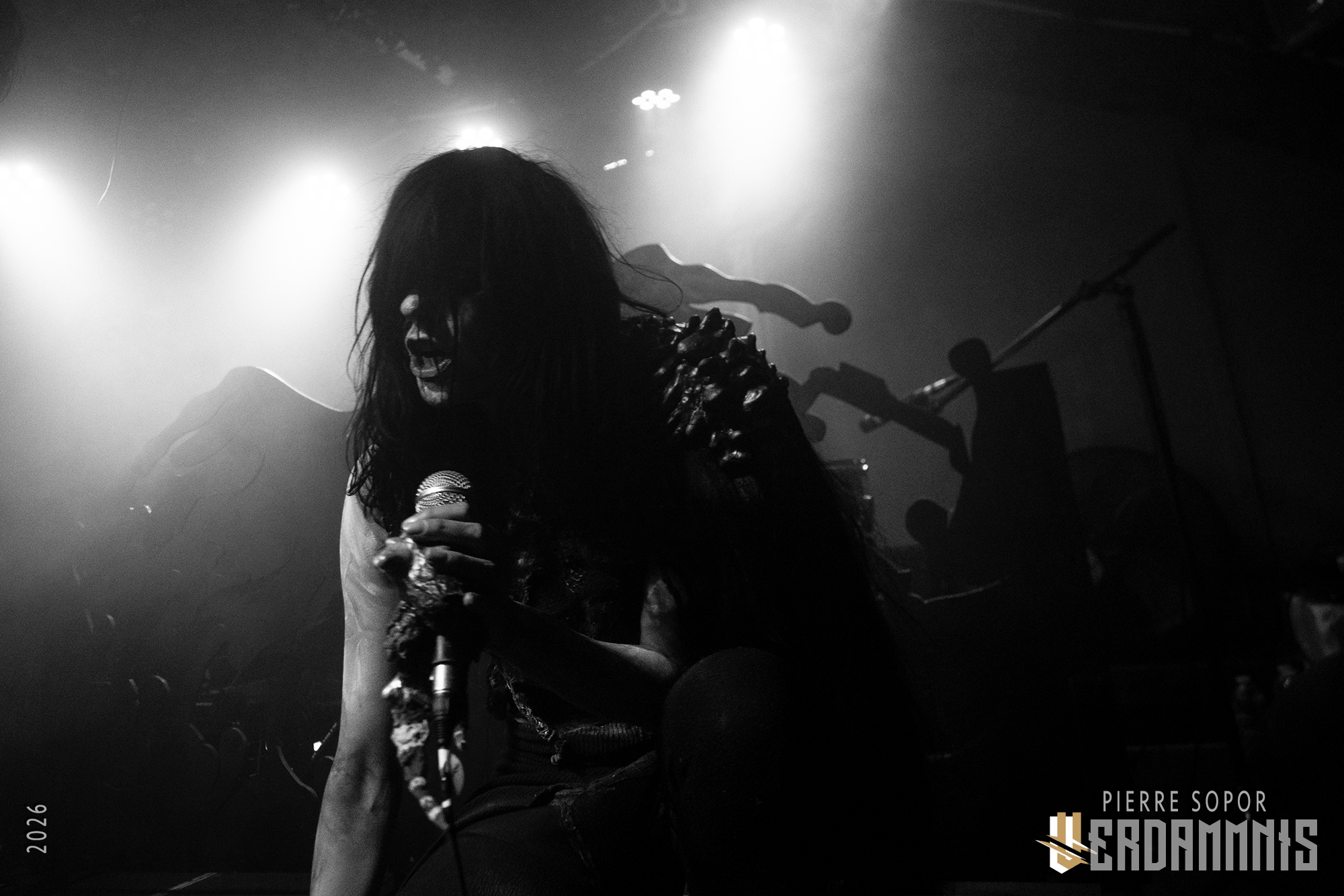
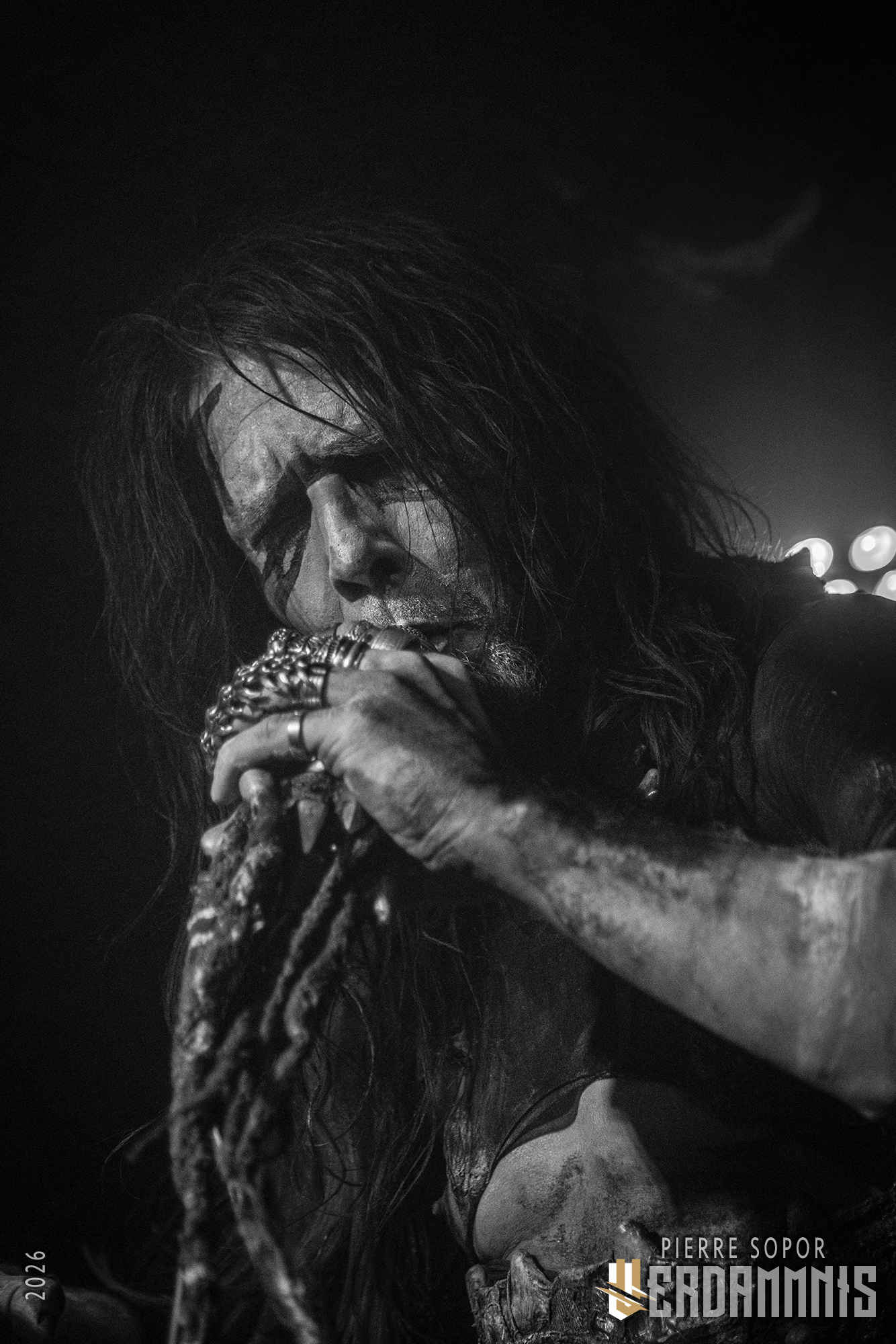
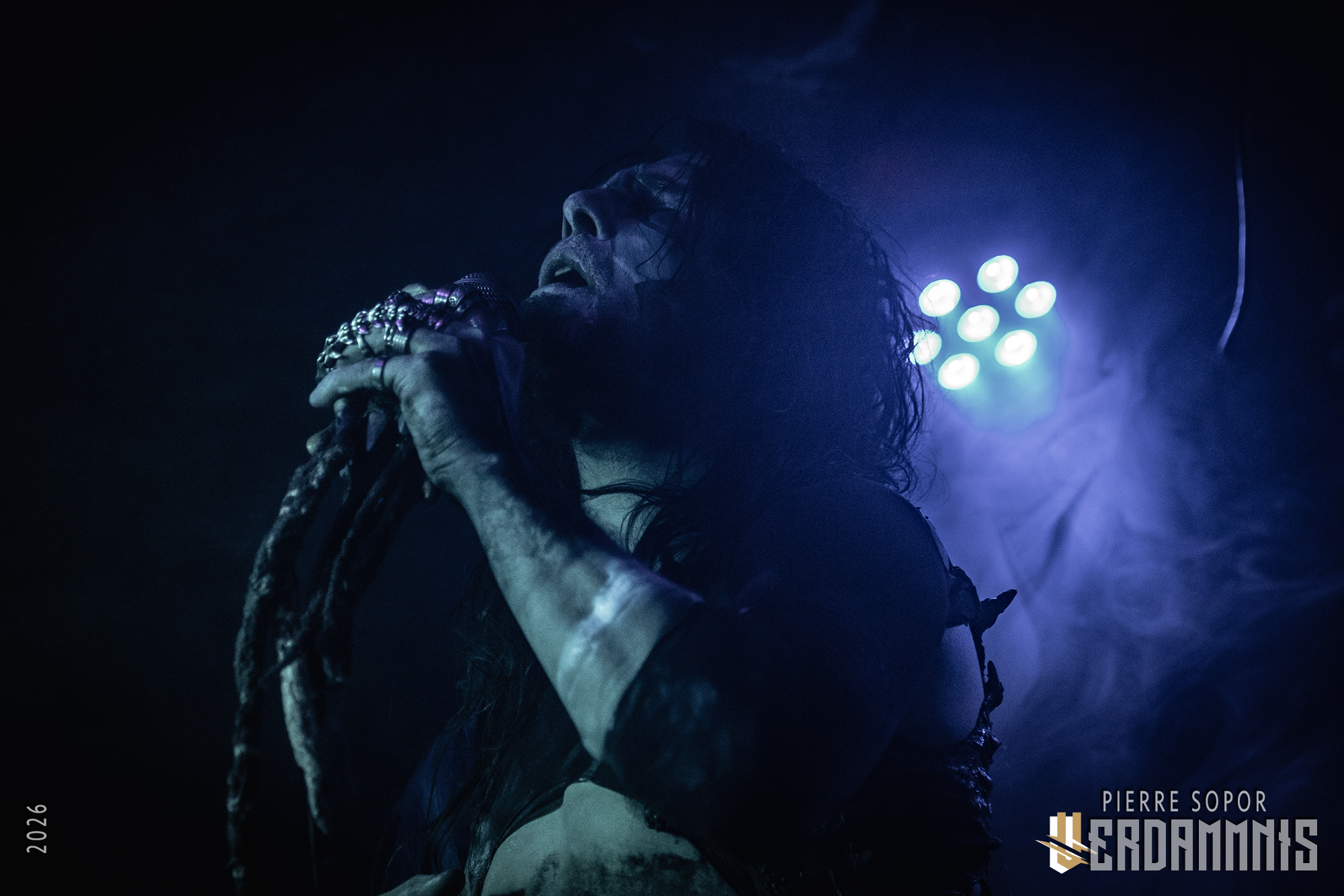
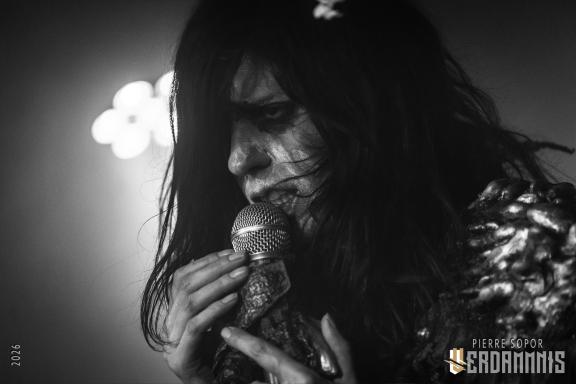
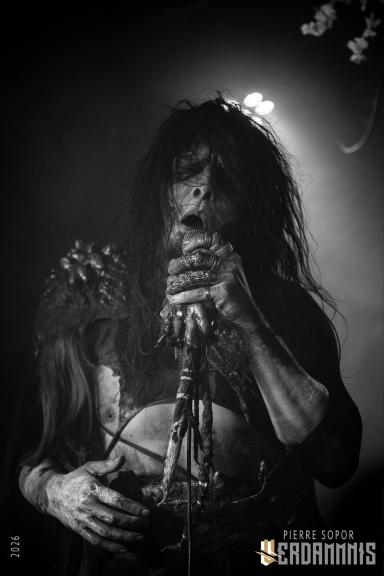
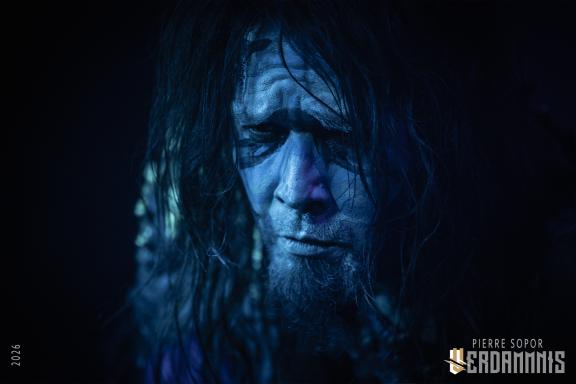
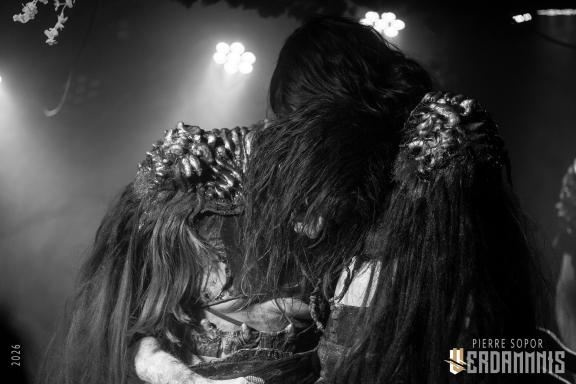
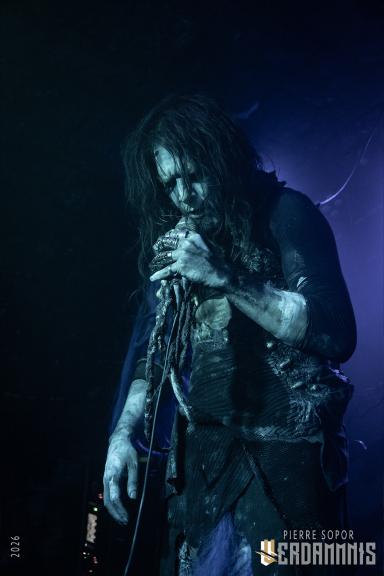
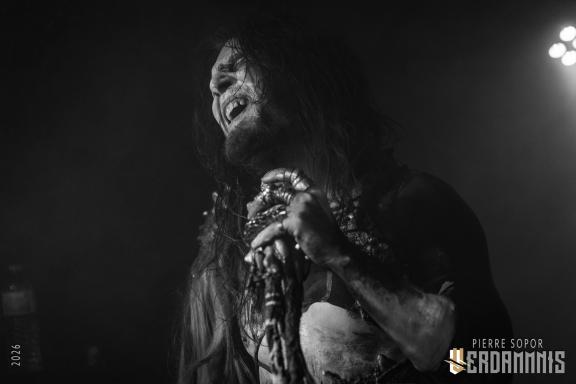
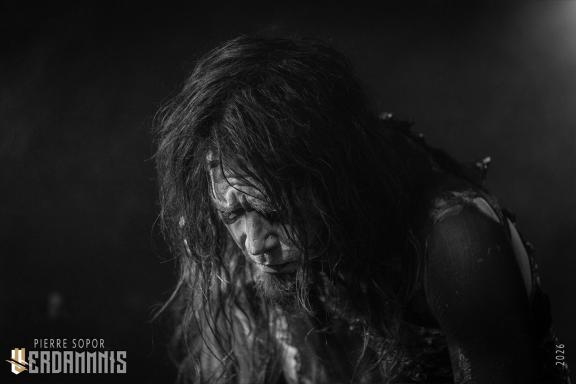
Before the music begins, the audience is immersed in the visuals: under blue spotlights, we discover intriguing primitive costumes and painted faces. Öxxö Xööx has a theatrical quality, which is also due to the charisma of its duo, but that doesn't mean the approach isn't sincere. Laurent Lunoir never leaves his stage persona, regardless of the project he is working on. It's not just a costume to look good in: when it comes to his art, things have meaning and importance. The heaviness of doom, baroque touches, two voices responding to each other, stage presence that brings the characters to life. Their onstage chemistry still works just as well, as does their complementarity, both in their singing and their movements. Together, they are often downcast, crushed, overwhelmed, then rise up, touched by a kind of spiritual grace.
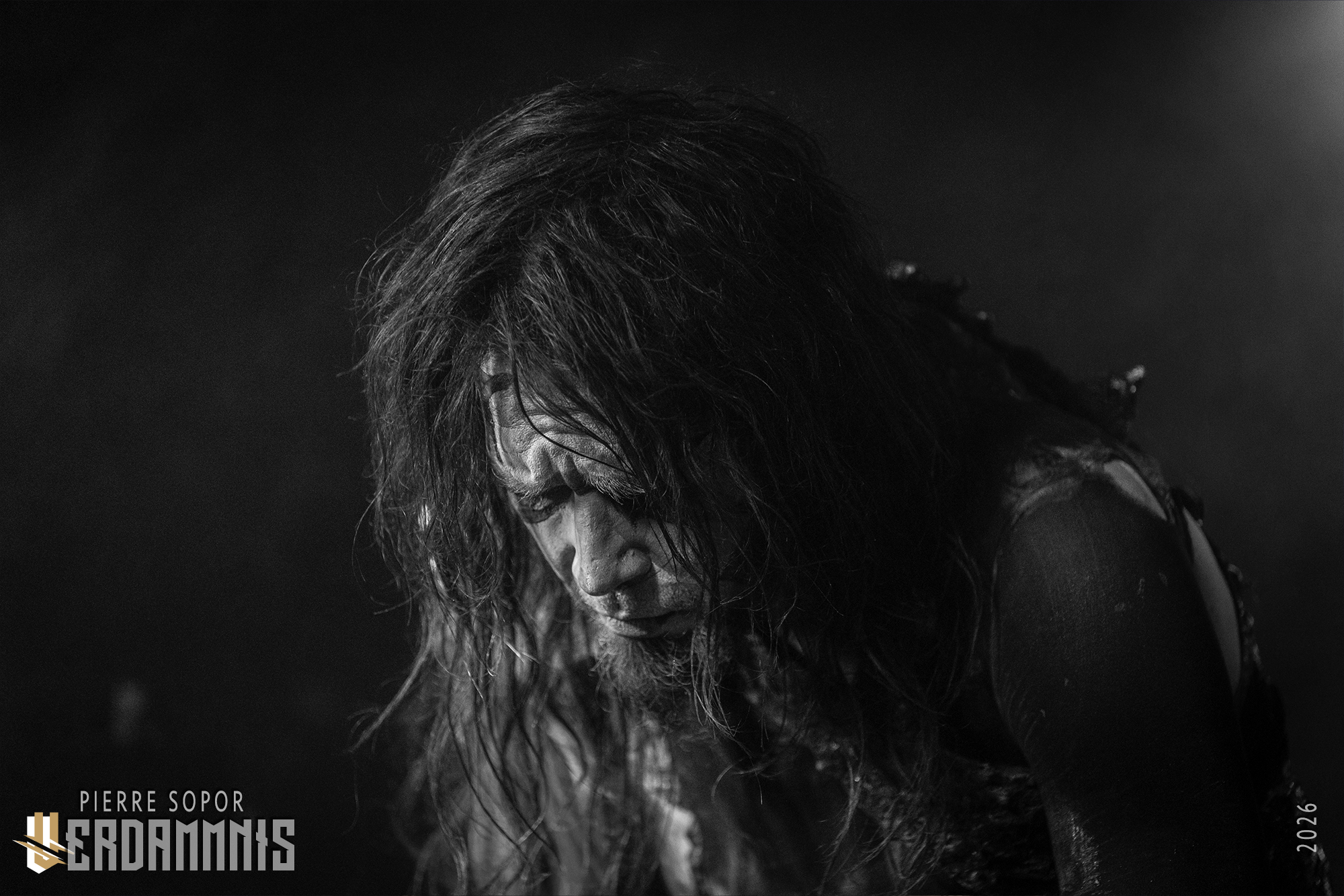
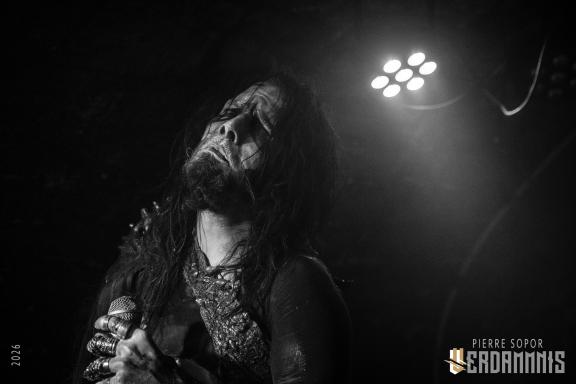
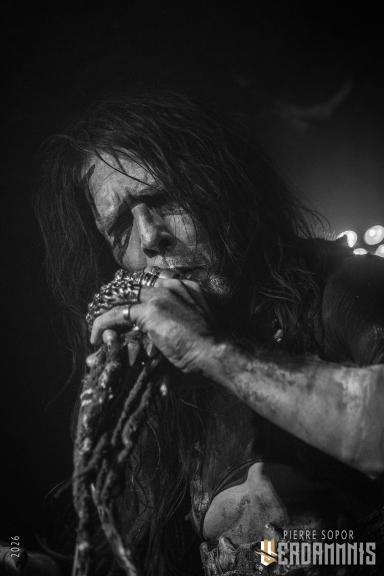
The music is solemn. A funeral procession, an ancestral ritual, a quest for light... Öxxö Xööx is a sometimes impenetrable but fascinating magma. While some may regret that, in the absence of a “real band,” not all the instruments are given enough prominence, one can also appreciate how this allows the two voices to shine, with the electronic parts and percussion highlighting unexpected industrial shadows. With his grave expression, Laurent Lunoir is both a grotesque creature from another age, frightening and dark, but also a majestic and noble Christ-like figure whose sacrificial suffering and melancholy can be seen on his tormented face.
If you're not right at the front, you can't see much. It's a shame because Öxxö Xööx is impressive in the thick smoke. We strain our ears when, suddenly, Laurent Lunoir momentarily abandons the language he has created to switch to French. This dark, emphatic Gothic liturgy is decidedly unique, this association between primordial darkness and the quest for redemption unfolding in an atypical and deeply personal universe. The sound of a funeral organ continues to echo underground as Öxxö Xööx leaves the stage, and then, in the darkness, Laure makes a heart shape with her fingers. After this crazy evening, which was theatrical, cathartic, and spiritual all at once, leaving the basement and breathing the outside air takes on an unexpected metaphorical dimension, like a bizarre rebirth, as if, after following Orpheus' songs and enduring a thousand torments, we had finally found our way out of Hell. Come on, let's believe it: this little tour will make everyone want to perform on stage more often. We're keeping our fingers crossed.