
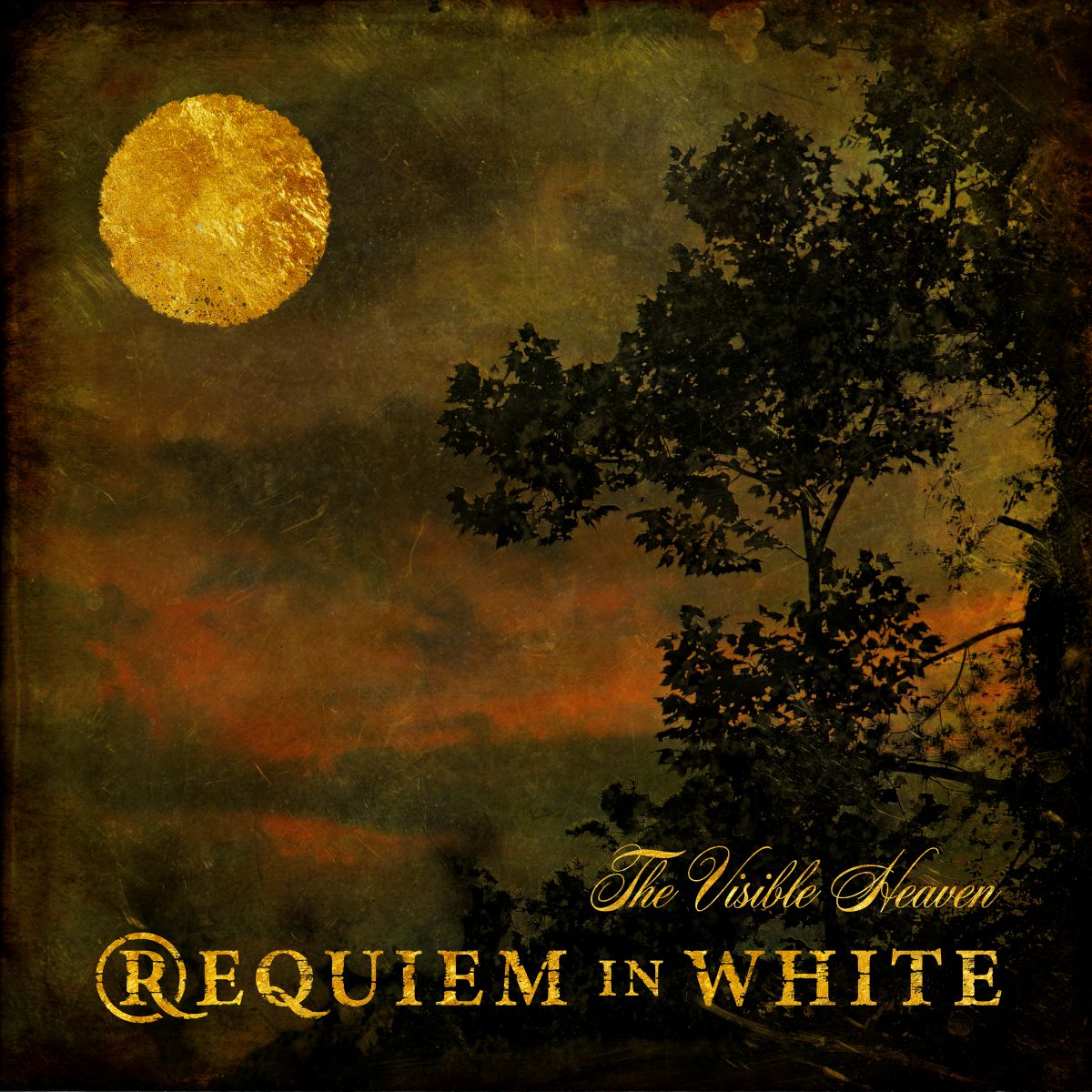
The 2025 release of the compilation Hymnal of Remembrance marked the resurgence of a gothic band that had been out of the spotlight for far too long: Requiem In White. With just a handful of records, the Boston-borned band had left their mark on the nineties with their calls from the darkness, combining the heavy guitar sound characteristic of the American gothic scene with ethereal vocal incantations long before this combination appeared on Faith And The Muse’s album Evidence of Heaven. Hymnal of Remembrance allowed us to rediscover these works, and it left us wanting just one thing: more Requiem In White! Fortunately, the band clearly felt the same way, as their third album, The Visible Heaven, is being released this year. Created by multi-instrumentalist Doc Hammer and singer Lisa Stockton-Wilson, it was intended to be the record they would have recorded in 1994 had they been able to.
And indeed, The Visible Heaven immediately plunges us into the tormented lyricism we’ve come to expect from Requiem In White. The guitar, which borders on gothic metal with its distortion (Requiem In White have, incidentally, played with Type O Negative in the past), possesses an overwhelming force that drags us into the heart of the eerie cavern created by the bass and drums, with all the reverb that sends shivers of delight through us, we crows; it’s dark, haunting and powerful, all the more so as the album benefits from a production quality and tighter melodies that it lacked in its first incarnation. And what impresses us even more is Lisa Stockton-Wilson’s heavenly vocals, which seem to form an ensemble all of their own! Whether fragile or radiant, her tone always possesses an irresistible eloquence; her transitions grip us, swiftly taking us from darkness to enchantment—or vice versa.
The Visible Heaven is, therefore, a truly beautiful album, one that draws you in all the more precisely because it is short: at half an hour for eight tracks, the record is inevitably very consistent. Yet you come away from it without any sense of frustration; these eight tracks have given us exactly what we were looking for. We do, of course, have our favourite moments: the title track benefits from a pleasantly heavy introduction, Ursuline Sister from the use of the organ, and True Lovers and Whores from a splendid refrain; where the album delights us most, however, is when its rhythms become most relentless and its melodies most unsettling, on Missa Brevis and even more so on the formidable Suffer and Sleep... It is then that we feel there is such a thing as an audible paradise, if not a visible one.