
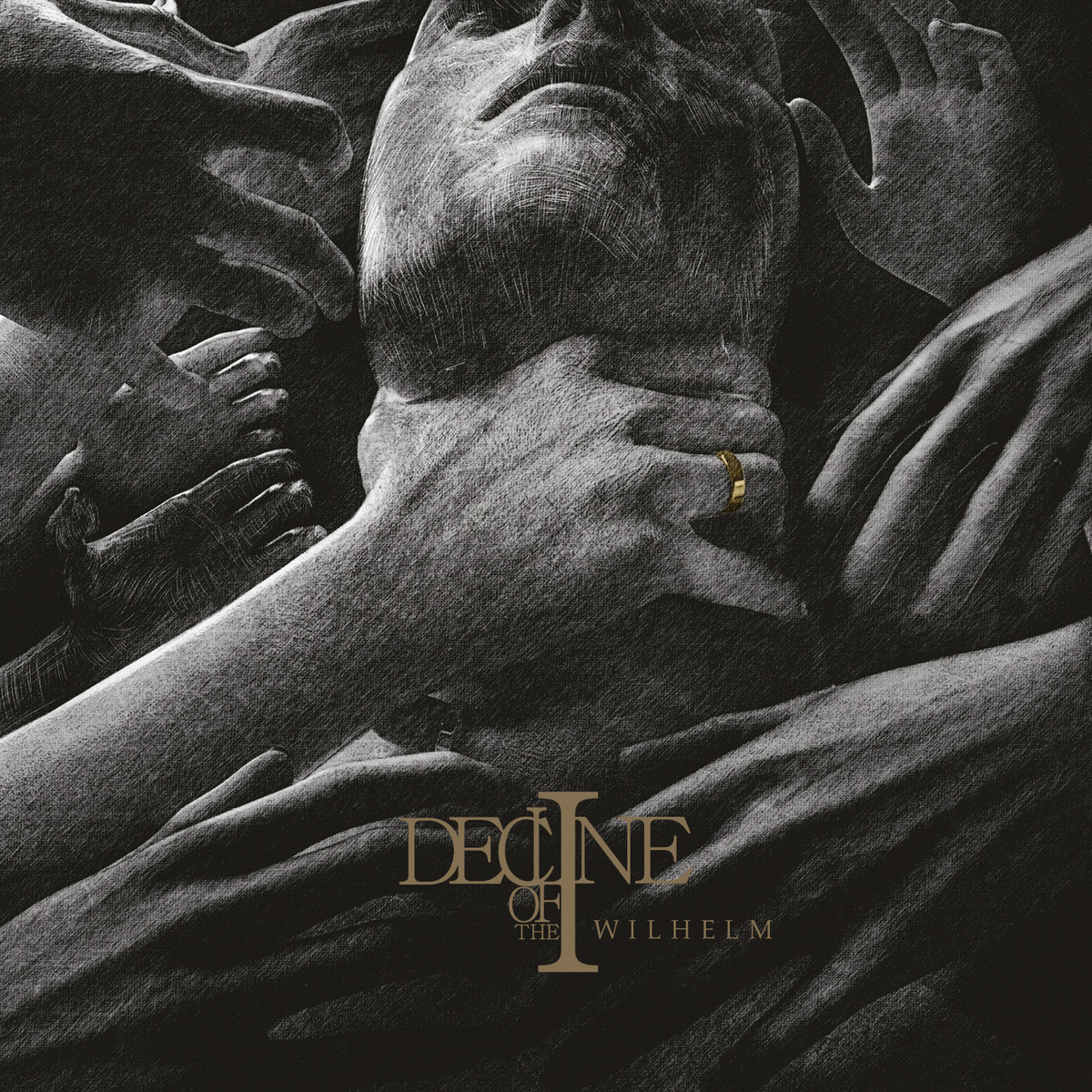
Jean Renoir used to say that “a director only makes one film in his life. Then he breaks it into pieces and remakes it.” Far from suggesting that inspiration runs dry, dooming artists to repeat themselves laboriously, let's assume that a work of art carries within it the personality of their authors, their obsessions and torments, and that these are tirelessly recycled throughout their life. Something similar could be said about Decline of the I, A.K.'s fascinating and ambitious multi-headed monster, whose new album Wilhelm is both an intimate exploration of the familiar and an exhilarating journey into the unknown.
His very personal universe is recognizable even before turning up the volume: L'Alliance des Rats, the title of the first track, echoes The Other Rat from the first album, while Eros N recalls the artist's work with Éros Nécropsique. Obsessions, echoes, ghosts that come back to haunt us and spiral around a music that is ever richer and more exciting. After a first trilogy inspired by surgeon Henri Laborit, Wilhelm is the second album in a cycle influenced by Søren Kierkegaard. As on Johannes, Decline of the I sounds less dirty, less gloomy, more expansive.
The frenetic angst of black metal, suffocating and tempestuous, blends with moments of contemplation: violins, poetic lulls, film excerpts (Jean Eustache's The Mother and the Whore, already sampled on the very first album Inhibition—what did we say about artists' obsessions?)... Decline of the I shakes us up and then stuns us with its sepulchral beauty, like the twilight pause carried by clean singing on L'Alliance des Rats. There is a sense of theater here that takes nothing away from the sincerity of the message, a visceral dramatic intensity that never veers into melodrama, a grandeur that impresses.
With its often clear vocals, orchestrations, and electronic touches (the glitches in Entwined Conundrum have an Aphex Twin-like strangeness that blends so well with the spectral strings lamenting in the mist or, later on Diapsalmata, with the interview given by Marie-Jo Simenon shortly before her suicide), Decline of the I breathes. A.K. allows for pauses that keep the listener in suspense and enable him to unleash the full power of his message throughout long tracks, lending themselves to this epic, sometimes even grandiloquent character (The Renouncer, an apocalyptic conclusion haunted by a funereal fatalism, leaves us knocked out).
Anxiety takes on monumental proportions. There is emphasis and elegance, madness, poetry. Decline of the I succeeds in combining the cerebral aspect of its avant-garde audacity with the sincere viscerality of emotions. Better still: Wilhelm, with its wide variety, its breaks in rhythm, its elements distancing it from extreme metal, and its production that highlights all these elements with a cleanliness that sets it apart from the first albums, is both Decline of the I's most ambitious and most accessible record. In this case, this is by no means synonymous with lazy conformity to worn-out codes: Wilhelm is a monumental inner odyssey of fascinating darkness.