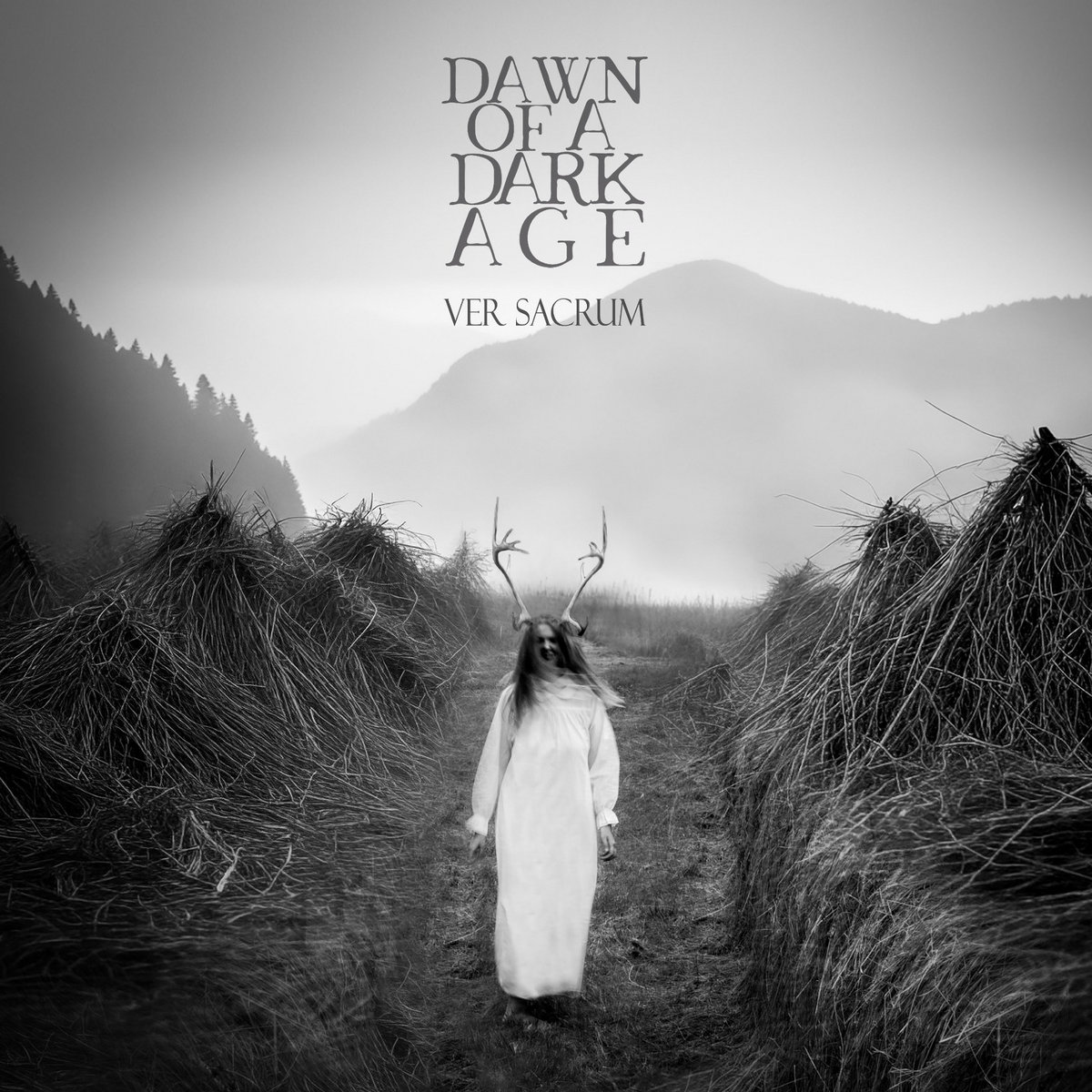
Dawn of a Dark Age is a fascinating creature. Like all projects by clarinettist Vittorio Sabelli (INCANTVUM, A.M.E.N., etc.), don't expect anything too conventional. After admiring the cover art by Kjetil Karlsen (we talked about his work here), you might have fun dissecting the tracklist to note that his black metal/folk/jazz/avant-garde and mystical project seems to have permanently left behind the two twenty-minute tracks per album: Ver Sacrum is composed of four tracks lasting an average of ten minutes! While Sabelli still calls the shots, playing most of the instruments you hear, Ignazio Cuga, alias Brusiòre (KRE'U), is the new voice of Dawn of a Dark Age.
Clarinet, accordion, piano... Il Voto Infranto (L'Ira di Mamerte) plunges us into the melancholic and mystical atmosphere of the album, between folk influences and occult temptations. The music is heavier than in the past, deprived of the female voices that still haunted the previous Transumanza. Cuga declaims, growls and shouts, with Italian lending a very particular energy to his lyrics. Theatrical and martial percussion resonates, bellicose choirs chant: Dawn of a Dark Age is reminiscent of both the ancestral fog of Wolves in the Throne Room and the more conquering impulses of Rotting Christ... but also to the dark, hypnotic delicacy of Jozef Van Wissem (the intro to Il Rito Della Consacrazione, before its funeral choirs).
We love how the album takes its time to impose its sinister and threatening mists, plunging the listener into a mysterious ritual, like Il Consiglio degli Anziani (L'Oracolo), which takes a good five minutes before introducing a beautiful incantatory throat singing. Dawn of a Dark Age seizes our soul and plunges us into a night whose opacity is suddenly broken by more atmospheric interludes, stripped of guitars and drums, giving way to a few words as Cuga transforms into an unsettling narrator. Dark folk, dark jazz, black metal, avant-garde: whatever label you choose, the result is majestic and fascinating.
With its progressive touches, the album unfolds like listening to old terrifying tales by the fireside, sometimes breathless, sometimes filled with unfathomable mysteries. The various instruments fill the space without the need for vocals, but when they do sound, they are as much those of a singer as of an actor taking on different roles, both storyteller and sorcerer. At the end of the epic Venti Anni Dopo - La Partenza (Nascita della Nazione Sannita), the accordion expires and its last breath leaves only the choirs, a guitar, a percussion here and there, until a conclusion that falls like a curtain on a stage. A timeless spell, Ver Sacrum is an album that is both crazy and solemn, brimming with creativity and a delectable darkness.