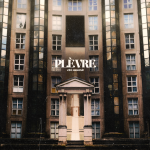
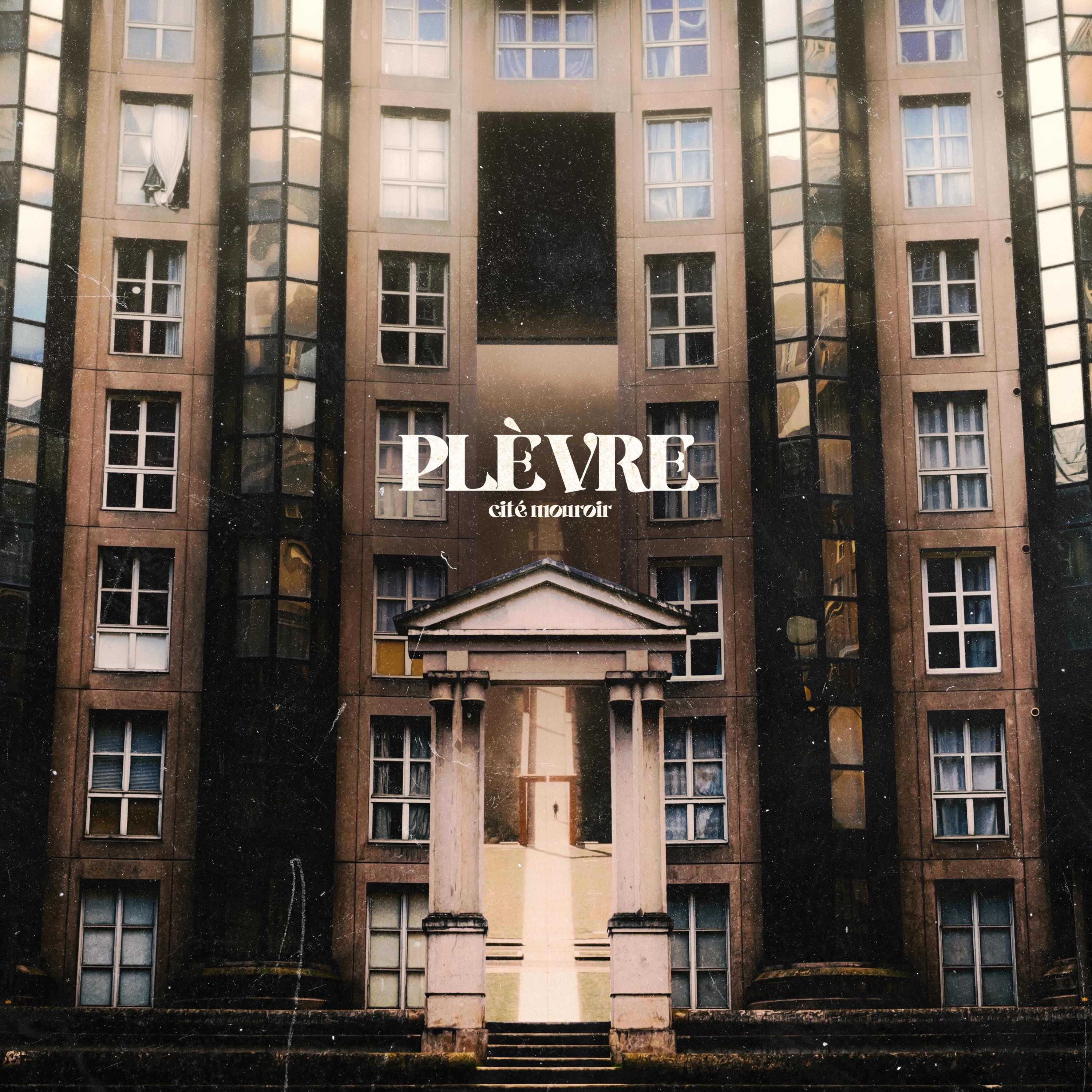
"Tu dois croire au printemps" (‘You must believe in spring'), Plèvre tells us right from the introduction to their debut album. If we’re to go by Saint Thomas’s biblical punchlines, well, unless we'll need to see this spring before believing in it! Released at the dawn of autumn, Cité Mouroir presents a world of shades of grey. With heavy clouds hanging over concrete blocks, the artwork drives the point home with a view of the interior of the Espaces d’Abraxas in Noisy-le-Grand – an impressive, dystopian architectural extravaganza that has served as the setting for several Hollywood films. Do you think it’s beautiful? Go and have a look for yourself. It’s no coincidence that Terry Gilliam filmed Brazil there. No need to keep you in suspense: here’s yet another album brimming with positive vibes!
'Plèvre' is the french for 'pleura' (which, in return, is the french word for 'cried', nice coincidence!). As well as being a new post-black metal band, the pleura is a membrane surrounding our lungs (no, this article isn’t sponsored by Wikipedia). This is no trivial matter, as we realise from the very first track, Décimées – a merciless steamroller from which a few rare glimmers of light escape: Plèvre delves into the organic and the visceral, but also into suffocating, stifling atmospheres. Ophélie’s roars ooze with rage; they bite hard, and already Plèvre seems driven by the possessed energy that comes with agony. We’re suffocating, but the band knows that dangling a few breaths of air and glimmers of hope before our eyes will only make the torment all the more cruel: a clear vocal emerges, a few weightless moments that suddenly create stark contrasts, infusing the track with an extra dose of melancholy, bitterness, anguish and humanity. We rub our ears at Absestose, that haunting guitar melody, that raw, strained vocals that burst forth: Plèvre cites Brutus amongst their influences. It sometimes really catches the ear, this moment of elevation just before the crushing concrete blocks that plunge us back down to level -6 of an underground car park. Asbestosis refers to “fibrosis of the lung tissue leading to chronic respiratory failure caused by prolonged inhalation of asbestos dust”: organic, unbreathable, always. Enough with Wikipedia now!
Crushed beneath this apocalyptic weight, despite horizons blocked by greyish towers, Plèvre also offers us genuine moments of poetry – atmospheric, suspended instants that are more often haunting than reassuring. Take the finale of A Corps Perdu or the contemplative moments in Dissociation: we could almost see a few flowers amidst all that concrete. Well, Chrysanthemums. Flowers for graves, that is. Perhaps that's the spring evoked at the start of the album...
With its French lyrics spat out with venom by a female voice, Plèvre is bound to be quickly categorised alongside bands such as Houle (whose work, like Cité Mouroir, is produced by DNI prod) or Galibot. Plèvre, in fact, shares with the latter a suffocating, artificial, dehumanised world, where the outside air is nothing but a distant and cruel dream. The Lord of the Rings, the devil and all that are all well and good, but seeing metal (and black metal in particular) rooted in a contemporary, realistic urban setting immediately lends new power to the music, making its torments more compelling. In a very different genre, Plèvre, like Hangman’s Chair, cultivates this very contemporary, real despair, this sense of being crushed and this loneliness, whilst we live crammed together by the dozen per square metre, where concrete blocks serve as a concrete symbol to illustrate the anguish.
Their debut album may well be weighed down by a gloomy mood, yet it still manages to sweep us along with its fervour. The madness of Tord Boyaux – a delirium tremens oscillating between hallucinatory wanderings and grotesque delusions – or the unstoppable radicalism of Sillons Sanglants, for example, are sure to satisfy your urge to smash everything to smithereens with a jackhammer. Now, that's an idea for the rhythm section on their next album! Plèvre have gone about things cleverly: it’s abrasive and in-your-face, but the aggression is regularly tempered by brief moments of respite and song structures with almost theatrical variations, as their progression seems entirely at the service of the narrative and emotions. Cité Mouroir is a bulldozer, yet it doesn’t forget to remind us that beneath all that concrete, there are still human beings, being crushed and left to die.