
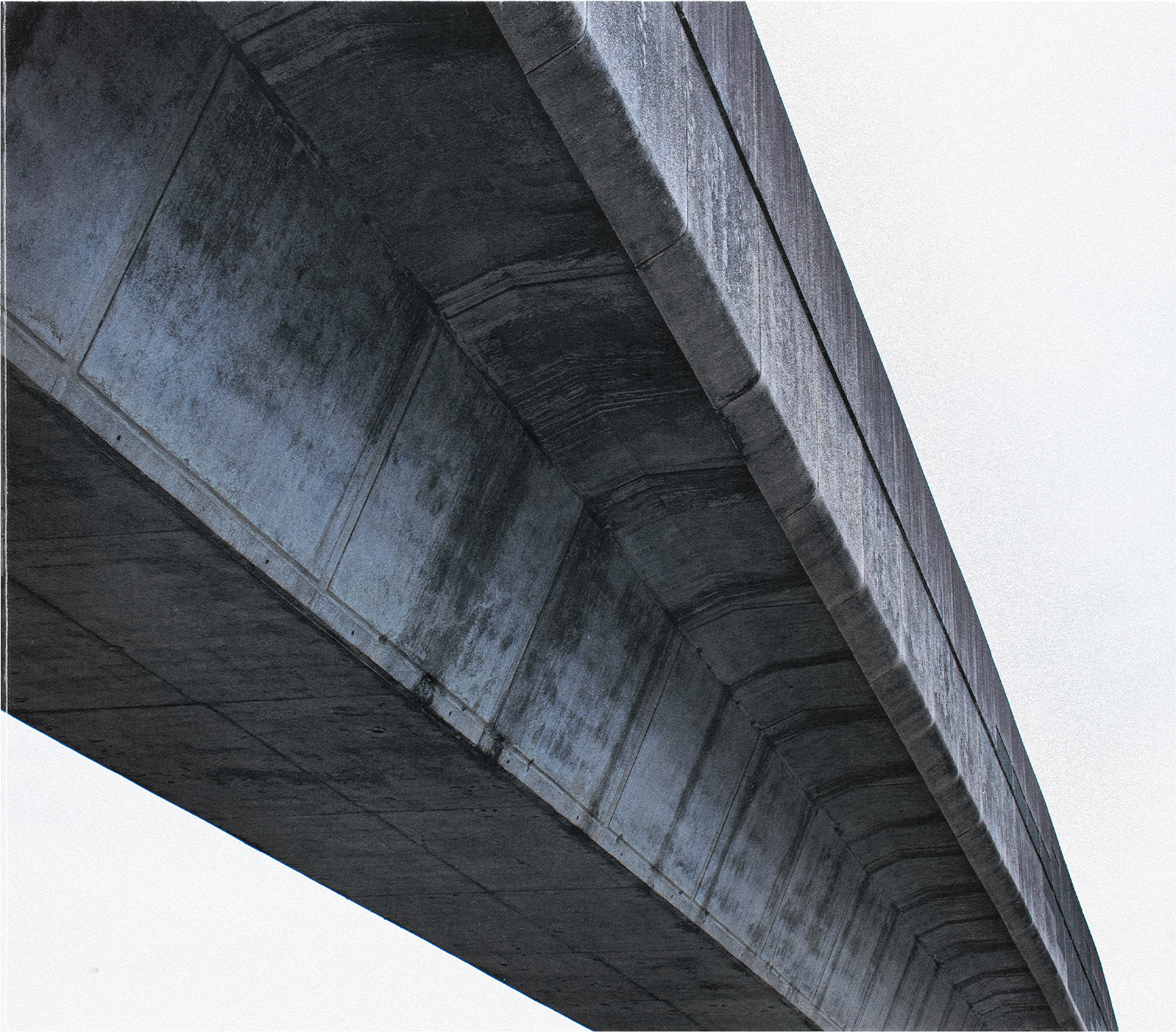
Appeared on our radar three years ago with a self-titled EP, Deûle (named after a river in Lille) immediately established a distinctive sound, a unique voice blending a whole host of elements: the heaviness of raw doom metal, a few snarling bursts borrowed from black metal, gut-wrenching screams, but also ghostly echoes of post-punk and suspended, poetic moments, hallucinatory bubbles for which the Lille-based band subtly prepares us with heavy use of synths and industrial touches. Synth-doom / noise-rock / post-metal: the labels were swept away by the currents of the Deûle as they released their debut album, L’Appel du Vide ("The Call of the Void"). It’s precisely the sort of call that’s hard to resist, one that draws you into the mist until you drown.
Beyond the obvious puns about rivers, mermaids and the like, the theme of drowning is very much present from the very first moments of the album: after all, in Hamlet, this is the fate that awaits Ophelia after she has descended into madness. Is this where Deûle drew their inspiration for the opening track? Perhaps: the emotions conveyed in the vocals seem fragile, ready to spiral into an uncontrollable whirlwind, much like the music itself, where intimate delicacy gives way to visceral outbursts. Deûle captivates by being unpredictable, giving their tracks a strong narrative impact. There is something alive about their music – a rugged authenticity and raw spontaneity – as if the band had allowed their songs to come to life bit by bit, to grow and evolve without trying to control them too much.
The sound is heavy, hypnotic. Deûle digs a huge hole in which to bury us. The title track, sombre and menacing, plays on our nerves, holding back its power only to finally unleash a devastating tidal wave. The words crack out, unadorned, unafraid to let a few cracks creak through Elya’s voice: Deûle never concern themselves with ‘perfection’; what matters is the emotion. Between the grey, concrete-clad landscapes of Vendeurs de Mort—a nightmarish fog from which a few screams emerge— the drumming on Danse de Chiens Gris, which evokes a death sentence rather than a joyful canine farandole, or the alienating heaviness of Virée Nocturne and its noise-driven pain—as if only a chaotic cacophony could express all that needs to be said—L’Appel du Vide lacks neither roughness nor harshness.
Yet, amidst this coldness, the harshness of the concrete blocks and their relentless condemnation, Deûle allows a constant melancholy to seep through – an anguished humanity that culminates in Du Sucre dans le Béton (a particularly apt title!), with its haunting melody and mournful slowness, its flamboyant torments and liberating surges. L’Appel du Vide is a grey album: the grey of the clouds, the grey of the concrete, the grey of the graves, the grey of the Deûle in autumn. Amidst all this greyness, there is a tormented soul that screams, its cries piercing through the layers of this urban tomb. It is heavy, wild, vicious and gut-wrenching. A french film from the late 1980s dared to claim that "Life Is a Long Quiet River". Clearly, its director, Etienne Chatillez, hadn’t heard of the Deûle before saying such a thing, because here, life is full of anguish, death, anger and sadness, and it absolutely never allows itself to be passively carried along by the current!