
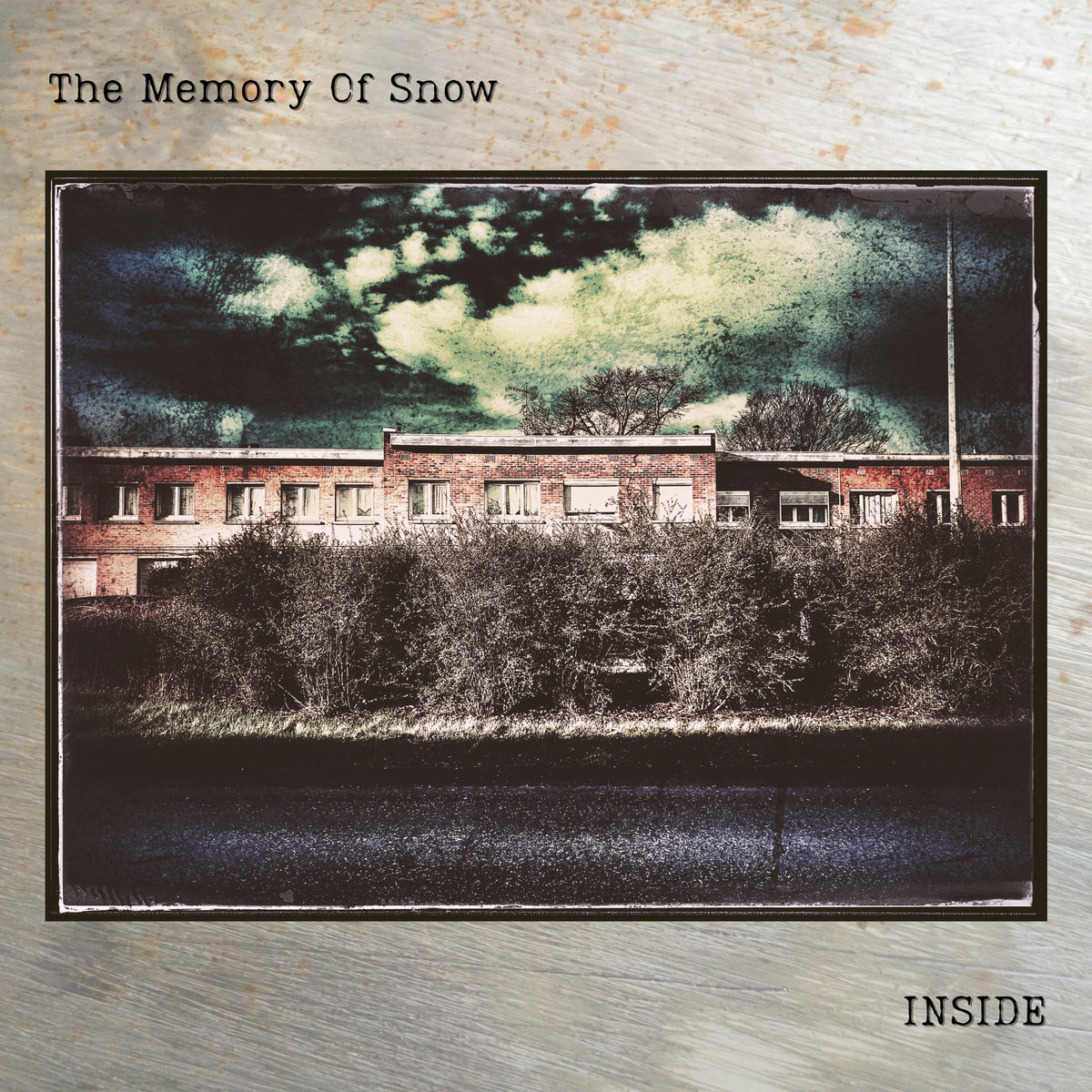
Could it be that Albin Wagener (who performs under his own name but also as Dawn and Overcast in the 2000s) is a bit of a joker? Releasing an album by a project called The Memory of Snow in the early days of summer is not without a certain irony: whilst we’re sweltering in the heat, his music brings us a bit of welcome coolness and a touch of nostalgia for grey days! True to his impressive pace of one album a year (and what albums they are: quality and quantity are consistently on offer), Inside follows on from Obsidian Dust after what was, however, a turbulent year in which the artist lost some of his work following a burglary...
A change of scene: this time, The Memory of Snow draws its inspiration from the bleak atmosphere of Scandinavian crime thrillers to tell the story of a detective investigating the murder of a young girl killed by her stepfather. Albin Wagener explains that he originally intended to offer a personal response to David Bowie’s Outside, which itself featured a murder investigation inspired by Twin Peaks... And it must be said that The Memory of Snow not only possesses an elegance reminiscent of Bowie’s, but also an approach to music where experimentation and a flair for catchy songs go hand in hand, with an ambition to combine effective formulas with more unusual elements.
Inside begins with the sombre restraint of To the North Sea, an almost minimalist post-punk track haunted by a few electronic touches that gradually builds in richness and density, as a melody emerges and a few cries burst forth. More than ever, The Memory of Snow offers a variety of sounds, experiments with new ideas and gains in scope. Thus, we move from a title track where we encounter the plaintive, aristocratic shadows of the Thin White Duke and Peter Murphy to the industrial tension of the bitter All The Things I Shouldn’t Have Seen and its gloomy atmosphere.
Albin Wagener explains that, as the story unfolds, the inspector loses his footing and the crime narrative plunges us into a “psychological descent into hell”. The horror lurking behind the doors of everyday life, the madness and darkness that creep in… these Lynchian elements are reinforced by the more cinematic qualities of the music. The atmosphere is carefully crafted right from the introduction of tracks whose structure is designed to highlight their narrative dimension; the singer – a disillusioned crooner – is thus both narrator and character in his own story, blurring the lines between his own questions and those of his inspector.
Little by little, his fever becomes palpable as the music grows more hallucinatory and tortuous, a sombre inner labyrinth where our bearings become blurred and where rage and sadness intertwine (the hypnotic The Diner and the meticulous attention paid to the various layers that overlap like echoes, or reflections repeating ad infinitum as the individual dissolves into their doubts). Whilst, as is usually the case with The Memory of Snow, the album’s length may seem daunting or even off-putting at first, the way Inside gradually mutates to plunge us into an increasingly opaque, fragmented and unpredictable world constantly rekindles our interest. Just imagine: we told you the album began with a rather sober track featuring pronounced post-punk influences. In its final moments, Inside breaks free of its shackles to offer us a double conclusion that is both fierce and exhilarating in more ways than one: with screeching guitars in its verses, Patchwork Pathway to Hell sweeps us away like a deathrock song written by Nine Inch Nails, before Into the Eyes of a Stranger fully embraces an industrial metal aggression whilst retaining the class borrowed from Nick Cave or Bowie, with the added bonus of a possessed piano and brass section haunting its opaque fog.
So not only you'll probably turn up the volume as the album progresses, but you also realise the sheer range of possibilities that lie ahead for The Memory of Snow. Post-punk? Chanson? Pop? Cold wave? Industrial metal? Avant-garde? There’s a bit of all that in Inside. So we’re left with a rather odd dilemma: we need to take the time to appreciate this substantial body of work, whilst at the same time champing at the bit to hear what The Memory of Snow has in store for us in the future! But do you know what's best? Given the artist’s productivity, we shouldn’t have to wait too long before discovering this future that looks set to be so exciting!